Cold weather creates unique utility management challenges for campground operators. Whether you’re winterizing a seasonal park, preparing infrastructure for reduced shoulder-season demand, or maintaining full operations through northern winters, the systems that function reliably in summer need specific attention as temperatures drop.
The range of approaches is wide: some campgrounds drain every water line at season’s end and have minimal winter utility concerns; others operate 12 months per year in climates where nighttime temperatures regularly reach single digits or below zero. Both extremes — and everything in between — require thoughtful planning.
Water System Freeze Protection
Water is the utility most vulnerable to cold weather damage. A single freeze-thaw cycle in an unprotected water line can cause catastrophic pipe bursting. The costs of repairing freeze damage — not just the pipe repair itself but the associated property damage, business interruption, and guest impact — far exceed the cost of proper freeze protection.
Winterization for seasonal closures:
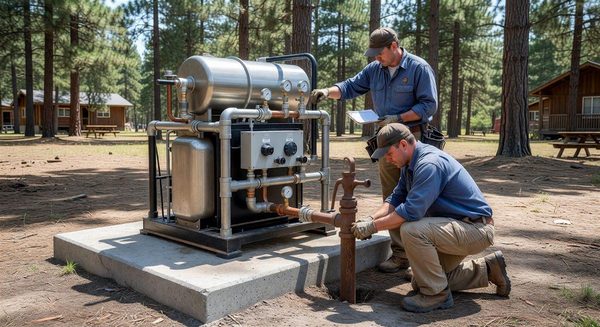
Complete winterization involves draining every component of the water system that could retain water and freeze: supply lines, water meters, backflow preventers, pressure tanks, site hookup risers, bathhouse plumbing, and irrigation systems.
The process typically uses compressed air to blow out lines after gravity drainage — a labor-intensive operation on a large campground that may require 1–3 days for a maintenance crew. Creating a written winterization checklist that covers every system component — and requiring sign-off from the person performing each step — reduces the risk of overlooked components that freeze and break over winter.
Heat tracing for year-round operations:
Campgrounds operating in cold climates use electric heat trace cable applied to water lines running in unheated or exposed areas. Heat trace maintains water line temperature above freezing, consuming energy proportional to line length and ambient temperature.
Smart heat trace controllers — rather than simple on/off thermostats — can significantly reduce energy consumption by modulating heat output based on the actual temperature differential required. Some advanced systems use pipe temperature sensors rather than air temperature sensors for more precise control.
Insulation improvements:
Proper pipe insulation is the foundation of freeze protection. Insulation doesn’t add heat — it slows heat loss, reducing the heat trace energy required to maintain safe temperatures and extending the time before exposure to cold air causes problems. Pipe insulation in outdoor campground applications often degrades over time from UV exposure, physical damage, and pest damage. Annual inspection and replacement of damaged insulation sections is worthwhile maintenance.
Frost-free site hookups:
In campgrounds designed for year-round or extended-season operation, site water hookup risers need freeze protection. Frost-free hydrant designs allow water to drain back below the frost line when the hydrant is closed, eliminating the most vulnerable water column. For existing risers, heat trace and insulation are the standard protection approach.
Heating Systems for Year-Round Facilities
Campgrounds with heated restrooms, shower houses, and laundry facilities in winter climates need reliable heating systems sized for cold-weather operation — which typically means significantly more heating capacity than the same space requires in summer cooling mode.
Commercial HVAC for bathhouses:
Forced-air heating systems in bathhouses need to maintain comfortable temperatures for guests while contending with frequent door opening, high humidity from showers, and exposure to cold outside air. High-capacity units with adequate air circulation prevent cold spots and manage humidity that would otherwise condense on surfaces.
Variable refrigerant flow (VRF) systems are increasingly popular for campground bathhouses in cold climates — they provide both heating and cooling from the same equipment, operate efficiently across a wide temperature range (to -13°F or below with cold-climate variants), and allow zone-by-zone control.
Radiant heating:
Radiant floor heating in bathhouse slab floors provides comfort benefits beyond air temperature — warm floors are dramatically more comfortable in a barefoot shower environment than heated air alone. Installation requires embedded heating elements in the concrete slab, making it a new-construction or major-renovation option rather than a retrofit.
Infrared radiant heaters suspended from ceilings work well in high-traffic entrance areas and covered outdoor spaces where maintaining air temperature is impractical. They heat objects and people directly rather than warming air.
Freeze stat controls:
Freeze stats (freeze-protection thermostats) are automatic controls that activate heating systems when temperatures approach freezing, regardless of occupancy mode or other control settings. They’re essential protection against equipment failures, extended power outages, or scheduling errors that might leave facilities unheated during cold weather. Every heated facility should have a freeze stat as a last line of defense.
Utility Monitoring in Winter
Remote monitoring systems become particularly important in winter, especially for partially-closed or minimally-staffed facilities.
Temperature monitoring: Wireless temperature sensors in mechanical rooms, bathhouses, and water meter enclosures alert operators when temperatures approach dangerous thresholds. A text alert at 40°F in a water meter pit is infinitely better than discovering a frozen and burst meter in spring.
Water flow monitoring: Continuous water flow monitoring can detect leaks caused by freeze damage. If flow continues during periods when no one should be using water, there’s likely a problem. Some campgrounds implement automated shutoff systems that close the main water supply valve if leak-indicative flow conditions persist without manual override.
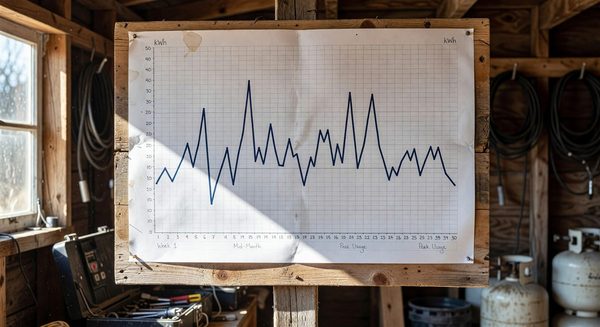
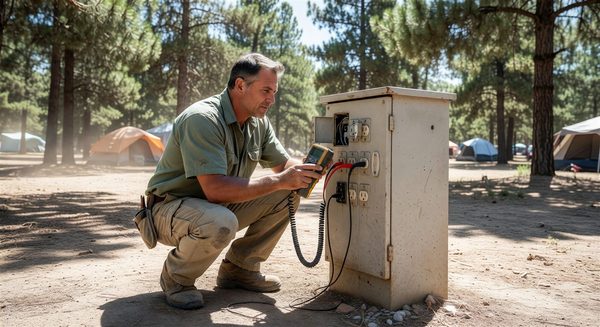
Power monitoring: Winter is when electrical issues — often related to heat trace systems running at capacity — are most likely to cause problems. Monitoring electrical consumption across heat trace circuits and heating systems helps operators detect failures: a heat trace circuit that suddenly shows zero consumption isn’t functioning, potentially leaving a line vulnerable to freezing.
Septic and Wastewater in Cold Weather
Septic systems in cold climates face specific winter challenges. Anaerobic bacterial activity in septic tanks slows significantly in cold temperatures, reducing treatment effectiveness. In extremely cold conditions, the effluent line from tank to drain field can freeze if flows are insufficient to maintain temperature.
Best practices for cold-weather septic management:
- Avoid excessive water conservation in winter that reduces flow to the point where pipes cool and freeze
- Ensure septic tank insulation (typically a foam cover over the tank lid and risers) is in good condition
- Be cautious about introducing antifreeze products — some are harmful to septic bacteria
- Know where the drain field is located and avoid plowing or parking on it — compaction and snow removal reduce the insulating snow layer over the field
For campgrounds with pump-based sewer systems (lift stations), winter pump monitoring is essential. A failed pump in winter can result in sewage backup before anyone notices during low-traffic periods.
Frequently Asked Questions
When should seasonal campgrounds start their winterization process? Timing depends on your climate and the reliability of your first freeze dates. Most campgrounds should complete winterization at least 2–3 weeks before their expected first hard freeze, accounting for the possibility of an unusually early cold event. In northern states and Canada, September or early October is typically the target window for late-season operations.
How much does heat trace cable consume electrically? Self-regulating heat trace cable — the standard for modern installations — consumes approximately 5–12 watts per foot at its maximum output in very cold conditions. A 100-foot protected water line might consume 500–1,200 watts during peak cold. Smart controls can reduce consumption by 30–50% compared to simple on/off thermostats. Factoring heat trace consumption into your winter electrical budget is important for operations with significant pipe protection requirements.
Can I leave RV hookups connected through winter in cold climates? This depends significantly on your hookup design and local climate. Standard site riser configurations with ball valves are vulnerable to freezing if water isn’t continuously flowing or drained. Operations that offer winter camping typically either have frost-free hydrant designs, keep site water valves shut with guests using a central water station, or accept that site water is unavailable in winter conditions and guests rely on their RV’s internal tanks.
What’s the most common cause of winter utility damage at campgrounds? Incomplete winterization — a step that was missed on the checklist — is the most common cause of winter water system damage at seasonal campgrounds. The second most common is a heating system failure in a facility that wasn’t being monitored remotely, leaving a previously-protected pipe or fitting to freeze when heat was lost. Both are preventable with systematic checklists and remote temperature monitoring.
Further Reading from Authoritative Sources
- ARVC campground winter operations standards and seasonal utility management resources — ARVC’s operational resources for campground operators cover seasonal closing procedures, winter utility management, and year-round operations in cold climates.
- U.S. Department of Energy building winterization and heat trace technology resources — The Department of Energy’s resources on building winterization, heat trace technology, and cold-weather energy management provide the technical framework for campground winter utility decisions.