Water management at campgrounds encompasses a wide range of concerns: supply (is there enough water?), distribution (is it reaching all sites reliably?), consumption (how much are we using and who’s using it?), waste (where are the leaks?), and quality (is it safe?). Technology tools exist for each of these, and the combination of aging water infrastructure and increasing regulatory scrutiny is pushing more operators to invest in monitoring and management systems.
Understanding Your Water System
Before addressing specific problems, understand what you have:
Water source: Is your campground on a municipal water supply or a private well? Municipal supply simplifies quality management (the utility handles most of it) but means you’re subject to supply restrictions and rate increases you don’t control. Well water requires your own quality monitoring and treatment but gives you independence.
Distribution system: How old is your buried water piping? Cast iron pipes from the 1960s and 1970s are approaching end of life. Galvanized steel is prone to corrosion and scale buildup. PVC and HDPE piping from the 1980s onward is generally in better condition. An aging distribution system is the primary source of campground water loss.
Consumption patterns: How much water does your property use per day, and how does that vary by season? Without baseline measurement data, you can’t identify anomalies.
Treatment systems: If your water requires treatment (chlorination, filtration, softening), what systems are in place and are they functioning within specifications?
Water Loss: The Hidden Campground Cost
Industry estimates suggest that 10–30% of water distributed by utilities is lost to leaks before it reaches end users. For campground operators on private wells, water loss is also operational cost (pump energy) and potentially a constraint on supply during high-demand periods.
The most common campground water loss sources:
Underground pipe leaks: These are the hardest to detect and the most common. A pin-hole leak in a buried pipe may run for months before it’s discovered (often only when the surface above it becomes saturated or subsides).
Faucet and fixture leaks: Dripping faucets in bathhouses and campsite water connections are individually small but cumulatively significant.
RV connection leaks: Guests who leave water connections partially open or whose RV hose connections are faulty.
Overflow from water storage: If you have a holding tank or pressure tank, overflow from faulty level controls wastes water.
Leak Detection Technology
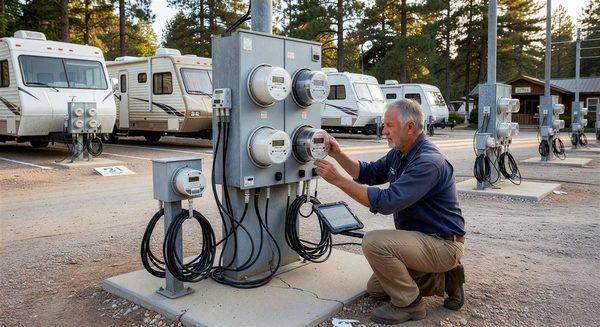
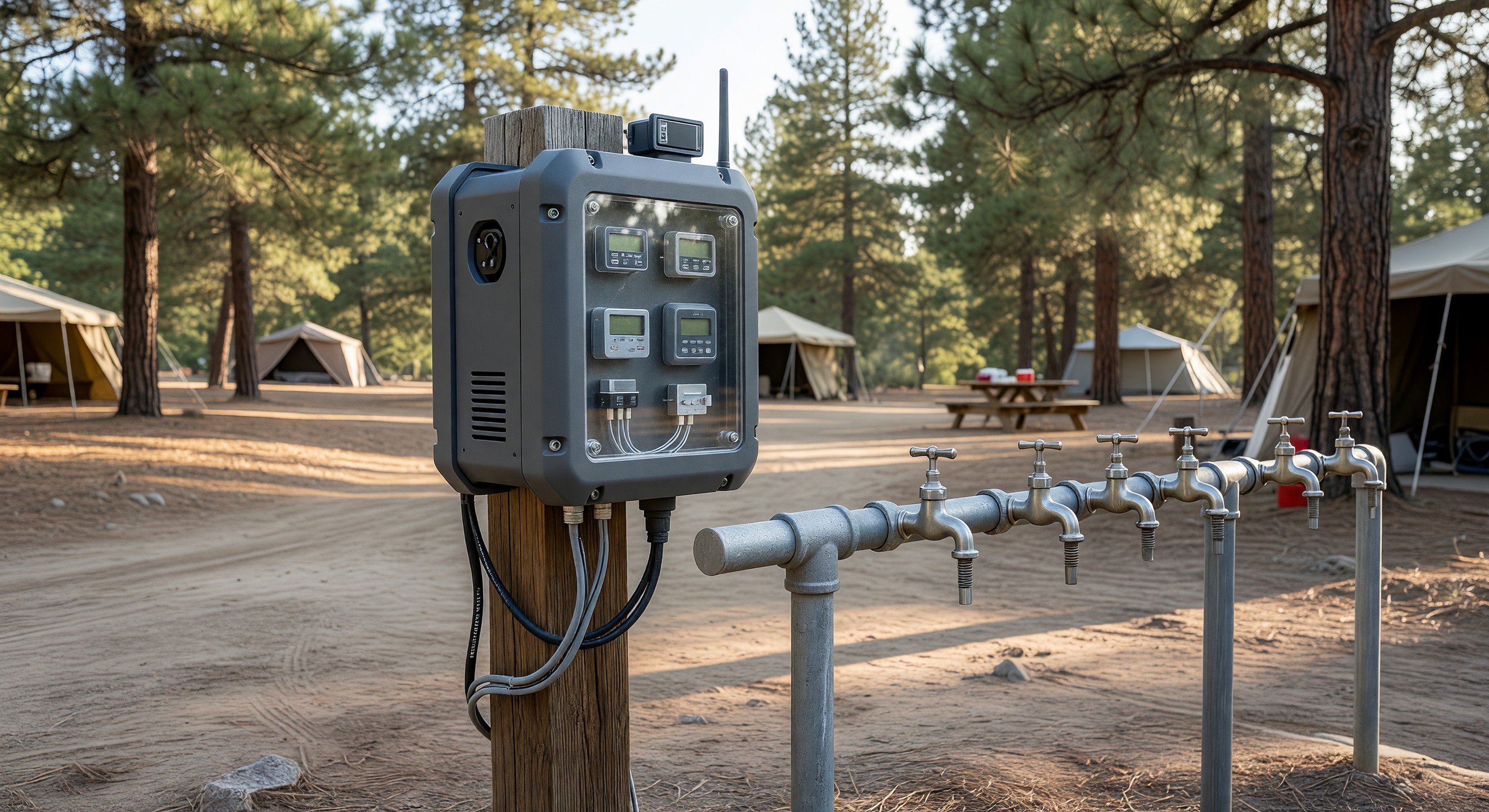
Flow monitoring at the distribution point: A flow meter at the main entry to your distribution system tracks total water consumption. Comparing this meter’s reading to the sum of individual end-point consumption (if you have site-level meters) reveals system losses. Comparing daily flows to expected patterns (flow at 2am when no one should be using water is a leak indicator) identifies potential problems.
Acoustic leak detectors: Devices that detect the sound frequency of water escaping from a pressurized pipe. Technicians use these for targeted leak detection; some systems can be permanently installed at intervals along a distribution line for continuous monitoring.
Soil moisture sensors: Unusually high soil moisture at a specific location is an indirect indicator of a subsurface leak. These sensors are simple and inexpensive; a grid of them across your property can identify suspicious areas for follow-up investigation.
Smart irrigation controllers: For campground landscaping served by your water distribution system, smart irrigation controllers significantly reduce consumption by adjusting irrigation schedules based on weather, soil moisture, and evapotranspiration data.
Water Quality Monitoring
For campgrounds on private wells or operating water systems serving the public, water quality monitoring is a regulatory requirement in most jurisdictions:
Regular testing: Quarterly or more frequent testing for coliform bacteria, and periodic testing for other contaminants depending on your local regulatory requirements. A certified testing laboratory is required for regulatory compliance testing.
Continuous chlorine monitoring: Systems that continuously measure residual chlorine levels in your distribution system and alert when levels fall outside acceptable ranges.
pH and turbidity monitoring: For surface water sources, these parameters can change rapidly after precipitation events and indicate treatment system issues.
Frequently Asked Questions
How do I know if my campground has a significant water leak? Compare your utility bills month-over-month and year-over-year. A significant unexplained increase in water consumption — particularly during periods when occupancy hasn’t increased — often indicates a new or worsening leak. Installing a simple flow meter at your main connection point gives you daily consumption data to monitor.
What does a typical underground water leak cost in water and energy? A medium-sized leak (1 gallon per minute) running continuously loses 1,440 gallons per day. At typical municipal rates, that’s $5–$15 per day depending on your rate. For well systems, the pump energy cost is significant, and large leaks can reduce system pressure and limit water supply for guests.
Are there grants available for water infrastructure improvement at campgrounds? USDA Rural Development programs have funded water infrastructure improvements at rural hospitality properties including campgrounds. State environmental quality agencies sometimes fund leak detection and repair through conservation programs. Contact your state’s small business and rural development offices for current program availability.
How often should a campground conduct a comprehensive water system audit? For parks on aging infrastructure, annually. For parks with newer systems and no water loss indicators, every 3–5 years. After any significant construction or digging on the property that could have damaged buried pipes, a check should be conducted.
Further Reading from Authoritative Sources
- EPA Safe Drinking Water Act requirements for campground private well water systems — The EPA administers the Safe Drinking Water Act and publishes the regulatory framework for non-community water systems including campground private wells.
- ARVC campground water management standards and utility infrastructure guidance — ARVC’s utility infrastructure and operational resources for campground operators cover water system management, leak detection, and conservation technology applicable to campground-scale water operations.