Utility costs at campgrounds are significant and often undermanaged. Between electricity for RV site hookups, bathhouse lighting and water heating, HVAC for facilities, and water and sewer system operation, utilities represent a major portion of operating expenses — yet many operators have limited visibility into where money is going or which investments would have the most impact.
This guide covers practical approaches to utility cost reduction, organized by category, with realistic expectations for what each strategy can deliver.
Starting With a Utility Audit
Before spending money on equipment or efficiency upgrades, understand your current cost drivers. A utility audit answers the question: where is our utility spending going?
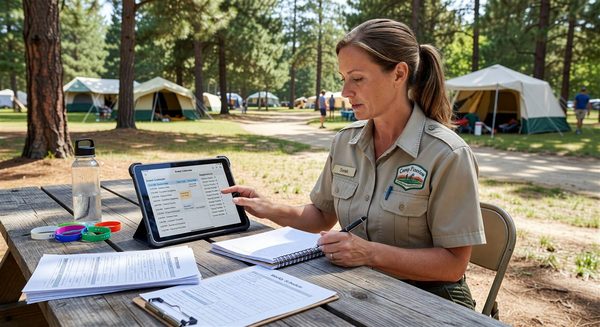
Gather 24 months of bills: Request billing history and interval data (15-minute consumption records) from your utility for electricity, and billing history for gas, propane, and water. Look for patterns: which months are highest? How much variation is there month to month beyond what occupancy would explain?
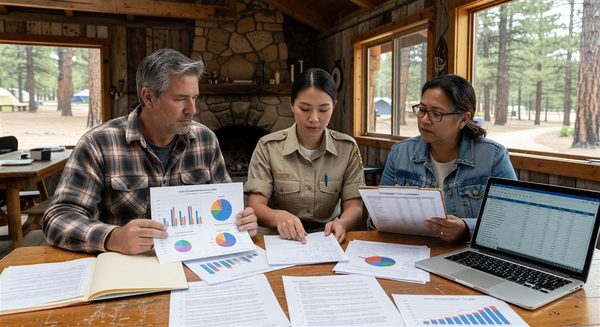
Map consumption to sources: A simple spreadsheet that allocates total consumption to major systems — site hookups, bathhouse, laundry, lighting, office, pool/spa, irrigation — gives you a rough picture of where energy is going. You may not have sub-meters for each system yet, but engineering estimates based on equipment ratings and runtime are a useful starting point.
Calculate cost per occupied site-night: Normalizing utility costs by occupancy volume allows you to compare your cost structure to benchmarks and track improvement over time without being distorted by occupancy changes.
With this baseline in place, you can prioritize interventions by their impact potential.
Electricity: The Largest Opportunity
For most campgrounds, electricity is the dominant utility cost. Reduction strategies span a wide range of investment levels.
Low-cost / no-cost actions:
- Review HVAC setpoints and schedules. Facilities heating or cooling empty spaces are wasting energy. Programmable controls tied to occupancy schedules are a minimal investment with immediate return.
- Audit lighting for facilities that run lights during daylight hours when natural light is adequate. Motion sensors in restrooms and utility areas where occupancy is intermittent pay back quickly.
- Check refrigerator door gaskets at camp store and vending. Failed seals cause compressors to run almost continuously.
- Review pump controls. Pool circulation pumps and pressure booster pumps running 24/7 when reduced-speed or time-controlled operation would suffice are common sources of waste.
Moderate investment (typically $500–$5,000 per item):
- LED lighting conversion in bathhouses, common areas, and outdoor fixtures. LED conversions typically reduce lighting electricity consumption by 60–80% and pay back in 1–3 years.
- Smart power strips or outlet controllers in offices and camp stores to eliminate phantom loads from equipment in standby.
- Variable frequency drives (VFDs) on pool pumps and large HVAC fan motors. VFDs allow motor speed to match actual demand rather than running at full speed continuously, reducing motor electricity consumption by 30–60%.
- Occupancy sensors for bathhouse lighting rather than lights running on fixed schedules.
Larger investments (typically $10,000+):
- Smart metering and energy management platform (covered in detail in a separate article)
- HVAC system replacement with high-efficiency units
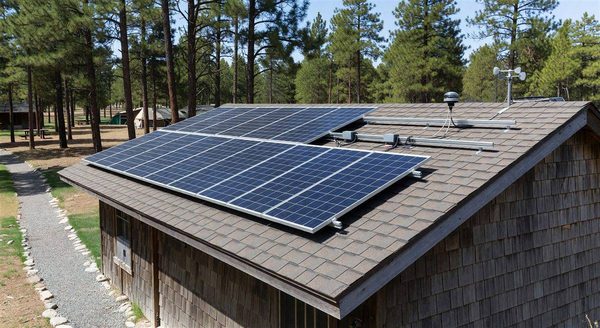
- Solar installation
- Battery storage for demand charge management
Water: Managing a Variable Cost
Water costs vary enormously by region — from nearly zero where groundwater is abundant and municipal rates are low to very high where water is scarce or where wastewater treatment costs are significant. Understanding your actual water cost, including sewer charges, determines how aggressively to pursue conservation.
Leak detection: A campground distribution system typically has thousands of feet of pipe, dozens of connections and valves, and site hookups that guests may leave open or damaged. Leaks are common and often go undetected for extended periods. Installing a water logger or pressure monitoring system that tracks flow continuously allows you to detect unusual nighttime flow (when no legitimate use should be occurring) as an indicator of leaks.
Fixture flow rates: Showerheads in campground bathhouses are often high-flow units that survived from an era when water conservation wasn’t a priority. Modern high-efficiency showerheads delivering 1.5 GPM vs. 2.5 GPM — while maintaining guest satisfaction — reduce water consumption by 40% per shower. Faucet aerators are even less expensive and similarly effective.
Irrigation scheduling: If your campground irrigates landscaping, smart irrigation controllers that adjust schedules based on actual weather and soil moisture conditions can reduce irrigation water use by 30–50% compared to fixed-schedule systems. This is particularly impactful in arid climates where irrigation represents a significant portion of total water consumption.
Guest billing: If electricity is billed separately but water is included in site rates, guests have no financial incentive to conserve water. Site-level water metering — increasingly available through smart pedestal systems — allows usage-based water billing that creates natural conservation incentives while recovering actual costs.
Gas and Propane: Targeting Water Heating
Natural gas and propane at campgrounds are primarily used for water heating (bathhouse and laundry) and cooking (camp store kitchen, if gas-fired). Water heating typically accounts for 70–85% of campground gas consumption.
Water heater efficiency: If your bathhouse water heaters are over 10 years old, they’re almost certainly less efficient than modern options. High-efficiency condensing water heaters achieve 95%+ efficiency vs. 60–75% for older standard units. The energy savings on water heating — often 25–35% reduction — can provide payback within 3–5 years.
Water heater sizing: Oversized water heaters have higher standby heat loss and may cycle on and off unnecessarily. Undersized heaters struggle to meet peak demand, leading operators to set temperatures higher than necessary to maintain an adequate hot water reserve. Properly sized equipment runs efficiently across the demand range.
Pipe insulation on hot water distribution: Uninsulated hot water pipes lose heat continuously. Insulating distribution lines from water heaters to fixtures reduces heat loss and decreases the time guests run water waiting for it to reach temperature — reducing both gas and water consumption.
Tracking Progress and Accountability
Utility cost reduction requires ongoing attention, not a one-time project. Building tracking into regular operations:
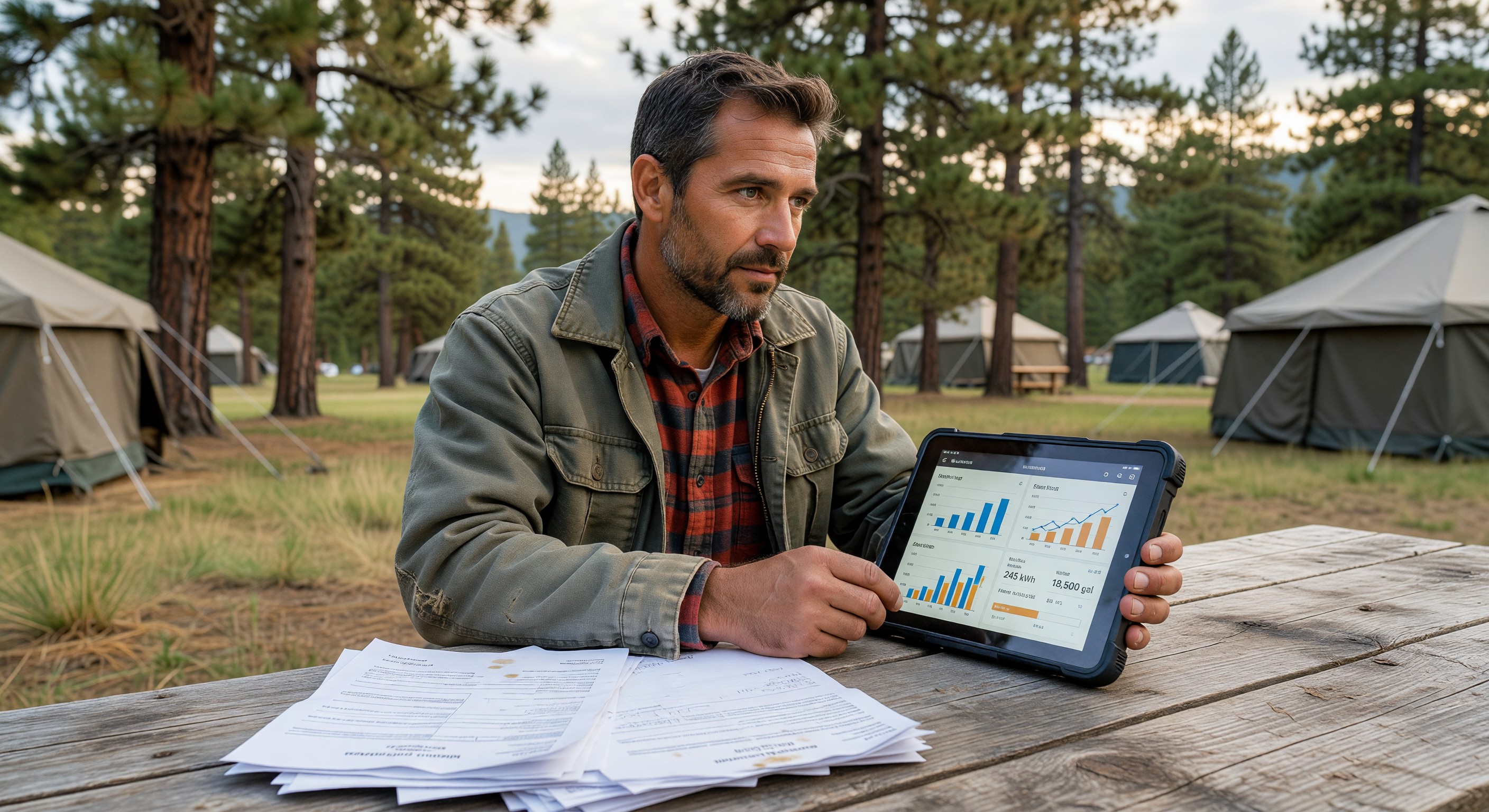
Monthly utility dashboard: A simple spreadsheet or dashboard showing current-month vs. prior-month vs. prior-year electricity, gas, and water costs (normalized by occupancy) gives operators an ongoing feedback loop. Unexplained increases become visible quickly.
Maintenance integration: Equipment efficiency degrades gradually over time — dirty HVAC filters reduce airflow and increase energy consumption; scale buildup in water heaters reduces heat transfer efficiency. Building efficiency checks into regular maintenance schedules prevents gradual degradation from going unnoticed.
Staff awareness: Kitchen and laundry staff make dozens of daily decisions that affect energy and water consumption. Brief training on efficient equipment operation, the importance of reporting drips and leaks, and the financial impact of utility costs creates shared accountability.
Frequently Asked Questions
What’s the single highest-ROI investment for most campgrounds? LED lighting conversion consistently delivers among the highest returns — high energy savings, immediate impact, minimal installation complexity, and long equipment life. If you haven’t already converted, it’s the place to start. After lighting, smart metering that enables site-level electricity billing often delivers the next highest return by recovering costs previously absorbed as overhead.
How quickly can utility costs be reduced without capital investment? Operational changes alone — schedule adjustments, HVAC setpoint optimization, leak detection and repair — can typically reduce utility costs by 10–20% within 60–90 days. These free or low-cost interventions create the baseline against which capital investments should be measured.
Should I focus on electricity or propane/gas cost reduction first? Focus on whichever has higher absolute cost and better reduction opportunities. At most campgrounds, electricity represents the larger spend and has more diverse reduction options. However, if you’re on propane (rather than natural gas) and paying high per-BTU costs, propane system efficiency can offer outsized returns.
Are utility rebates available for campground efficiency upgrades? Many electric utilities offer rebates for commercial customers on LED lighting, efficient HVAC, variable frequency drives, and smart controls. State energy efficiency programs and rural electric cooperatives often have additional programs. Research available incentives before finalizing any efficiency project — rebates can cover 20–40% of equipment cost in some jurisdictions, meaningfully improving payback timelines.
Further Reading from Authoritative Sources
- Department of Energy commercial energy efficiency resources — The Department of Energy’s Office of Energy Efficiency and Renewable Energy publishes guidance on commercial energy efficiency measures including LED lighting, motor controls, and demand management that directly support the recommendations in this article.
- EPA WaterSense water efficiency guidance for commercial facilities — The EPA’s WaterSense program certifies water-efficient fixtures and publishes commercial facility water reduction guidance, providing the performance standards and savings estimates cited for bathroom fixture upgrades in this article.