As electricity costs rise and campground operators increasingly install smart meters to track site-level consumption, the next challenge becomes translating meter readings into guest charges — accurately, efficiently, and without billing disputes. Utility billing software provides the infrastructure to automate this process, connecting meter data to your reservation system and generating charges that follow guests from their stay to their final invoice.
The market for campground utility billing software has matured significantly over the past five years, with dedicated solutions emerging alongside billing modules within broader property management systems. Understanding how these systems work and what to look for helps operators make good purchasing decisions.
How Utility Billing Integrations Work
The core workflow in campground utility billing involves three steps: reading meter data, associating consumption with reservations, and generating charges.
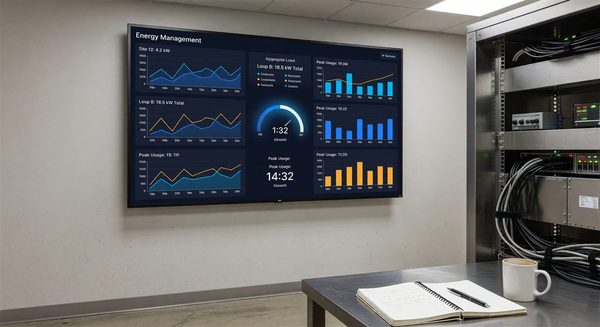
Meter data collection: Smart meters at each site transmit consumption data at regular intervals — typically every 15 minutes to hourly — to a central system via cellular, Wi-Fi, or power line communication. The billing software collects this data continuously, maintaining a running consumption total for each active site.
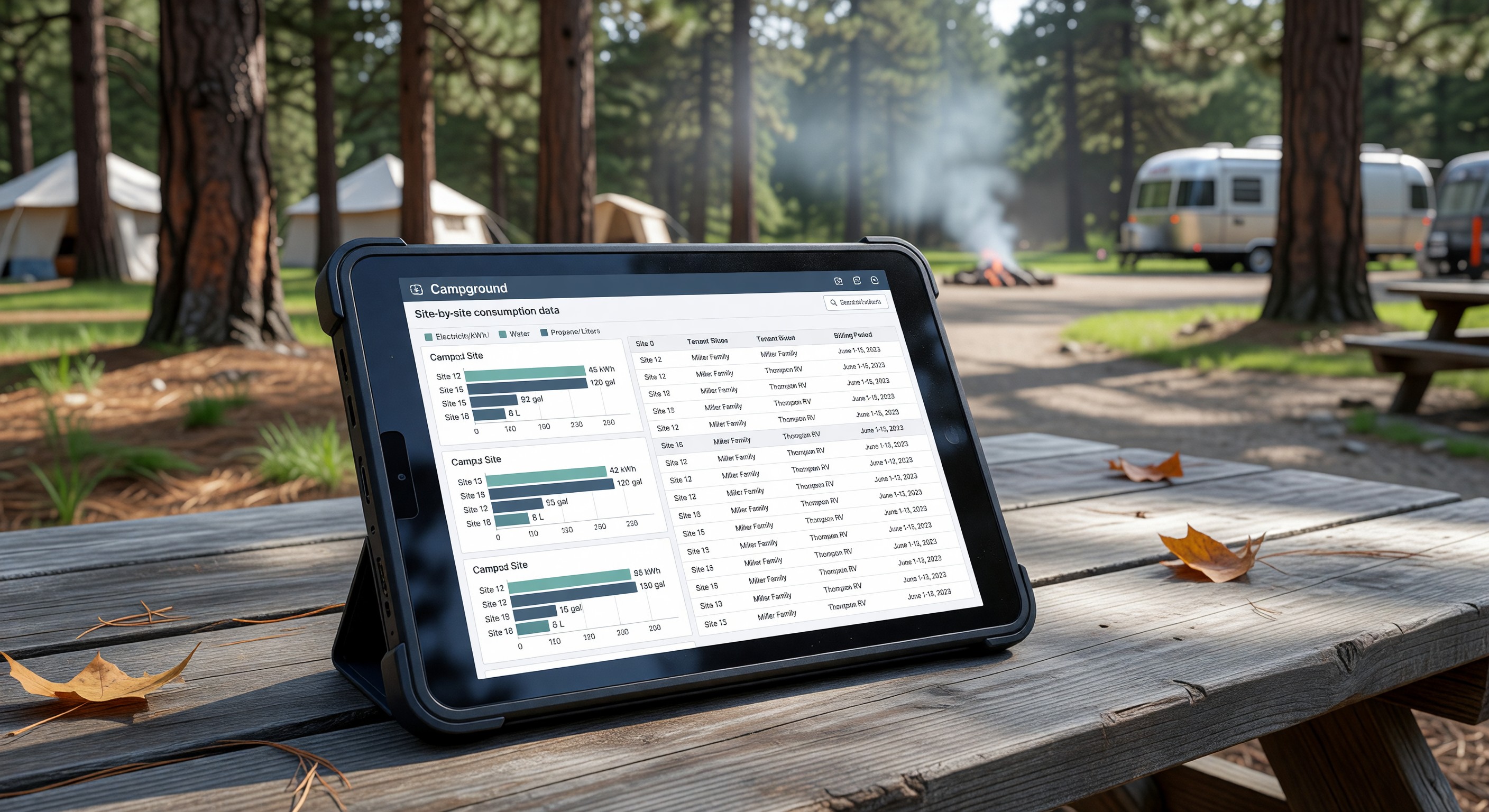
Reservation association: When a guest checks in to a site, the billing system records the check-in timestamp and associates subsequent meter readings with that reservation. When the guest checks out, the system calculates total consumption during the stay and generates a charge.
Charge generation: The consumption charge (consumption in kWh × rate per kWh, or consumption in gallons × rate per gallon) is calculated and either added to the reservation balance for collection at checkout or billed separately through a payment processor.
The quality of the integration between meter data and reservation system determines whether this process is nearly automatic or requires significant manual reconciliation.
Integration with Reservation Management Systems
The most seamless utility billing implementations integrate directly with your campground’s reservation management system (RMS). In these setups:
- Guest check-in and check-out events in the RMS automatically trigger consumption tracking start and stop in the billing system
- Charges are automatically posted to the guest folio in the RMS
- Receipts include itemized utility charges alongside site fees
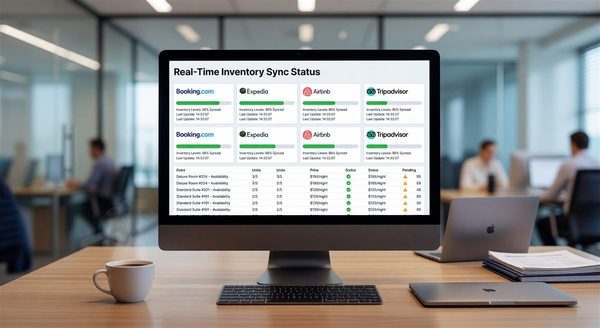
The level of integration available depends on which RMS and which meter system you’re using. Some campground RMS platforms have built utility billing directly into their core product; others offer integrations with specific meter hardware vendors; still others require custom integration work.
When evaluating utility billing implementations, ask specifically:
- Does the billing system integrate with my current RMS? Which specific version?
- Are charges automatically posted to guest folios, or do I need to manually enter them?
- How are reservation modifications (early departures, extended stays, site changes) handled?
- What happens if the meter loses connectivity during a stay?
Billing Models and Rate Configuration
Good utility billing software should support multiple billing models that operators can configure based on their business requirements:
Flat per-night utility fee: A fixed amount added to each reservation regardless of actual consumption. Simplest to implement and explain to guests, but doesn’t recover costs from high-consuming guests or create conservation incentives.
Per-unit metered billing: Consumption × rate per unit. Maximum fairness, maximum conservation incentive, maximum transparency. Requires clear communication to guests before they book.
Tiered pricing: Lower rate for initial consumption (e.g., first 10 kWh/night), higher rate for consumption above that threshold. Encourages conservation while not penalizing moderate users.
Included allowance with overage billing: A base electricity allowance included in the site rate, with overage billed at a per-kWh rate. Common compromise that reduces sticker shock while recovering costs from heavy consumers.
Time-of-use rates: Different rates based on time of day — lower rates overnight to encourage EV charging during off-peak hours. Requires meter data granular enough to separate time periods.
The software should allow rate schedules to be configured by site type (30-amp vs. 50-amp sites may have different rate structures) and by season.
Guest Communication and Transparency
Utility billing works best when guests understand what they’re being charged before they arrive, not when they see the charge at checkout.
Pre-arrival communication: Booking confirmations should clearly state that utilities are billed separately at $X per kWh (or whatever the structure is). This is the most important communication touchpoint — guests who expect utility charges aren’t surprised; guests who don’t expect them are frustrated even if the amounts are reasonable.
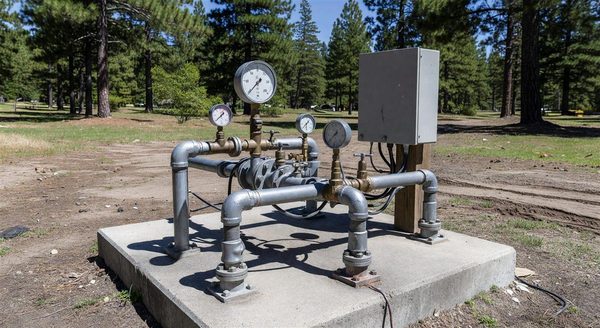
Site-level meter displays: Smart pedestals with guest-facing displays showing current consumption and cost make real-time usage visible to guests throughout their stay. This reduces checkout disputes dramatically — guests have been watching the meter all along.
Interim billing statements: For longer stays (weekly or monthly), providing interim statements so guests can see their cumulative charges and adjust behavior if they choose reduces the potential for large unexpected charges at checkout.
Clear receipts: Checkout receipts should itemize utility charges separately from site fees, showing consumption (in kWh or gallons) and the rate applied. This transparency is both legally appropriate and practically important for dispute resolution.
Handling Disputes and Exceptions
Even well-designed billing systems generate occasional disputes. Software should support the workflows needed to investigate and resolve them:
Access to raw meter data: The ability to pull interval-level consumption data for any site during any period allows operators to verify what the meter actually recorded during a disputed stay. If a guest claims they weren’t running their air conditioner but the meter shows 40 kWh consumption in 24 hours, the data tells the story.
Override and adjustment capability: Authorized staff should be able to manually adjust charges when investigation reveals a billing error — a meter malfunction, a site that was double-occupied due to a system error, or a situation where full charges aren’t appropriate.
Manual meter reading fallback: When a meter loses connectivity, the system needs a defined process for estimating consumption or taking a manual reading at check-in and checkout. Software that handles meter outages gracefully prevents disputes from multiplying when there’s a connectivity issue.
Reporting and Analytics
Beyond transaction processing, utility billing software should generate useful operational reports:
Revenue reporting: Total utility billing revenue by period, by site type, by billing model. This data flows into revenue recognition accounting.
Consumption analysis: Average consumption by site type, day of week, season, and occupancy pattern. Useful for pricing decisions and infrastructure planning.
High-consumption alerts: Automated alerts when a site’s consumption exceeds a threshold — useful for identifying potential meter malfunctions and for contacting guests whose consumption patterns might indicate a problem with their RV’s electrical system.
Variance reporting: Comparing total metered site consumption against the utility’s billing for the campground as a whole reveals losses — from distribution system leaks, unmetered common area loads, or meter accuracy issues.
Frequently Asked Questions
Can I implement utility billing software if I have older non-smart meters? Some utility billing software supports manual meter reading entry — operators or guests read meters at check-in and checkout, and the software calculates consumption and generates the charge. This approach loses the automation benefit but provides billing structure and documentation even without smart meter hardware.
How do I handle sites that have both 30-amp and 50-amp hookups? Most smart metering systems can meter each outlet separately if wired that way, or meter total site consumption. If a site has both outlet types and a guest uses both simultaneously, total site metering is simpler to implement and explain to guests.
What’s the typical time investment to implement utility billing? For a campground with existing smart meter hardware and a reservation system with a native utility billing integration, setup can be completed in a few days of configuration and testing. More complex implementations — custom integrations, multiple site types with different rate structures, older meter hardware — can take 2–4 weeks. Plan for a test period before going live with guest billing.
Should utility billing rates cover the full electricity cost or include a margin? Most operators aim to recover actual utility costs from site-level billing rather than profit from it — setting rates to cover the average per-kWh cost from the utility bill (including all charges, not just the energy rate). Some operations add a small administrative margin (10–15%) to cover billing software costs and meter maintenance. Setting rates at or near cost positions the billing as cost recovery rather than a revenue center, which is easier to communicate to guests.
Further Reading from Authoritative Sources
- ARVC campground utility billing standards and submetering implementation resources — ARVC’s utility management resources cover utility billing implementation, submetering compliance, and the financial analysis of metered versus flat-rate billing for campground operators.
- U.S. Department of Energy commercial submetering standards and electricity billing resources — The Department of Energy’s resources on commercial electricity submetering provide the technical and regulatory framework for campground utility billing implementations.