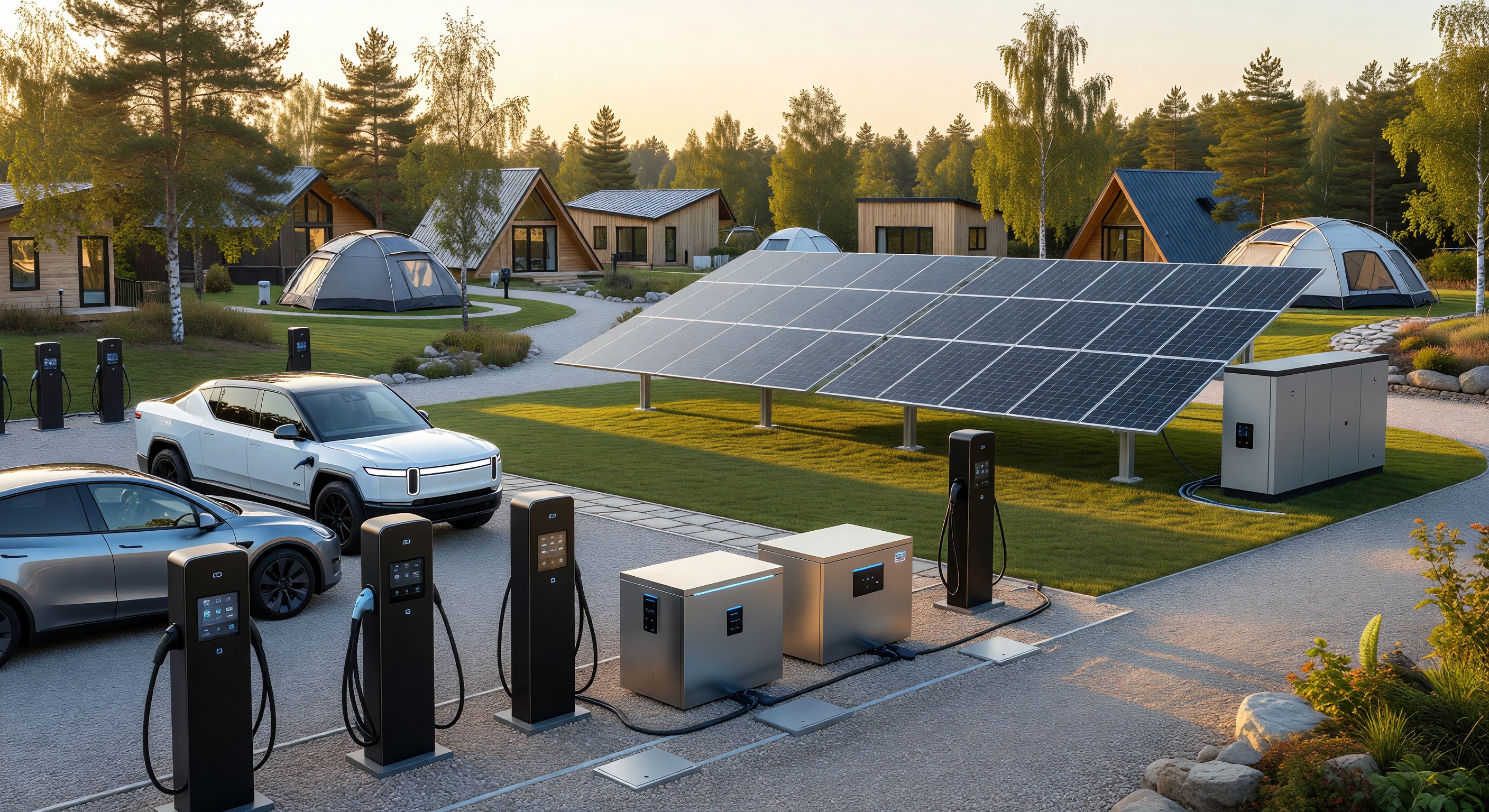
The campground utility landscape looks significantly different in 2026 than it did five years ago. What began as scattered green initiatives — a solar panel here, a rain barrel there — has evolved into a more integrated approach to sustainable utility management. Operators are combining energy generation, storage, EV charging, smart metering, and water conservation into coherent systems that reduce costs, meet guest expectations, and support genuine environmental goals.
This article examines where sustainable utility practices stand in 2026 and what operators can realistically implement over the next two to three years.
Integrated Energy Systems Are Becoming Standard
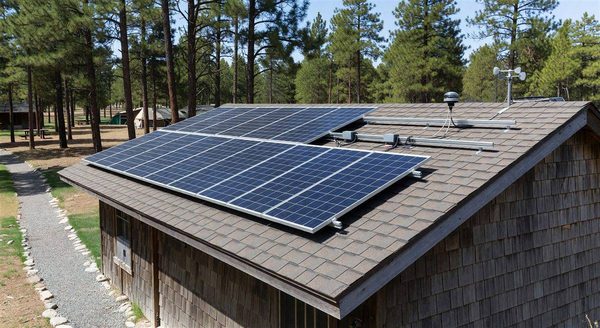
The phrase “solar-plus-storage” has become almost redundant — most new campground solar installations in 2026 are being designed with battery storage from the outset rather than as an afterthought. The reason is economic: solar-only installations export excess midday production to the grid at rates that are rarely as favorable as self-consumption. Storage captures that production for use when the sun isn’t shining, improving the financial return and increasing the percentage of consumption covered by renewable energy.
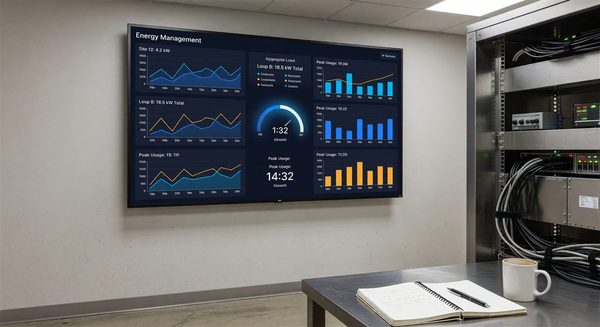
The next evolution — solar-plus-storage-plus-demand-management — integrates these components with intelligent control platforms that optimize dispatch based on utility rate structures, weather forecasts, and real-time consumption patterns. Battery systems that charged from solar yesterday can be discharged strategically tomorrow to avoid peak demand charges.
For campground operators evaluating their energy infrastructure, the integrated approach isn’t necessarily more expensive than piecemeal additions — and the control platform unlocks value from each component that would be inaccessible if the systems operated independently.
EV Infrastructure Has Moved Past the Early Adopter Phase
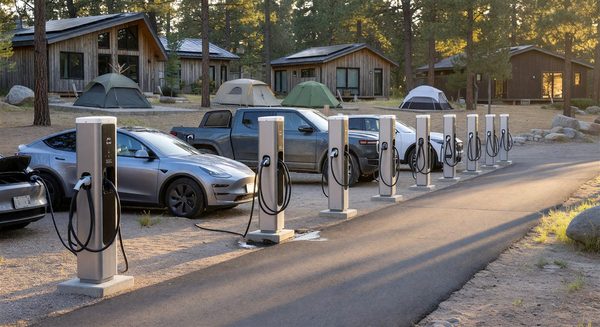
In 2020, EV charging at campgrounds was a niche amenity. In 2026, it’s approaching table stakes for a significant portion of the market. The number of electric and plug-in hybrid vehicles on North American roads has grown substantially, and a meaningful percentage of those vehicle owners camp — sometimes in their electric vehicle, sometimes towing a camper or trailer.
Several trends are shaping the current state:
NACS adoption is accelerating: The North American Charging Standard (originally Tesla’s proprietary connector) has been adopted by most major automakers and the Society of Automotive Engineers. New EV charging installations in 2026 increasingly specify NACS or dual-protocol (NACS + J1772/CCS) equipment. Campgrounds that installed J1772-only equipment in earlier years are managing the transition through adapters.
Electric tow vehicles and RVs are becoming real: The RV industry’s transition to electrification is happening slower than the passenger vehicle segment, but Class A and B electric RVs are available in 2026 with more models announced. These vehicles bring significantly higher electrical demand — some Class A electric motorhomes have battery systems over 300 kWh and can charge at rates exceeding 50 kW. Campgrounds planning for 5-10 year infrastructure lifespans need to account for this higher-demand future.
Managed charging is essential infrastructure: Campgrounds that installed EV charging without load management software are finding that peak charging demand creates utility cost spikes. Managed charging — which coordinates charge rates across all vehicles to stay within electrical infrastructure limits and avoid demand charge events — is now considered a standard component of campground EV infrastructure rather than an optional add-on.
Water Conservation Technology Has Improved
Water scarcity concerns in many regions have accelerated both regulatory pressure and guest expectations around water conservation. Campground operators in drought-affected areas are facing water restrictions and higher water costs simultaneously, creating strong incentives for investment in conservation technology.
Smart irrigation: Soil moisture sensors and weather-adaptive irrigation controllers are now widely affordable and are reducing campground irrigation water use by 30–50% compared to fixed-schedule systems. These systems prevent watering when the soil is already saturated or when rain is forecast — obvious waste that simple timer-based systems can’t avoid.
Low-flow fixture standards: Modern campground bathhouses being built or renovated in 2026 specify ultra-low-flow showerheads (1.5 GPM or less), sensor-operated faucets, and dual-flush or composting toilets in appropriate applications. These fixtures maintain guest comfort while substantially reducing per-shower water consumption.
Rainwater harvesting: For irrigation and non-potable uses, rainwater harvesting systems — collection from roof areas into storage cisterns — are appearing at more campgrounds, particularly in regions where the cost of water makes them economically viable. Regulatory requirements vary significantly by state and locality; compliance verification is essential before installation.
Gray water systems: In some jurisdictions, campground shower and sink gray water can be treated and reused for irrigation rather than sent directly to the sewer or septic system. These systems are complex and require regulatory approval but can significantly reduce both water consumption and wastewater treatment costs in appropriate applications.
Carbon Reporting and Green Certification
Environmental reporting requirements are expanding. While mandatory carbon reporting is currently focused on larger businesses, voluntary reporting and third-party certification are increasingly important for eco-conscious campground operators seeking to document and market their sustainability commitments.
What operators are tracking in 2026:
- Electricity consumption and source (grid mix, renewable certificates, on-site generation)
- Natural gas and propane consumption converted to CO2-equivalent
- Water consumption
- Waste diversion rates (recycling, composting)
- Transportation-related emissions from guest travel (typically reported as an awareness metric rather than an operator responsibility)
Certification programs: Several campground certification programs now include specific utility criteria — minimum energy efficiency standards, renewable energy requirements, water conservation practices, and waste management requirements. Operators pursuing these certifications benefit from having energy management platforms and smart metering in place before attempting certification, as the documentation burden is significant without automated data collection.
The Economics of Sustainability in 2026
A recurring misconception has been that sustainability costs money. The experience of operators who have implemented integrated utility management over the past five years is increasingly demonstrating that sustainability investments pay back through lower operating costs.
- Solar with battery storage: 5–10 year simple payback for most campground applications, with systems operating for 25+ years
- LED lighting conversion: 1–3 year payback, complete in most campgrounds
- Smart metering with utility billing: Revenue-positive from day one in most implementations
- Managed EV charging: Demand charge savings often offset equipment costs within 3–5 years
- HVAC controls and optimization: 3–7 year payback, improving equipment life and reducing maintenance costs
The direction of travel is clear: campground utility infrastructure that was considered advanced in 2020 is becoming standard in 2026, and what’s considered advanced today will be standard by 2030.
Frequently Asked Questions
What’s the single most impactful utility sustainability investment for a campground that hasn’t started yet? For most campgrounds, smart metering with site-level electricity billing delivers the most immediate and significant impact — it recovers utility costs that were previously absorbed as overhead while creating guest-facing conservation incentives. The second priority depends on your cost structure: solar if your electricity rates are high and you have suitable space, or LED lighting if you haven’t already completed that conversion.
Are there grants or subsidies available for sustainable utility investments at campgrounds? Federal programs (IRA energy credits, REAP rural energy grants), state utility rebates, and utility company incentive programs collectively offer meaningful financial support for efficiency and renewable energy investments. The landscape changes frequently and varies by location; consult with an energy advisor familiar with your region to identify current programs before finalizing investment plans.
How do I communicate our sustainability credentials to guests? Specificity matters more than general claims. “Powered by on-site solar generating 120,000 kWh annually” is more credible than “we’re eco-friendly.” Real-time displays showing current solar generation, cumulative carbon avoided, and water conservation metrics engage guests and tell a compelling story. Third-party certifications add credibility for guests who value that verification.
Should I pursue net-zero utility operations as a goal? Net-zero utility operations — where a campground’s renewable energy generation offsets total energy consumption over a year — is achievable technically at many campgrounds but requires significant investment in solar and storage capacity. More practical near-term goals are 50–70% renewable energy offset and demonstrable year-over-year improvement in energy intensity per occupied site-night. Setting interim goals builds momentum toward longer-term aspirations without overpromising.
Further Reading from Authoritative Sources
- DOE energy efficiency programs, solar incentives, and commercial EV charging standards — The U.S.
- EPA green certification programs and environmental reporting standards for campgrounds — The EPA administers environmental certification and reporting frameworks that campground operators pursuing green certification or carbon reporting are using to document their utility sustainability progress to guests and regulators.