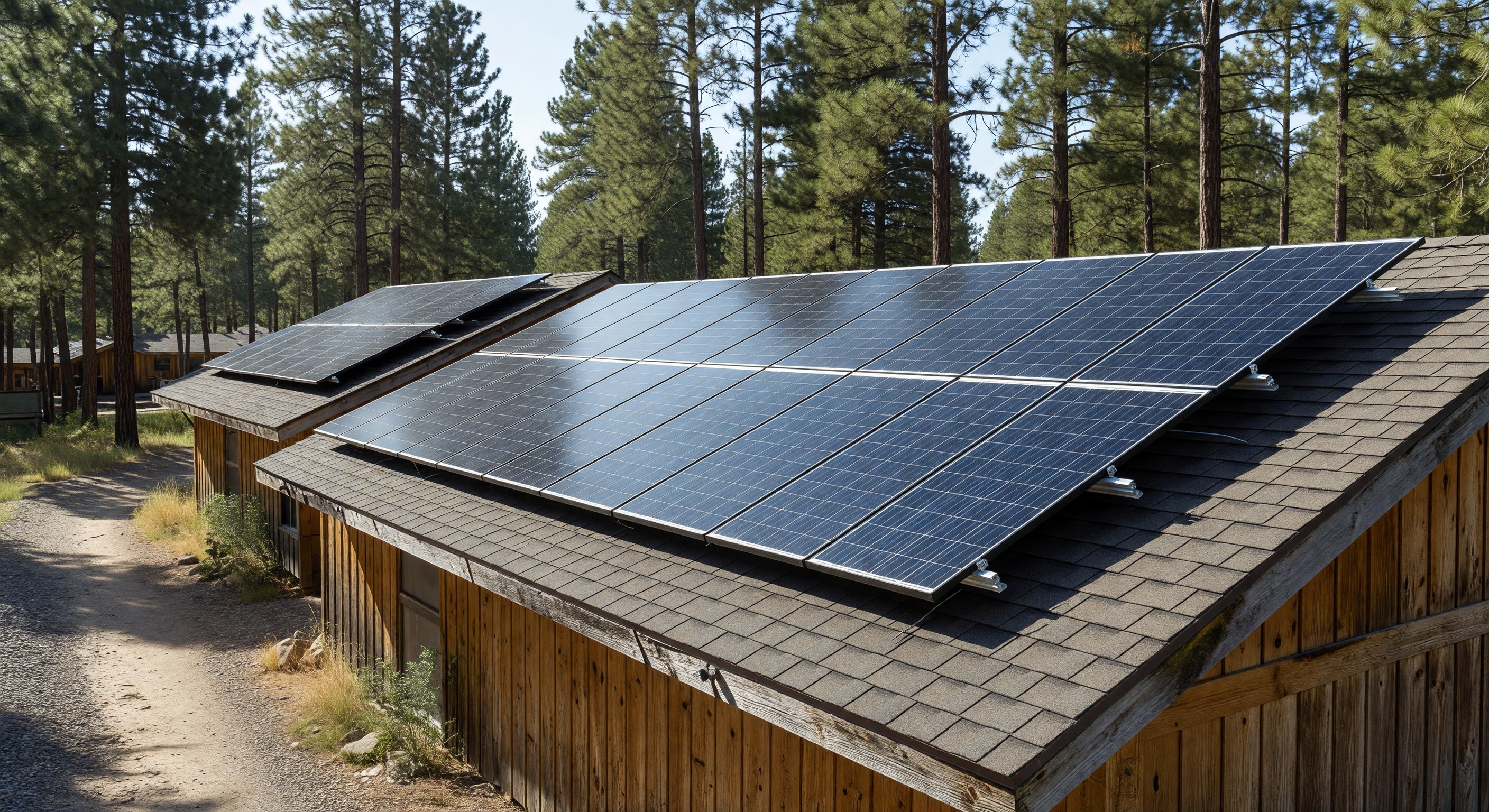
Solar energy adoption at campgrounds has accelerated significantly over the past five years, driven by declining panel costs, improving battery storage economics, and the availability of federal and state incentives. For campgrounds with high electricity consumption and good solar exposure, the financial case for solar installation is often compelling.
This comprehensive guide covers the technology fundamentals, installation considerations, financial analysis, and operational implications of campground solar.
How Solar Photovoltaic Systems Work
A solar PV system converts sunlight directly into electricity through photovoltaic cells in solar panels. The basic components:
Solar panels: Arrays of PV cells that generate DC electricity when exposed to sunlight. Panel capacity is rated in watts peak (Wp) — the output under standard test conditions. A typical commercial panel produces 350–550W.
Inverter(s): Convert the DC electricity from panels into AC electricity usable by your campground. String inverters handle output from multiple panels in series; microinverters are mounted on individual panels and convert at the panel level.
Mounting system: Structures that hold panels in the correct orientation. Rooftop mounts, ground mounts, and carport canopy mounts are the main options.
Interconnection and metering: Connections to your existing electrical system and to the utility grid if you’re net metering.
Battery storage (optional): Battery systems (typically lithium iron phosphate chemistry) store excess solar generation for use at night or during cloudy periods.
Sizing a Campground Solar System
The right system size depends on:
Your electricity consumption: Pull 12 months of utility bills and calculate your average monthly consumption in kWh. Understanding seasonal variation is important — summer peaks may drive sizing decisions.
Your solar resource: Solar panel output depends on local sun hours (the equivalent hours per day of peak sunlight). Most of the continental US receives 4–6 peak sun hours per day on average.
Your available installation area: Rooftop capacity is limited by roof area and orientation. Ground-mounted systems are sized more flexibly but require land area.
Your financial objectives: Are you trying to cover all your consumption (100% offset), reduce bills by a fixed amount, or maximize the financial return on the investment?
A simple rule of thumb: 1 kW of solar capacity produces approximately 1,200–1,600 kWh per year in most US locations. If your campground uses 150,000 kWh per year, a 100 kW system would cover roughly 80–100% of consumption.
Net Metering and Utility Interconnection
Net metering allows campgrounds to export excess solar generation to the utility grid and receive credit against consumption during non-generating periods (nights, cloudy days). The economics depend on:
Whether your state and utility offer net metering: Most US states have net metering policies, but terms vary significantly. Some utilities credit excess generation at retail rate; others at a lower “avoided cost” rate.
Your consumption timing vs. generation timing: Campgrounds that consume most electricity during daytime hours (pool pumps, HVAC, lights) benefit more from solar self-consumption and less from net metering than those with heavy evening demand.
Battery Storage Considerations
Battery storage significantly changes the economics and utility of solar at campgrounds:
Evening demand coverage: If you generate 500 kWh of solar during the day but your peak demand is in the evening, battery storage allows the daytime generation to offset evening consumption.
Backup power: Battery storage provides resilience during grid outages. Sized appropriately, a battery system can power critical campground loads (gate, lighting, refrigeration) through a multi-hour outage.
Demand charge reduction: Large campgrounds on commercial electricity rates with demand charges (a charge based on the highest 15-minute demand in the billing period) can use battery storage to “peak shave” — reducing demand spikes that drive high demand charges.
Cost: Battery storage adds significantly to system cost — $400–$800 per kWh of usable storage capacity. The economics are most favorable when the application includes demand charge reduction or backup power value alongside self-consumption benefits.
Financial Analysis
Federal Investment Tax Credit (ITC): The Inflation Reduction Act of 2022 restored the ITC to 30% for commercial solar installations through at least 2032. This is a tax credit (not a deduction) equal to 30% of the system cost, reducing federal tax liability dollar-for-dollar.
Depreciation: Solar systems qualify for MACRS (Modified Accelerated Cost Recovery System) depreciation — typically 5-year accelerated depreciation for solar assets, providing additional tax benefit.
State incentives: Many states offer additional rebates, tax credits, or property tax exemptions for solar installations. Check your state’s incentive programs.
Simple payback calculation: (System cost after incentives) ÷ (Annual electricity cost savings) = Simple payback period. For campgrounds in medium-sunlight markets with moderate electricity rates, payback periods of 5–10 years are common with 25–30 year panel lifespans.
Frequently Asked Questions
Do solar panels work on cloudy days? Yes, but at reduced output — typically 10–25% of full-sun capacity on overcast days. Solar systems are sized based on annual averages that account for cloudy periods, so seasonal variation in output is expected and factored into financial projections.
How long do solar panels last? Most commercial solar panels carry 25-year performance warranties guaranteeing at least 80% of rated output after 25 years. Actual lifespans typically exceed 30 years. Inverters have shorter lifespans (10–15 years) and should be budgeted for replacement.
What maintenance does a campground solar system require? Relatively little. Panels benefit from occasional cleaning (rain handles most of this naturally; manual cleaning may be needed in particularly dusty environments). Annual electrical inspection of connections and inverter performance monitoring are good practices.
Can I get solar without the upfront capital cost? Power Purchase Agreements (PPAs) and solar leases allow campgrounds to install solar with no upfront cost — a third party owns the system, and you agree to purchase the power at a defined rate for 15–25 years. This eliminates the capital barrier but reduces the financial upside. Solar loans are also widely available, spreading the investment over time.
Further Reading from Authoritative Sources
- Department of Energy solar energy resources and commercial installation guidance — The Department of Energy’s Office of Energy Efficiency and Renewable Energy publishes the definitive guidance on commercial solar incentives, system sizing tools, and installation best practices that campground operators use when planning solar projects.
- USDA Rural Energy for America Program solar grants and loan guarantees — The USDA administers the REAP program which is specifically available to rural campground operators and provides significant additional financial support for solar installations, making it an essential resource for the target audience of this article.