The humble power pedestal — that weathered metal box at each RV site with a 30-amp outlet and maybe a 50-amp outlet — has been a campground fixture for decades. For most of that history, it was entirely passive hardware: power in, power out, no visibility, no control, no billing capability.
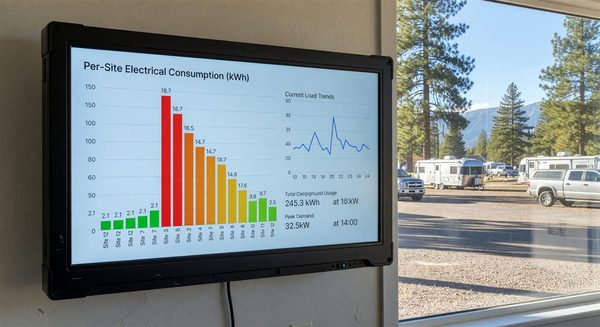
Smart pedestals change that dynamic. Modern units incorporate sub-metering, remote monitoring, load management, and sometimes water and sewer hookups — all connected to a central management platform that gives operators real-time visibility and billing capability across every site. Understanding what smart pedestals offer and what they require helps operators make informed upgrade decisions.
What Makes a Pedestal “Smart”
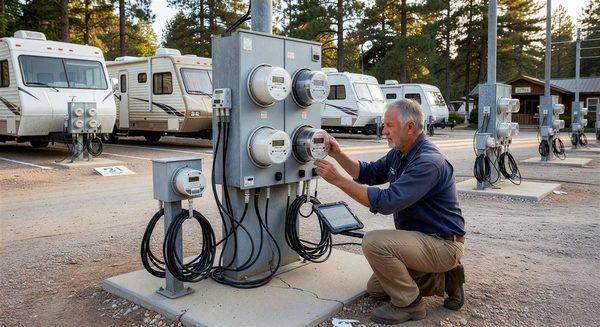
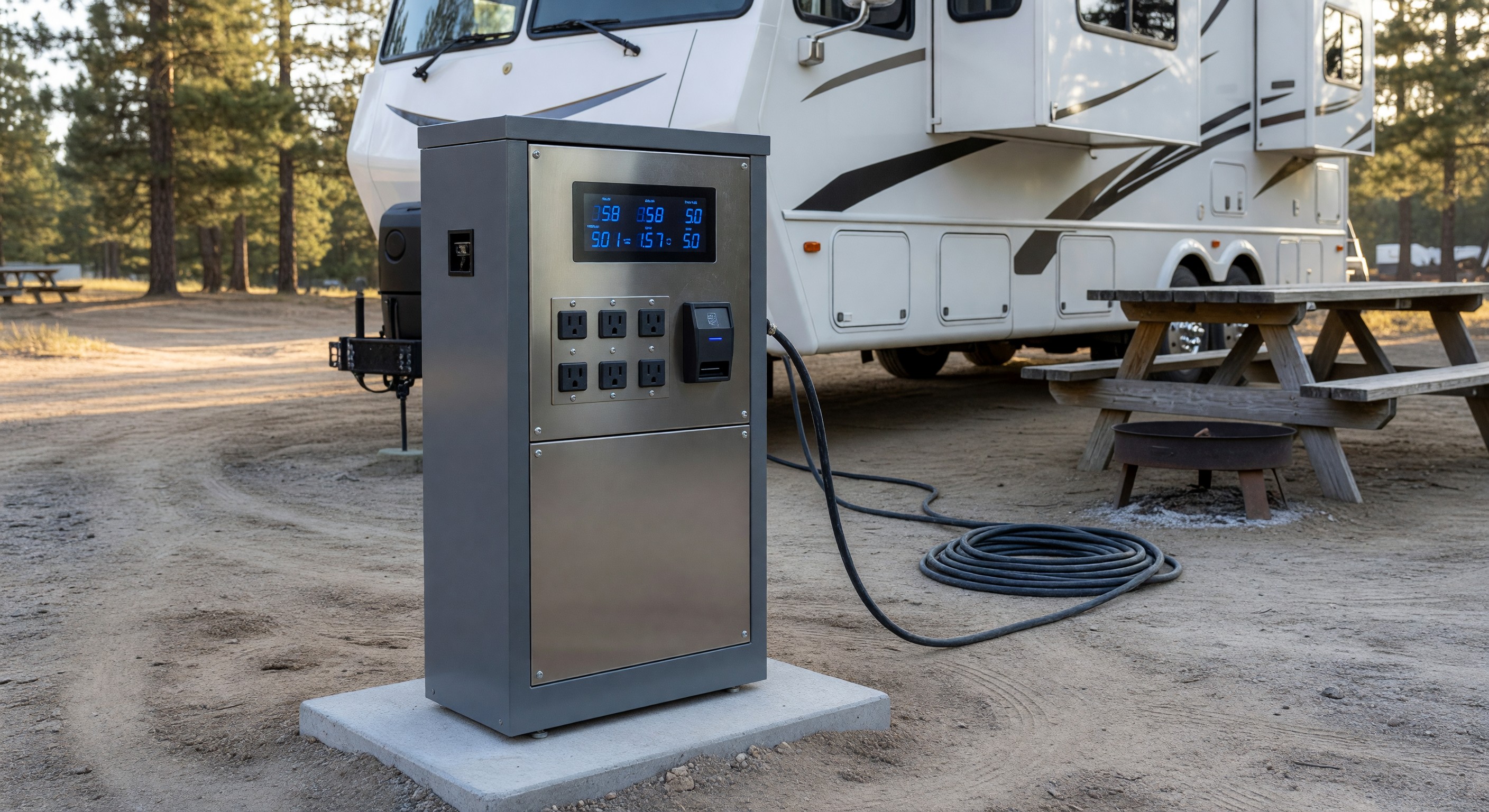
A smart pedestal is fundamentally a metered electrical connection point with network connectivity. The core components:
Revenue-grade electricity meter: Tracks consumption at each outlet (30-amp, 50-amp, and sometimes 20-amp receptacles) with accuracy sufficient for billing purposes — typically 0.5% or better. Some units meter each outlet independently; others meter total site consumption.
Network connectivity: Communication to a central management system via cellular, Wi-Fi, or power line communication (PLC). Enables remote monitoring, remote shutoff capability, and automated data collection.
Display (optional): Some pedestals include a small display showing current consumption, total usage, or remaining included power allocation. Guest-facing displays can reduce billing disputes by giving guests direct visibility into their usage.
Remote disconnect: The ability to remotely disable power to a site — useful for automated checkout processes, non-payment situations, and safety incidents.
Some advanced smart pedestal systems also monitor outlet voltage and current for early warning of wiring problems, detect ground faults, and log power quality data that can help diagnose RV electrical compatibility issues.
Electrical Billing Models Enabled by Smart Pedestals
The core financial case for smart pedestal investment is the shift from flat-rate or included power to consumption-based billing. The right billing model depends on your property’s competitive positioning and guest expectations.
Per-kWh metered billing: Guests pay for exactly what they consume at a rate you set. Maximum fairness, maximum transparency, and direct financial incentive for guests to conserve. Works well at destination campgrounds where guests expect to pay for amenities consumed. Requires clear communication at booking and check-in.
Included allowance with overage charges: Each reservation includes a power allowance (common ranges: 50–150 kWh per night) with overage billed per-kWh beyond that threshold. This model reduces sticker shock from the first per-kWh bill while still recovering costs from high consumers — particularly those running multiple air conditioners or using electric resistance heating.
Prepaid power cards: Guests purchase power credit at check-in. The pedestal cuts power when the credit is exhausted and requires the guest to purchase additional credit to continue. Common at transient parks with shorter average stays.
Flat site rate with monitoring: Some operators deploy smart pedestals for operational visibility without direct guest billing, using the consumption data for budgeting and to inform future pricing decisions. This approach provides a transition period before implementing guest billing.
Water and Sewer Integration
Many smart pedestal manufacturers offer water metering as a companion to electrical metering. Smart water modules connect to the campground’s water supply lines at each site and track water consumption per site per stay.
Water metering adds a second utility to consumption-based billing. Water costs at campgrounds vary widely — from negligible where municipal supply is cheap and abundant to significant where water must be hauled or where wastewater treatment costs are high. For properties where water is a meaningful cost, metered billing or at minimum operational monitoring of water consumption is increasingly common.
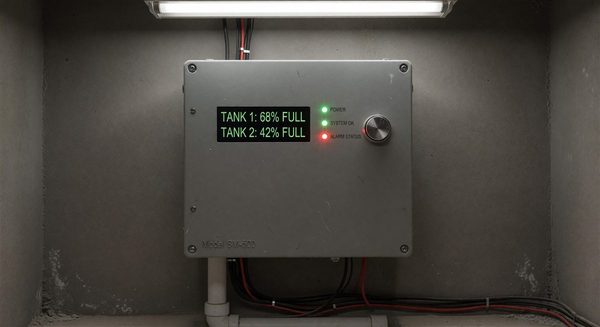
Sewer connection monitoring is less common than water metering but available on some systems. Sensors that detect whether sewer connections are actively in use — and in some cases flow monitoring — help operators understand sewer system loading and can support billing for sewer hookup as a separate amenity line item.
Load Management and Demand Control
Smart pedestals with remote control capability enable load management across the RV site inventory. This is particularly valuable as EV adoption increases the electrical demand associated with campground stays.
Circuit-level load limiting: Smart systems can cap the maximum amperage delivered to individual sites or to groups of sites. If your electrical infrastructure supports a maximum of 600 amps across a section of your park, the management system can ensure that collective site consumption stays within that limit by dynamically adjusting individual site limits.
Demand event response: When monitoring detects that the campground’s overall demand is approaching a threshold that would trigger a higher demand charge, the system can automatically reduce EV charging rates or send guest notifications requesting reduced consumption. This demand management capability directly reduces electricity costs.
EVSE integration: Electric vehicle charging equipment installed at or near RV sites can integrate with smart pedestal management systems, allowing coordinated control of both RV electrical loads and EV charging to stay within infrastructure limits.
Installation Considerations
Replacing existing pedestals with smart units is a significant infrastructure project. Key considerations:
Electrical infrastructure assessment: Smart pedestals are only as capable as the electrical infrastructure they’re connected to. Before investing in site-level metering, ensure your distribution panels, feeders, and main service are adequate for current and anticipated future load. An electrical engineer’s assessment is money well spent.
Communication infrastructure: Cellular-connected pedestals require adequate cellular signal at each site — potentially problematic in remote campgrounds or in valleys with poor signal. Wi-Fi-connected systems require robust outdoor access points covering all sites. Power line communication systems avoid the wireless coverage challenge but have their own limitations in noisy electrical environments.
Integration with reservation software: Smart pedestal systems need to connect with your reservation management platform to associate site consumption with specific reservations and guest accounts. Confirm integration compatibility before selecting hardware.
Replacement timeline and disruption: Replacing pedestals requires temporarily taking sites offline. A phased approach — converting one loop or section at a time — minimizes revenue impact. Plan for late season or shoulder season replacement when occupancy is lower.
ROI Framework
The payback on smart pedestal investment comes from multiple directions:
- Direct recovery of electricity costs from guest billing
- Demand charge reduction through load management
- Reduced staff time on utility management and billing
- Reduced billing disputes through transparent metering
- Improved ability to attract EV-driving guests with reliable charging infrastructure
For a 100-site campground where electricity previously wasn’t billed and average consumption is 8 kWh/site/night at 70% occupancy, metered billing at $0.20/kWh could recover approximately $40,000 per year in previously unrecovered electricity costs. Against a smart pedestal system cost of $150,000–$250,000 installed, that’s a 4–6 year simple payback — before accounting for demand management savings or reduced staff overhead.
Frequently Asked Questions
Do guests react negatively to metered electricity billing? Reactions vary based on how billing is communicated. Guests who are informed at booking that electricity is billed by consumption accept it much more readily than those who encounter it as a surprise at checkout. Clear explanation of rates, transparent site-level meter display, and billing that reflects actual costs rather than profit margin on electricity are keys to acceptance.
What’s the lifespan of smart pedestal hardware? Quality commercial pedestals — smart or otherwise — have a design life of 15–25 years in outdoor campground environments. The electrical hardware is durable; the electronics that make pedestals “smart” may need more frequent firmware updates and have a shorter cycle. Look for manufacturers with a clear software support commitment and the ability to upgrade electronics without replacing the entire pedestal.
Can I retrofit existing pedestals rather than replacing them? Some manufacturers offer retrofit metering solutions that add sub-metering capability to existing pedestals. These are generally less capable than purpose-built smart pedestals but cost significantly less and can be installed without taking sites offline for pedestal replacement. Retrofit metering is a reasonable interim approach for operations that want monitoring capability before committing to full replacement.
How are smart pedestal systems priced? Hardware cost per site typically ranges from $800–$2,500 depending on the capabilities included (metering only vs. metering plus management plus water). Software subscription fees typically run $5–$20 per site per month. Installation cost depends heavily on the condition of existing electrical infrastructure and how much trenching or panel work is required.
Further Reading from Authoritative Sources
- ARVC campground smart metering standards and utility billing implementation resources — ARVC’s utility management and technology resources for campground operators cover smart metering adoption, utility billing implementation, and the financial analysis of metered versus flat-rate electricity billing.
- U.S. Department of Energy smart metering technology and commercial electricity management resources — The Department of Energy’s resources on smart metering technology and commercial electricity management provide the technical framework for the metering capabilities described in this article.