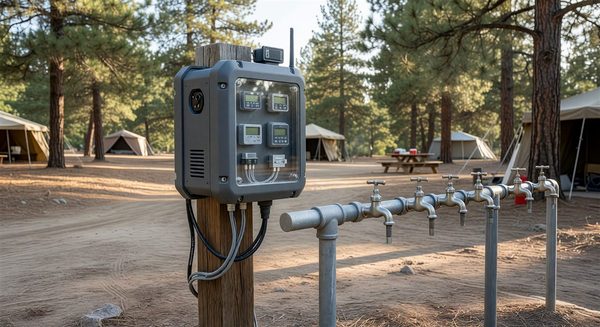
Campground septic and sewer systems handle significantly higher loads during peak season than most residential or even commercial systems. A campground with 100 occupied sites generates wastewater from 200–400 people simultaneously — a load that, if concentrated over a few months of the year, stresses even well-maintained systems.
When a septic system fails at a campground, the consequences are severe: regulatory shutdown orders, expensive emergency pumping, potential environmental contamination, and the reputational damage of guests witnessing a sewage backup. Preventive monitoring is far less expensive than emergency response.
How Campground Septic Systems Work
Most rural campgrounds use one of these wastewater management approaches:
Conventional septic system: Wastewater flows from the campground’s plumbing into a septic tank where solids settle and liquids flow to a drain field for soil absorption. Requires adequate soil absorption capacity and regular tank pumping.
Holding tanks with pump-out service: Some campgrounds (particularly those on less permeable soils) use holding tanks that accumulate all wastewater. A septic pump truck empties the tanks periodically. Higher operating cost but simple to manage.
Municipal sewer connection: Parks near municipalities may connect to the public sewer system. Simplest from an operator perspective; eliminates most on-site wastewater management responsibilities.
Advanced wastewater treatment systems: Aerobic treatment units, constructed wetlands, and other alternative systems are used where conventional septic drain fields aren’t viable. These have more sophisticated monitoring requirements.
What Can Go Wrong and When
Septic tank solids buildup: If tanks aren’t pumped frequently enough, solids accumulate and eventually carry over to the drain field. Drain field clogging is expensive to remediate and can lead to complete system failure.
Drain field saturation: Heavy use periods, wet weather, or system undersizing can saturate the drain field faster than it can absorb, leading to surface breakout.
Lift station pump failure: Parks with wastewater lift stations (pump stations that move wastewater uphill or over distance) face significant risk if the pump fails — wastewater backs up rapidly in the collection system.
RV dump station overflow: Improperly maintained RV dump stations can overflow, creating a health hazard and environmental risk.
Monitoring Technology for Septic Systems
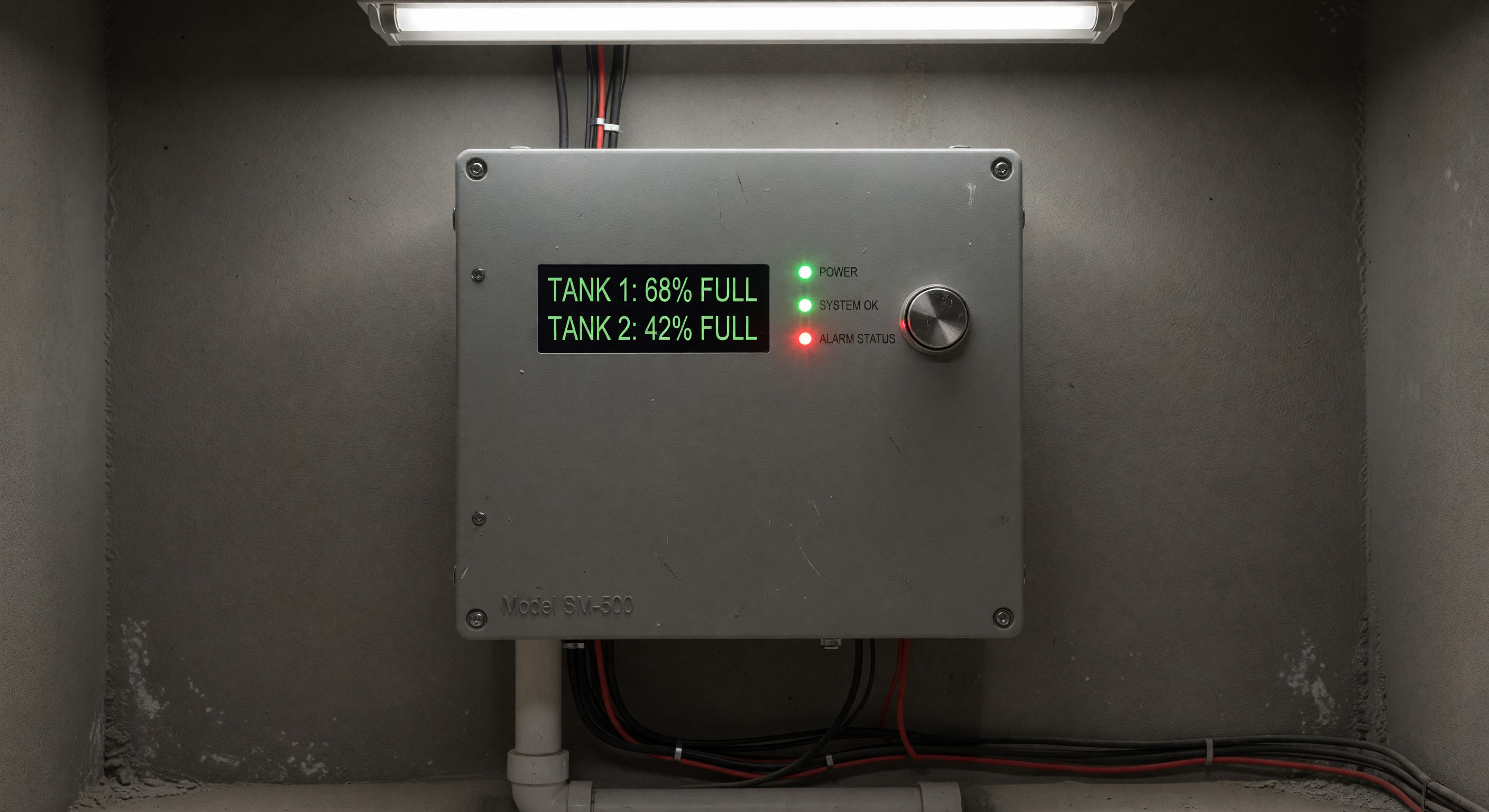
Tank level sensors: Ultrasonic or pressure-based sensors that continuously measure the liquid level in septic tanks. When the level approaches a threshold, an alert triggers — pump before a crisis, not after.
Lift station alarms: Float-switch-based alarms at lift stations alert operators when the liquid level exceeds normal operating range. This is a basic but critical monitoring tool — lift station failures that go undetected quickly become serious.
Connected alarm systems: Traditional lift station alarms beep locally; connected alarm systems send an SMS or email alert to staff immediately. For a lift station at a remote corner of your property, a local alarm you can’t hear is of limited value.
Flow monitoring: Measuring total wastewater flow through the system over time gives you data on system loading. Unusual flow events (a very high flow rate that doesn’t correspond to expected occupancy) can indicate a broken pipe allowing groundwater infiltration.
Remote access for pumping service: Coordinating with your septic pumping service is more efficient when you can provide current tank levels from a monitoring dashboard rather than requiring a physical visit to assess.
Preventive Maintenance Schedule
Monthly: Check lift station operation and panel for alarm conditions. Inspect accessible drain field areas for signs of surfacing.
Before peak season: Pump septic tanks if within 6 months of last pumping; inspect inlet and outlet baffles; verify all monitoring systems are operational.
Annually: Full inspection by a licensed septic professional. Drain field inspection with probe testing. Documentation for regulatory compliance.
After peak season: Pump any tanks approaching capacity; inspect for damage from high-season loading.
Frequently Asked Questions
How often should campground septic tanks be pumped? Most campground septic systems require more frequent pumping than residential systems due to higher loads. Annual pumping at minimum for heavily used systems; bi-annual or quarterly for very high-use systems is not uncommon. The specific schedule should be determined by your licensed septic professional based on your tank size and occupancy patterns.
What do I do if the drain field shows signs of failure? Stop adding load to the failing drain field immediately if possible. Contact a licensed septic professional for evaluation. Options include rest and recovery (reducing use of the system), drain field repair or replacement, adding parallel drain field capacity, or upgrading to a different treatment system. Costs vary widely based on your soil, regulatory requirements, and system size.
Is there a regulatory requirement to monitor campground septic systems? Requirements vary significantly by state and locality. Many states require annual inspection of campground sewage systems; some require licensed professional oversight. Contact your state health department or environmental quality agency for specific requirements.
Can IoT sensors be added to existing septic systems? Yes, for most tank types. Ultrasonic level sensors mount on the access cover of the septic tank and can be installed without opening the tank. Wireless transmitters connect the sensor to a cloud monitoring platform. Installation is typically a 1–2 hour process per tank.
Further Reading from Authoritative Sources
- EPA septic system regulation and wastewater management guidance — The EPA regulates wastewater discharge and septic system performance standards for public facilities through its Clean Water Act programs and publishes guidance on septic system management and monitoring requirements that campground operators must comply with.
- ARVC campground wastewater and dump station management guidance — ARVC provides operational guidance for campground dump station management and wastewater system operation, making it the most directly relevant trade authority for the septic capacity and dump station management topics in this article.