Installing solar panels or other renewable energy systems is one decision. Getting the most value from them is an ongoing operational practice. Many campground operators who invest in renewables find that the initial installation is followed by years of suboptimal performance — not because the equipment isn’t working, but because the operational and management practices needed to maximize return on the investment weren’t put in place.
Renewable energy optimization at campgrounds involves understanding what your systems are producing, how that production relates to your consumption patterns, and what operational and technological changes can maximize the percentage of your energy that comes from renewable sources.
Measuring What You Have
The foundation of optimization is measurement. If you don’t know how much your solar array is producing hour by hour, you can’t make informed decisions about load scheduling, battery dispatch, or the timing of energy-intensive activities.
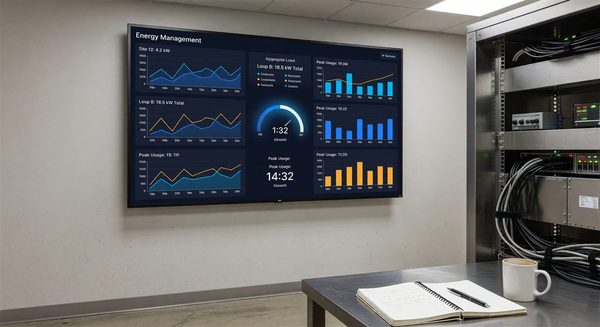
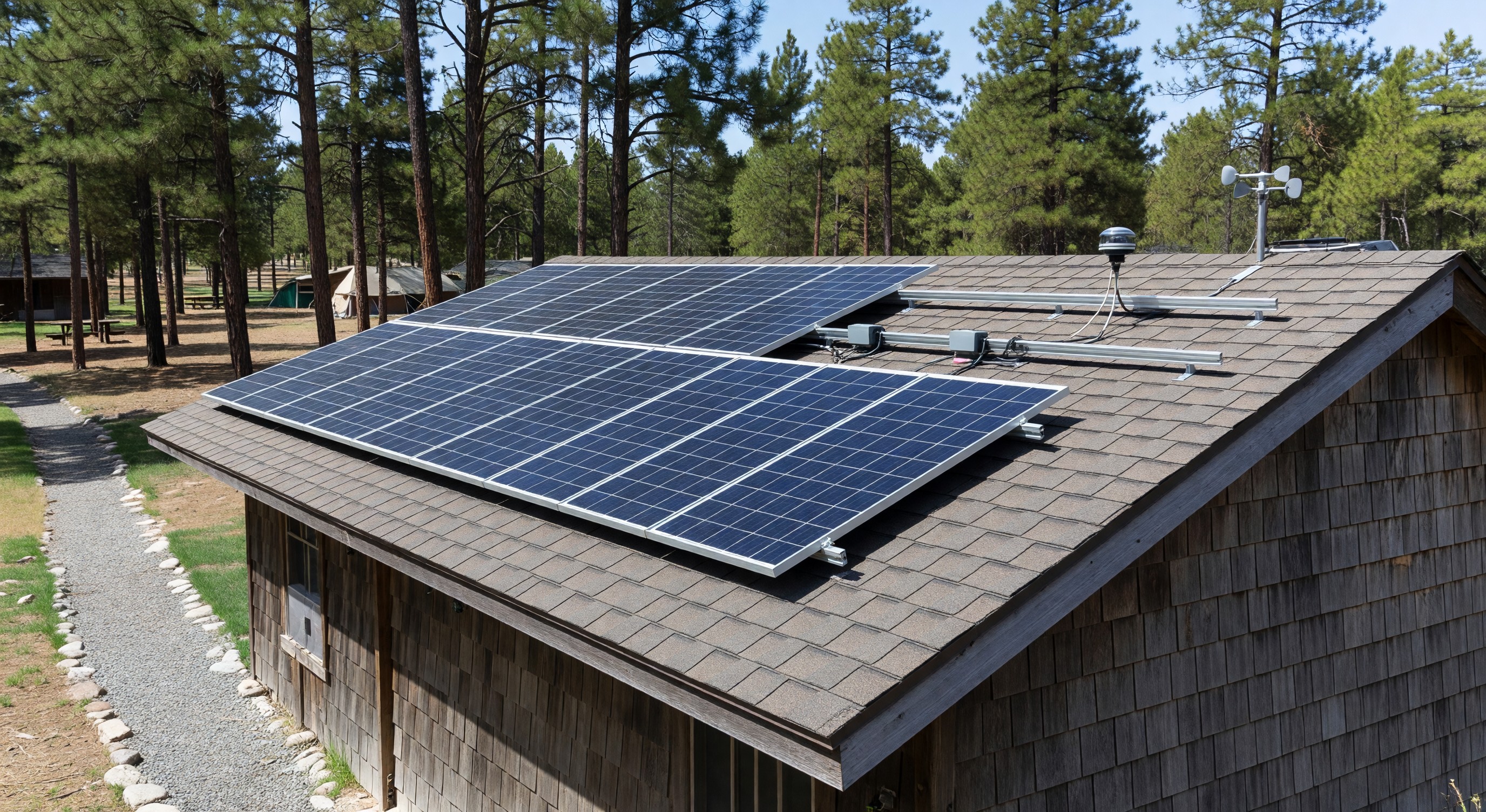
Solar production monitoring: Every modern solar installation should include production monitoring — either through the inverter’s built-in monitoring system or a third-party monitoring platform. This gives you real-time generation data and historical production records. Key metrics to track:
- Daily and monthly production in kWh
- Specific yield (kWh per kW of installed capacity) — allows comparison against expected performance
- System performance ratio — actual production vs. theoretical maximum given irradiance conditions
- Degradation trend over years — solar panels lose approximately 0.5–1% of output per year; tracking this helps plan for eventual replacement
Consumption monitoring: Solar production data alone is only half the picture. You also need consumption monitoring by facility or circuit to understand when and where you’re using energy. The combination of production and consumption data reveals your self-consumption percentage — how much of your solar generation is used on-site vs. exported to the grid.
Self-consumption is the key optimization metric. Grid export is typically valued at the retail rate or less; electricity you use on-site from your own solar is valued at whatever you would have paid the utility for it. Maximizing self-consumption maximizes your return on solar investment.
Load Shifting to Match Solar Production
Solar arrays produce electricity in a bell curve through the day — zero at night, peak around midday, tapering off in late afternoon. Shifting energy-intensive operations to align with peak production periods is the most direct way to increase self-consumption without additional technology investment.
Laundry timing: If your laundry facility serves guests who are generally flexible about timing, running laundry equipment during midday hours (10am–2pm) instead of the morning rush aligns heavy electrical loads with peak solar production. This is most practical for staff laundry and linen service; guest laundry is harder to control.
Water heating scheduling: Electric water heater tanks can be programmed to run heating cycles during peak solar hours. If hot water demand is typically highest in the morning and evening, a well-insulated tank recharged during midday solar production can meet those peaks without drawing grid power.
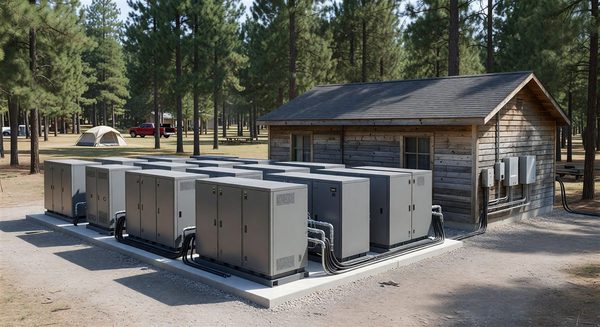
Battery charging from solar: If you have battery storage, ensuring the battery is prioritized for solar charging during production hours — rather than holding battery capacity for arbitrage or backup purposes — maximizes the clean energy percentage of your total consumption.
EV charging timing: Guests can be incentivized or informed about charging during solar production hours. Signage at EV charging stations indicating “Peak solar production: 9am–3pm — charge now for the greenest electricity” is an educational nudge that some guests will act on.
Battery Dispatch Optimization
For campgrounds with both solar and battery storage, how the battery is charged and discharged has a major impact on overall system performance.
Time-of-use optimization: If your utility has time-of-use rates with higher prices during peak hours (typically afternoon), and your solar production is concentrated in morning and midday, a dispatch strategy that stores solar energy in the battery for discharge during peak-price afternoon hours minimizes your electricity cost.
Demand management mode: If demand charges are your primary cost driver, configuring battery dispatch to prioritize demand peak shaving maximizes bill savings even if it reduces self-consumption percentage.
Backup reserve: Maintaining a minimum state of charge for emergency backup — say, holding 20% battery capacity in reserve regardless of dispatch optimization — trades some optimization for resilience.
Most sophisticated battery management systems offer automated dispatch optimization based on utility rate structures, weather forecasts, and historical consumption patterns. Some platforms use machine learning to improve dispatch decisions over time. Setting up these optimization algorithms — and reviewing their performance quarterly — is worth the time investment.
Solar Panel Maintenance for Performance
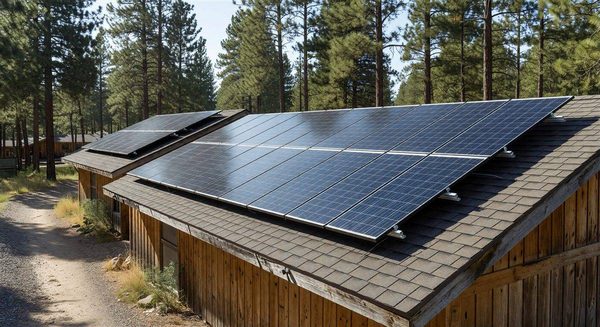
Dirty or shaded solar panels produce significantly less than their rated capacity. A bird dropping covering 5% of a panel can reduce that panel’s output by much more than 5% due to how panels in a series string respond to partial shading.
Cleaning schedule: Campground environments are often dusty, subject to pollen season, and adjacent to vegetation that can deposit material on panels. Quarterly cleaning during peak production months — spring and summer — is typically recommended. Annual cleaning at minimum. Use soft brushes and water without abrasive cleaners; avoid high-pressure washers that can damage panel surfaces.
Shade monitoring: Nearby trees grow. A panel that was unshaded at installation may experience partial shading five years later as adjacent trees mature. Annual review of shading conditions — particularly during winter when sun angles are lowest — helps identify when tree trimming is needed to protect solar access.
Performance degradation alerts: Solar monitoring platforms can alert operators when specific panels or strings are underperforming relative to expectations. This early warning of panel degradation, inverter problems, or connection issues allows prompt service before a small problem significantly affects annual production.
Sustainability Reporting and Marketing
Renewable energy investments tell a compelling story for eco-conscious guests — but only if the operation captures and communicates the data effectively.
Carbon offset calculation: Total solar production in kWh can be multiplied by your regional grid emissions factor (available from EPA’s eGRID database) to calculate metric tons of CO2 avoided. This number is meaningful in sustainability reporting and marketing materials.
Green certification support: Several campground certification programs — including some KOA, Kampgrounds of America, and state-level programs — give credit for renewable energy installations. The production data from your monitoring system provides the documentation these programs require.
Guest-facing communication: Dashboard displays in common areas showing real-time solar production, cumulative generation, and environmental impact are popular with guests. Some campgrounds project solar data on screens in the camp store or create signage at the solar array itself explaining how the system works and what it contributes.
Frequently Asked Questions
How much of a campground’s electricity can realistically be offset by solar? For campgrounds with suitable rooftop and ground space, 40–70% offset is achievable with appropriately sized systems. Full offset (100%) is theoretically possible but requires substantial battery storage to handle the mismatch between nighttime consumption and daytime production, and is rarely economically optimal compared to maintaining grid connection and selling excess production.
What is the payback period for campground solar installations? Without storage, ground-mount solar installations at campgrounds typically show simple paybacks of 7–12 years based on electricity cost savings alone. With the 30% federal ITC, paybacks shorten to 5–8 years. Adding state incentives and favorable net metering arrangements can bring payback below 5 years in some cases. Solar-plus-storage systems have longer paybacks — 8–15 years — but provide additional value from demand charge reduction and backup power.
Should I use net metering or a battery for excess solar production? Net metering — selling excess solar to the utility at retail or near-retail rates — is typically more economical than installing battery storage purely for arbitrage purposes. Batteries make economic sense when demand charges are significant, when utility export rates are very low, or when backup power capability has significant value. The right answer depends on your specific utility tariff and operational priorities.
How do I know if my solar panels are underperforming? Compare your actual monthly production to the production estimate provided at installation, adjusted for actual weather conditions. Your monitoring platform should provide this comparison automatically. A system producing consistently 10% or more below expected production warrants an inspection of panels, connections, and inverter performance. Many monitoring platforms offer automated underperformance alerts.
Further Reading from Authoritative Sources
- U.S. Department of Energy solar installation guidance and Investment Tax Credit resources for commercial facilities — The Department of Energy’s Office of Energy Efficiency and Renewable Energy provides campground operators with authoritative resources on solar technology, net metering, federal tax incentives, and renewable energy optimization.
- ARVC campground sustainability standards and renewable energy implementation resources — ARVC’s sustainability resources and member education cover renewable energy adoption, sustainability certification programs, and the guest communication strategies that campground operators use to leverage their sustainability investments in marketing.