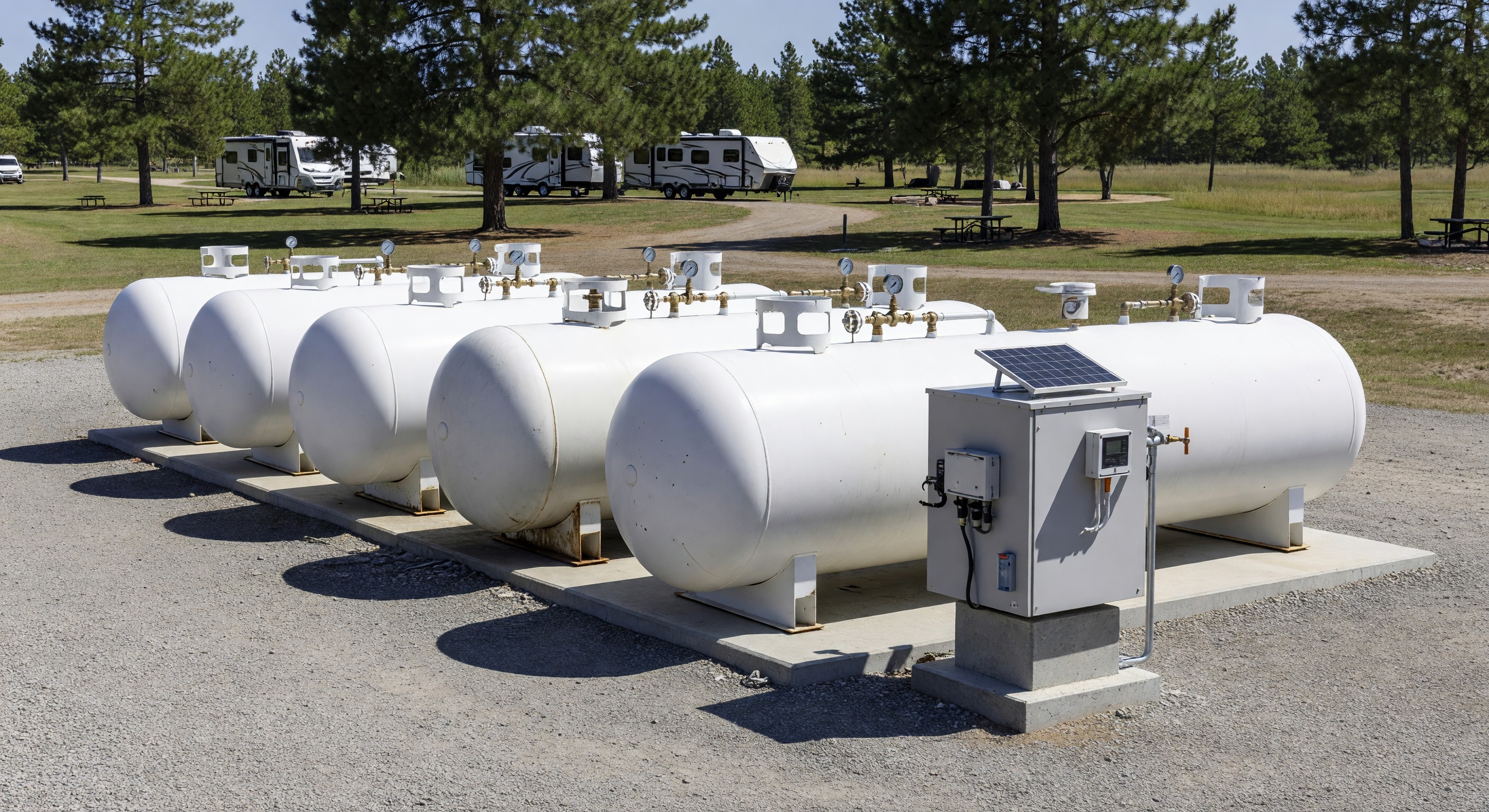
Propane powers a significant portion of campground infrastructure — from bathhouse water heaters and camp store appliances to laundry facilities and seasonal heating systems. Yet many operators still manage propane supply through a combination of manual tank checks and reactive emergency orders. Technology now offers better alternatives that reduce costs, prevent outages, and give operators real-time visibility into consumption.
Why Propane Management Matters
An unexpected propane outage isn’t a minor inconvenience. If your bathhouse water heaters run dry mid-weekend, you’re fielding complaints from dozens of guests simultaneously. Emergency delivery surcharges can double the per-gallon cost. And during peak camping seasons — Memorial Day, Labor Day, Fourth of July — suppliers may not have next-day availability regardless of what you’re willing to pay.
Systematic propane management shifts operators from reactive firefighting to proactive planning. The goal is maintaining sufficient supply without overfilling tanks (which has its own safety and cost implications) and building enough lead time to take advantage of better pricing.
Remote Tank Monitoring Systems
The foundation of modern propane management is a remote monitoring sensor installed on each tank. These devices measure tank fill level continuously using pressure, weight, or ultrasonic sensing technology and transmit readings via cellular or LoRaWAN network to a cloud dashboard.
What operators gain:
- Real-time fill percentage for every tank, accessible from any device
- Historical consumption data showing daily and weekly usage patterns
- Automated alerts when tanks drop below configurable thresholds (typically 20–25%)
- Trend analysis that projects when a reorder will be needed
Most monitoring hardware costs $150–$400 per tank with monthly subscription fees ranging from $10–$30 per tank for cellular connectivity. The payback calculation is straightforward: one prevented emergency delivery — which typically carries a $200–$400 surcharge — covers multiple months of monitoring fees.
Installation considerations: Sensors work on standard propane tanks from 120 gallons to large bulk storage vessels. Installation usually takes under an hour per tank. Cellular-connected models require adequate signal at tank locations, which can be an issue for remote campgrounds. In those cases, LoRaWAN sensors transmitting to a local gateway that connects via satellite may be a better fit.
Automated Reorder and Supplier Integration
Some propane monitoring platforms integrate directly with supplier ordering systems. When a tank reading drops to a preset level, the system automatically generates a delivery request and transmits it to your propane supplier’s scheduling software. You receive a notification that the order has been placed rather than having to initiate the call yourself.
This automation is most valuable for operators managing multiple tanks across a large property. A 200-site campground might have a dozen or more propane installations: main bathhouse water heaters, secondary shower facilities, laundry room, camp store kitchen, seasonal cabins, and maintenance buildings. Manually checking and ordering for all of these is time-consuming work that’s easy to defer until it becomes urgent.
Integrated ordering also creates a documentation trail. Every delivery is logged automatically with date, quantity received, and tank fill level before and after delivery. That data is useful for supplier negotiations, budget forecasting, and identifying consumption anomalies that might indicate equipment problems.
Understanding Consumption Patterns
Raw tank level data becomes much more useful when it’s analyzed as consumption rate rather than just current fill percentage. A tank at 40% that’s being consumed rapidly has a different urgency than a tank at 40% with slow seasonal demand.
Monitoring platforms that display consumption rate — gallons per day or week — allow operators to compare usage across different periods and facilities. Useful patterns to track:
Seasonal variation: Propane demand typically spikes in spring and fall when nighttime temperatures drop but summer heat hasn’t fully arrived. Water heating demand increases as outdoor temperatures fall. Understanding your seasonal curves helps with annual budget planning.
Weekend vs. weekday consumption: Most campgrounds see significantly higher propane use on weekends when occupancy is at its peak. If your water heaters are undersized, you’ll see faster tank depletion correlating with high-occupancy periods.
Anomaly detection: A sudden increase in consumption rate that doesn’t correlate with higher occupancy often indicates a leak or malfunctioning appliance. Monitoring systems that flag statistical anomalies can catch equipment problems early, before they become expensive.
Bulk Storage vs. Cylinder Programs
Larger campgrounds typically use bulk propane storage — large tanks that are refilled by delivery truck. Smaller operations or those with distributed facilities sometimes use cylinder exchange programs instead.
Cylinder exchange has its own management challenges. Tracking which cylinders are where, ensuring empties get collected, and maintaining adequate stock of full cylinders requires a different approach than bulk monitoring. Some operators use barcode or RFID tracking systems to maintain inventory visibility across their cylinder stock. Others rely on simple count-based reorder triggers.
The economics generally favor bulk storage once a facility’s annual consumption exceeds a certain threshold — typically 1,000–2,000 gallons per year. Below that, the capital cost of bulk tank installation and the minimum delivery quantities required by most suppliers make cylinder programs more practical.
Safety Technology Integration
Propane management technology increasingly overlaps with safety systems. Modern installations may include:
Gas leak detection: Sensors mounted near appliances and at tank connections that trigger audible alarms and can send push notifications when propane concentrations exceed safe thresholds. Some systems integrate with gate access or HVAC controls to shut off gas supply automatically if a significant leak is detected.
Automatic shutoff valves: Motorized shutoff valves on supply lines can be triggered remotely through a monitoring platform or locally by safety sensors. This capability is particularly valuable for unmanned facilities or cabins that may be unoccupied for extended periods.
Pressure monitoring: Beyond fill level, monitoring supply line pressure helps identify demand peaks that could affect appliance performance and can indicate connection or regulator issues before they cause problems.
Cost Optimization Strategies
Propane pricing fluctuates with energy markets, seasonal demand, and supplier relationships. Technology helps operators take advantage of better pricing when it’s available.
Volume purchasing: If your monitoring data shows you’re going to need a delivery in the next two weeks, you have time to call multiple suppliers and compare current pricing. Emergency orders give you no leverage.
Budget billing programs: Many suppliers offer budget billing arrangements that average annual costs into equal monthly payments. Accurate consumption history from monitoring systems makes it easier to evaluate whether a budget billing offer is priced appropriately for your actual usage.
Flexible delivery scheduling: Suppliers generally prefer delivering during off-peak periods for their drivers. If you can schedule deliveries with a week or two of lead time rather than demanding same-week service, you may be able to negotiate better pricing or at minimum maintain better relationships with suppliers.
Frequently Asked Questions
How accurate are remote propane tank monitors? Most modern sensors are accurate within 2–5% of actual tank level under normal conditions. Accuracy can be affected by temperature fluctuations (which change propane density) and sensor calibration drift over time. High-quality units compensate for temperature automatically and should maintain reliable accuracy for several years before needing recalibration.
Can propane monitoring integrate with campground management software? Some campground PMS platforms have begun integrating utility data, but propane monitoring integration is less common than electrical meter integration. More typically, propane monitoring runs as a standalone platform with its own dashboard and alert system. However, most monitoring services offer API access or webhook notifications that can feed data into broader campground management systems with custom development.
What’s the payback period for propane monitoring systems? For most campgrounds, the payback period for monitoring hardware and subscription costs is 12–24 months, primarily driven by avoided emergency delivery surcharges and the value of staff time saved from manual checks. Operations with high propane consumption or frequent delivery challenges typically see faster payback.
Do propane monitoring systems work in cold weather? Yes, though extremely cold temperatures (below -20°F) can affect some sensor types. Most commercial-grade monitoring hardware is rated for operation across the full range of temperatures campgrounds experience, and tank insulation can mitigate sensor exposure to extreme cold. Verify temperature ratings before purchasing for operations in very cold climates.
Further Reading from Authoritative Sources
- NFPA 58 propane storage, installation, and safety standards for campgrounds — The National Fire Protection Association publishes NFPA 58, the Liquefied Petroleum Gas Code, which establishes the safety standards for propane tank installation, storage, distribution, and leak detection systems that campground operators must comply with.
- Propane fuel properties and commercial distribution systems — Wikipedia’s propane article provides authoritative background on the physical and chemical properties of propane — including temperature-density relationships and storage characteristics — that affect remote monitoring sensor design and accuracy.