Power grid reliability has become a growing concern for campground operators in many regions. Climate-related weather events are driving longer and more frequent outages in some areas. Aging utility infrastructure creates vulnerability, particularly during peak demand periods. And campgrounds — often in rural areas at the end of distribution lines — are among the last to be restored after outages.
An unplanned power outage at a busy campground creates a cascade of problems: gate systems fail, water pumps stop, bathhouse lighting and HVAC go dark, food in camp store refrigeration begins to warm. Guest experience deteriorates immediately, and some situations (guests with medical equipment, extreme weather) create genuine safety concerns.
Planning for grid resilience — knowing which systems need backup power and having that backup in place and tested — converts a potential emergency into a manageable operational event.
Identifying Critical Loads
The first step in resilience planning is identifying which electrical loads are critical — what must keep running even when grid power fails — and which can be shed during an outage.
Critical loads (must maintain):
- Gate access systems (guests must be able to exit; staff must be able to enter)
- Security camera systems for continued monitoring
- Office systems for communication and reservation access
- Water pump systems if on well water (loss of water affects all sanitation)
- Emergency lighting in bathhouses and common areas
- Refrigeration for food safety in camp store and cabins
Important but not critical (maintain if capacity allows):
- Bathhouse water heating
- HVAC in office and bathhouses
- Camp store POS and lighting
- Wi-Fi access points
Deferrable during outage:
- EV charging (guests should be notified to postpone)
- Pool heating and circulation
- Non-emergency lighting
- Laundry equipment
This tiered prioritization determines the size of backup power infrastructure needed. Backing up only critical loads requires much less generator or battery capacity than trying to maintain full campground operation during an outage.
Generator Systems for Campgrounds
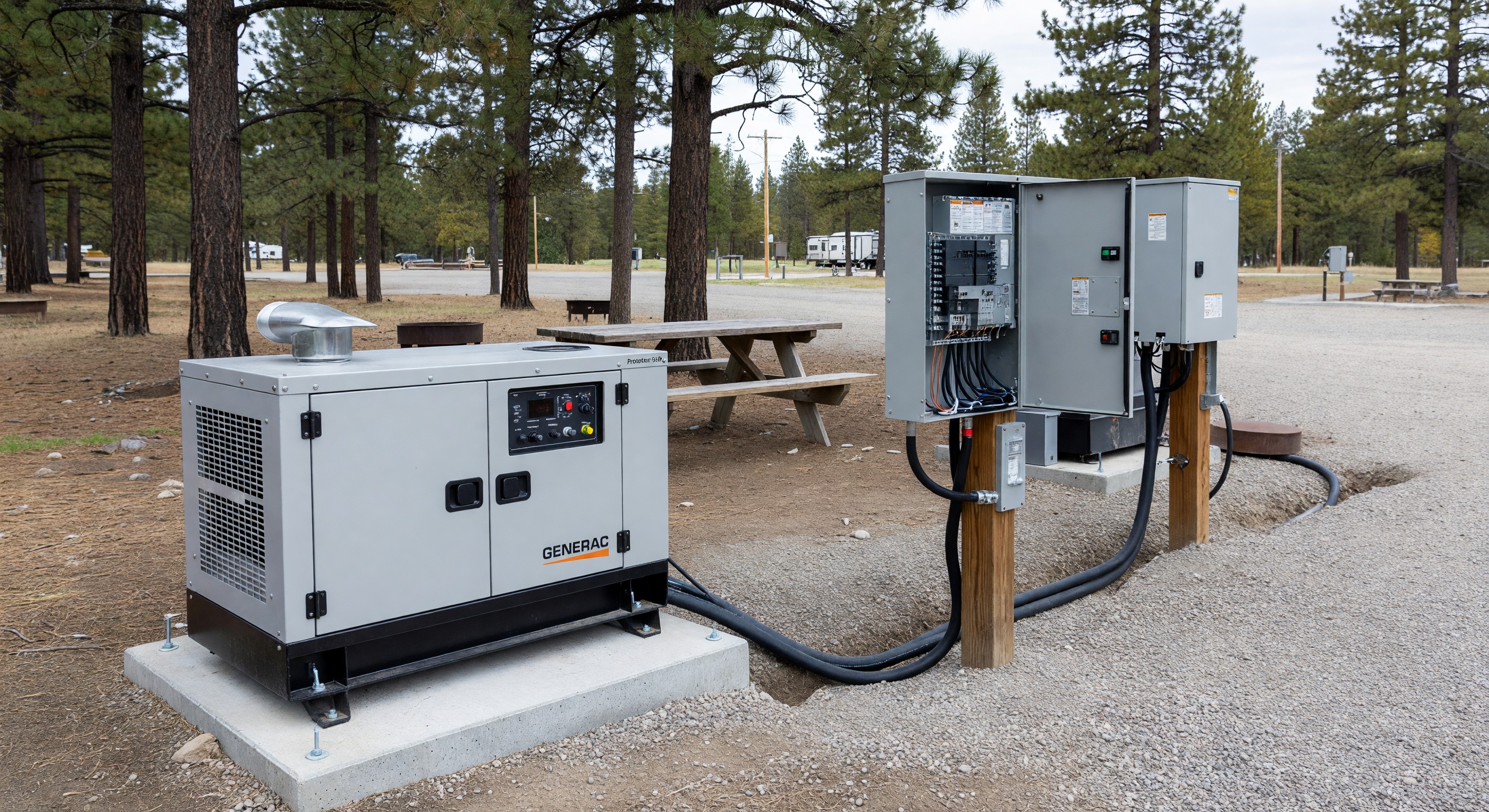
Diesel or propane standby generators remain the most common backup power solution for campgrounds because they can provide sustained power for extended outages without the capacity limitations of battery storage.
Automatic transfer switch: A critical component of any standby generator system. When grid power fails, the automatic transfer switch disconnects the campground from the grid and connects the generator — typically within 10–30 seconds of an outage detection. This happens without staff intervention and without exposing staff to the danger of manual switching.
Generator sizing: Size the generator based on the critical load calculation above, not the entire campground load. A generator that can handle all critical loads simultaneously plus a 25% margin for startup surge is appropriate. Oversized generators run inefficiently at light load; undersized generators won’t cover critical needs when demanded.
Fuel storage: A standby generator requires fuel supply for the duration of likely outages. Diesel storage tanks on-site provide reserves for extended events. Most campgrounds with significant generator reliance maintain 250–500 gallons of diesel storage. Propane-fueled generators can use the campground’s existing propane supply if sized appropriately.
Generator maintenance: Standby generators require monthly test runs (simulating a power failure) and annual load bank testing to verify they’ll perform under actual load conditions. Generators that sit idle for years between outages often fail to start when needed. Regular maintenance is not optional — it’s the entire point of having the generator.
Transfer Switch Configurations
The configuration of your transfer switch determines what loads are backed up and how the transition occurs.
Whole-facility transfer: Transfers the entire campground electrical service to generator. Requires a much larger generator but provides maximum simplicity. Appropriate only if generator capacity matches or approaches full campground load.
Critical load panel: A dedicated electrical panel containing only critical loads, connected to the generator through its own transfer switch. During a grid outage, only loads on the critical panel are backed up. This approach allows a smaller, more economical generator sized only for critical needs.
Selective circuit transfer: Individual circuits selected for backup power through relay-controlled switching. More complex to install and manage, but provides fine-grained control over exactly which loads are backed up.
Battery Storage as Backup Power
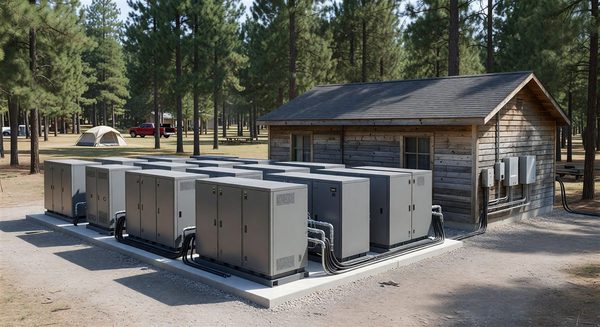
For shorter outages — 4–8 hours — battery storage systems with appropriate capacity can provide backup power for critical loads without the noise, exhaust, and fuel supply requirements of a generator.
Battery backup advantages:
- Silent operation — no generator noise complaints from guests
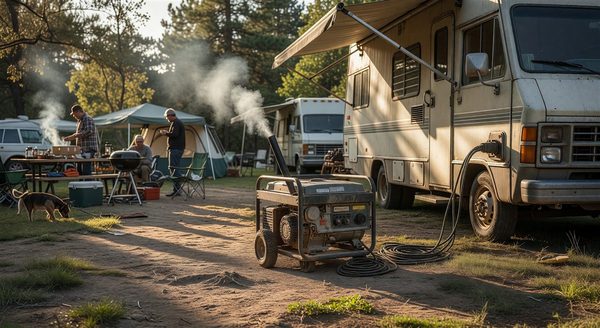
- No exhaust emissions — appropriate for enclosed or semi-enclosed spaces
- Immediate response — no startup delay like generators have
- Lower maintenance requirements than generators
Battery backup disadvantages:
- Limited capacity — extended outages will exhaust battery storage
- Higher capital cost for equivalent backup duration compared to generator
- Capacity degrades over time (typically 80% after 10 years)
The best resilience approach for many campgrounds is a combination: battery storage for immediate seamless backup of the most critical systems, paired with a generator that starts automatically and takes over for extended outages.
Communication During Outages
When grid power fails, notifying guests and maintaining communication is important.
Guest notification: If outage is expected to be brief (utility reports under 2 hours), simply posting a notice at the office and sending a message to checked-in guests via your campground messaging system is adequate. For longer expected outages, more active communication — security patrol, personal site visits for guests with medical equipment or other special circumstances — may be appropriate.
Utility coordination: Know your utility’s outage reporting system (app, phone, website) and report outages promptly. Utilities prioritize restoration for campgrounds and other businesses that report critical facility status.
Cellular backup for communications: Even if your internet connection fails during an outage, cellular backup for office communications — ensuring staff can send and receive calls and messages — maintains operational coordination. Cellular-connected security cameras and gate systems continue functioning when wired internet is down.
Frequently Asked Questions
How long should a campground backup power system sustain operations? Planning for 24–48 hours of backup capacity for critical systems provides coverage for the large majority of grid outages (most utility outages affecting campground areas are resolved within this timeframe). Extended backup beyond 48 hours is possible with larger fuel storage but may not be cost-justified relative to likelihood.
Should I notify guests about my backup power system? Noting on your website that the campground has backup power for critical systems is a subtle but meaningful differentiator for guests who’ve experienced outage problems at campgrounds previously. It also sets appropriate expectations about what will and won’t function during an outage.
What permits are required for a standby generator installation? Generator installations typically require a building permit and electrical permit. If fuel storage exceeds certain thresholds, fire marshal review may be required. Your installation contractor should manage the permitting process, but including permitting time in your project schedule is essential.
How much does a campground backup power system cost? Costs vary significantly based on generator size and fuel type, transfer switch configuration, fuel storage, and installation complexity. A basic critical-load backup system for a mid-sized campground commonly runs $15,000–$40,000 installed. Solar-plus-battery backup that provides extended resilience without generator dependence costs more ($40,000–$120,000+) but provides additional ongoing value from demand management and solar generation.
Further Reading from Authoritative Sources
- Department of Energy grid resilience and backup power resources — The Department of Energy publishes grid resilience guidance and distributed energy resource information for commercial facilities, providing the technical framework for backup power and solar-plus-storage recommendations in this article.
- NFPA electrical code requirements for emergency and standby power systems — NFPA 110 (Standard for Emergency and Standby Power Systems) establishes the design and testing requirements for automatic transfer switches and standby generators that campground backup power systems must meet for code compliance.