Campground swimming pools are among the most maintenance-intensive utility systems operators manage. Daily water chemistry testing, chemical dosing, filtration management, equipment maintenance, and safety compliance create a significant operational burden — while a pool failure or closure during peak season creates immediate guest satisfaction problems.
Pool management technology — automated chemistry control systems, remote monitoring, energy-efficient equipment — reduces the labor required for routine pool maintenance while improving water quality consistency and safety documentation.
Pool Chemistry Management Technology
Traditional pool chemistry management involves daily manual water testing, calculating required chemical additions, and manually dosing chemicals. This process is time-consuming, results vary with the person doing the testing, and compliance documentation requires separate record-keeping.
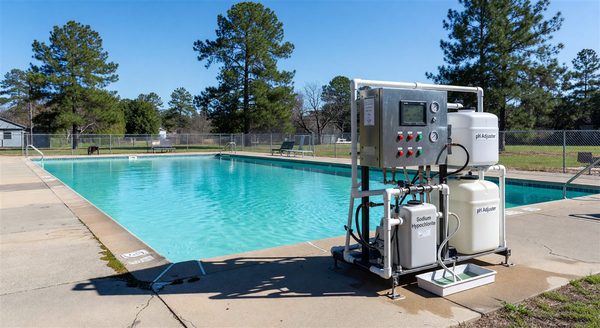
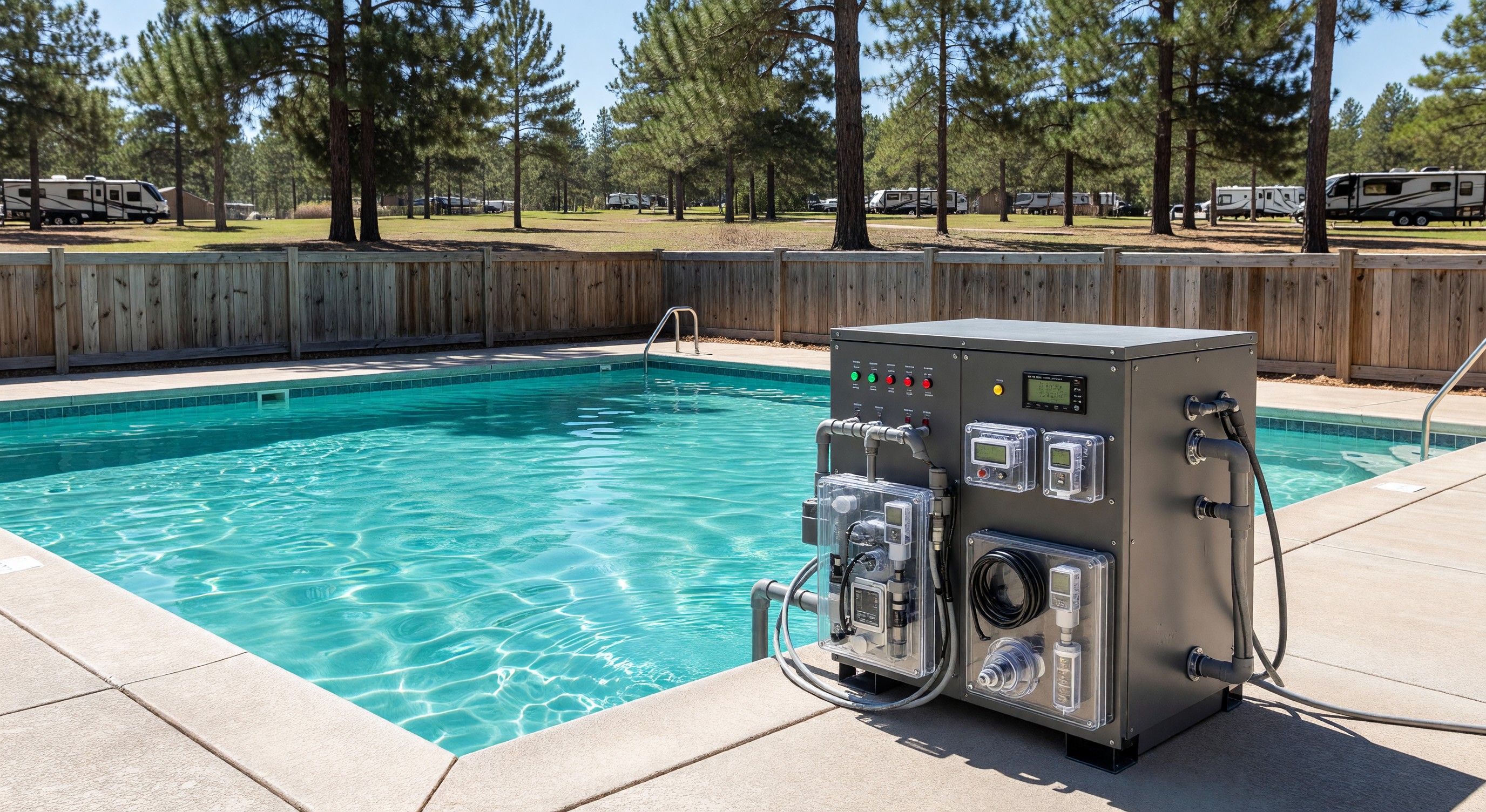
Automated chemistry controllers: These systems continuously monitor key water chemistry parameters — pH, ORP (oxidation-reduction potential, a proxy for sanitizer effectiveness), sometimes chlorine and cyanuric acid directly — and automatically dose chemicals to maintain target levels. The system activates chemical feed pumps when parameters drift out of range and records all readings and dosing events automatically.
Benefits of automation:
- Consistent chemistry maintenance regardless of staff skill level
- Automatic documentation of parameter readings (valuable for health department compliance)
- Immediate response to chemistry changes rather than waiting for the next manual test
- Reduced chemical waste from precise dosing vs. manual estimation
Chemical feed systems: Liquid chemical feed systems (peristaltic or diaphragm pumps) inject liquid sodium hypochlorite and muriatic acid or CO2 in precise doses controlled by the chemistry controller. Solid chemical feeders (trichlor or cal-hypo feeders) provide an alternative for operations preferring solid chemicals.
Supplemental sanitizers: UV disinfection systems, ozone generators, or salt chlorine generators reduce the dependence on added chemical chlorine while maintaining effective sanitization. These systems don’t eliminate chlorine entirely (a residual is still required) but can reduce chemical consumption and the associated odor and irritation that guests sometimes associate with heavily chlorinated pools.
Remote Pool Monitoring
Connecting pool chemistry controllers and equipment systems to cloud monitoring platforms provides remote visibility that’s particularly valuable for campgrounds where the pool may not have full-time attendant coverage.
Real-time parameter monitoring: View current pool chemistry readings from any device, without being physically present at the pool. Receive alerts when parameters fall outside acceptable ranges.
Equipment status monitoring: Monitor filter pressure, pump operation status, and heater performance remotely. Alerts for equipment failures allow prompt response before conditions deteriorate.
Compliance documentation: Cloud-stored chemistry logs with timestamps provide the documentation that health department inspectors require, without the risk of misplaced paper logs. Many platforms generate automated compliance reports.
Historical analysis: Reviewing chemistry trend data over time reveals patterns: pH that creeps up consistently in afternoon (carbon dioxide degassing from warm water), chlorine that drops rapidly on high-bather days. These patterns inform proactive chemistry management.
Pool Equipment Efficiency
Pool equipment — circulation pumps, heaters, lighting — represents a significant energy cost at campgrounds with pools.
Variable speed pumps: Older single-speed pool pumps run at full speed continuously. Variable speed pumps adjust their speed to match actual filtration requirements — running at lower speeds during off-peak periods and higher speeds during high-bather periods when filtration demand is higher. Variable speed pumps typically reduce pump energy consumption by 60–80% compared to single-speed equivalents.
Heat pump pool heaters: Heat pump heaters for pools work on the same principle as heat pump water heaters — extracting heat from surrounding air rather than generating it. They achieve efficiencies of 350–500% (coefficient of performance 3.5–5.0) compared to gas heaters at 80–85% efficiency. In moderate climates, heat pump heaters are significantly more economical to operate than gas heaters.
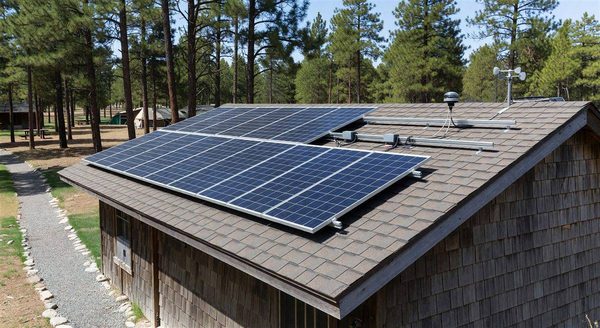
Solar pool heating: Solar thermal collectors for pool heating extend the swimming season by maintaining pool temperature using solar energy. Pool water is circulated through rooftop collectors during daylight hours, capturing solar heat. For campgrounds in sunny climates, solar pool heating provides substantial cost savings with relatively simple installation.
LED pool lighting: LED underwater lights use 70–80% less energy than incandescent equivalents and last 10× longer. The payback on LED conversion for pool lighting is typically 2–3 years.
Splash Pad and Water Feature Management
Campgrounds increasingly supplement or replace pools with splash pads — interactive water features that are popular with families, lower maintenance than pools, and not subject to lifeguard requirements in many jurisdictions.
Splash pad water systems use either recirculating or flow-through water supply:
Recirculating systems: Water is continuously recycled through a filtration and disinfection system similar to a pool. Recirculating systems require the same chemistry management discipline as pools but use significantly less water.
Flow-through (potable water) systems: Water flows to the splash pad from the potable water supply and drains to sewer. Simpler to manage than recirculating systems (no chemistry management required) but uses significant water volume and may have higher ongoing costs.
Chemistry management technology for splash pads follows the same principles as pools — automated controllers, remote monitoring, and compliance documentation.
Frequently Asked Questions
What’s the minimum daily pool maintenance required at a campground? At minimum: water chemistry testing (pH, chlorine, at multiple times daily), visual inspection of pool and deck area, equipment status check, and log documentation. Automated chemistry controllers handle the testing and dosing functions but don’t eliminate the need for visual inspection and manual verification. Health department requirements specify minimum testing frequencies — most require at least one manual test per day even with automated controllers.
How long does a pool pump typically last? Single-speed pumps in campground service typically last 8–12 years. Variable speed pumps, running at lower speeds for most of their operation, may last longer. Pump motor bearing wear is the most common failure mode, and bearings can often be replaced rather than replacing the entire pump. Annual inspection and lubrication of pump motor bearings is worthwhile preventive maintenance.
When should a campground consider closing its pool rather than continuing to operate it? Pool closure decisions involve several factors: the cost and benefit of maintaining the facility, guest use and satisfaction, compliance burden, and liability management. If a pool requires significant capital repair (major structural work, equipment replacement) and utilization is low, closing and converting the space to another amenity (splash pad, expanded deck area, additional programming space) may be more economical. Consult with your insurance carrier before making this decision — closed-pool liability considerations differ from operated-pool considerations.
Can I use a pool chemistry automation system without a certified pool operator on staff? Automation reduces the skill requirement for routine daily chemistry management, but it doesn’t eliminate the need for someone who understands pool chemistry and can troubleshoot when parameters fall outside normal ranges. Many states require a Certified Pool Operator (CPO) certification for the person responsible for the pool regardless of automation level. Training your maintenance manager in CPO basics is a worthwhile investment even if full certification isn’t required.
Further Reading from Authoritative Sources
- CDC healthy swimming guidelines and pool chemistry standards for campground aquatic facilities — The CDC’s Healthy Swimming program publishes the water chemistry standards, health risk guidance, and inspection framework for public pools and aquatic facilities that inform state health department regulations campground operators must follow.
- ARVC campground pool management standards and aquatic facility compliance resources — ARVC’s facility operations resources for campground operators cover pool management compliance, technology adoption, and insurance requirements.