Irrigation is often an overlooked component of campground utility management. For campgrounds with substantial landscaping — lawns between sites, entrance gardens, play areas, and common spaces — irrigation can represent 15–30% of total water consumption. In water-stressed regions, it can be the largest single water use at the facility.
Smart irrigation technology offers campground operators substantial water savings — typically 30–50% compared to conventional timer-based systems — while maintaining or improving the appearance of grounds that directly affect the guest experience. The technology has become increasingly affordable and straightforward to implement over the past several years.
Why Timer-Based Irrigation Wastes Water
The majority of campgrounds still irrigate on fixed schedules — the same duration, same days, regardless of conditions. This approach has fundamental limitations:
It ignores recent precipitation: A fixed-schedule system will run its Tuesday morning cycle even after a 1-inch rainfall Monday night, applying water to soil that’s already saturated. That water doesn’t benefit the grass; it becomes runoff.
It doesn’t account for seasonal variation: The irrigation schedule that keeps grounds green in August is dramatically more water than needed in May or September. Fixed schedules are typically set for peak summer demand and then left in place through shoulder seasons.
It can’t respond to plant water stress: Fixed schedules water on a calendar regardless of whether plants actually need water. In cool, cloudy periods, plants need much less; in hot, dry, windy weather, they may need more frequent watering than the schedule provides.
It applies the same water to every zone: Shaded areas, slopes, and different soil types need different amounts of water. Fixed schedules inevitably overwater some zones while underwatering others.
Smart Irrigation Controllers
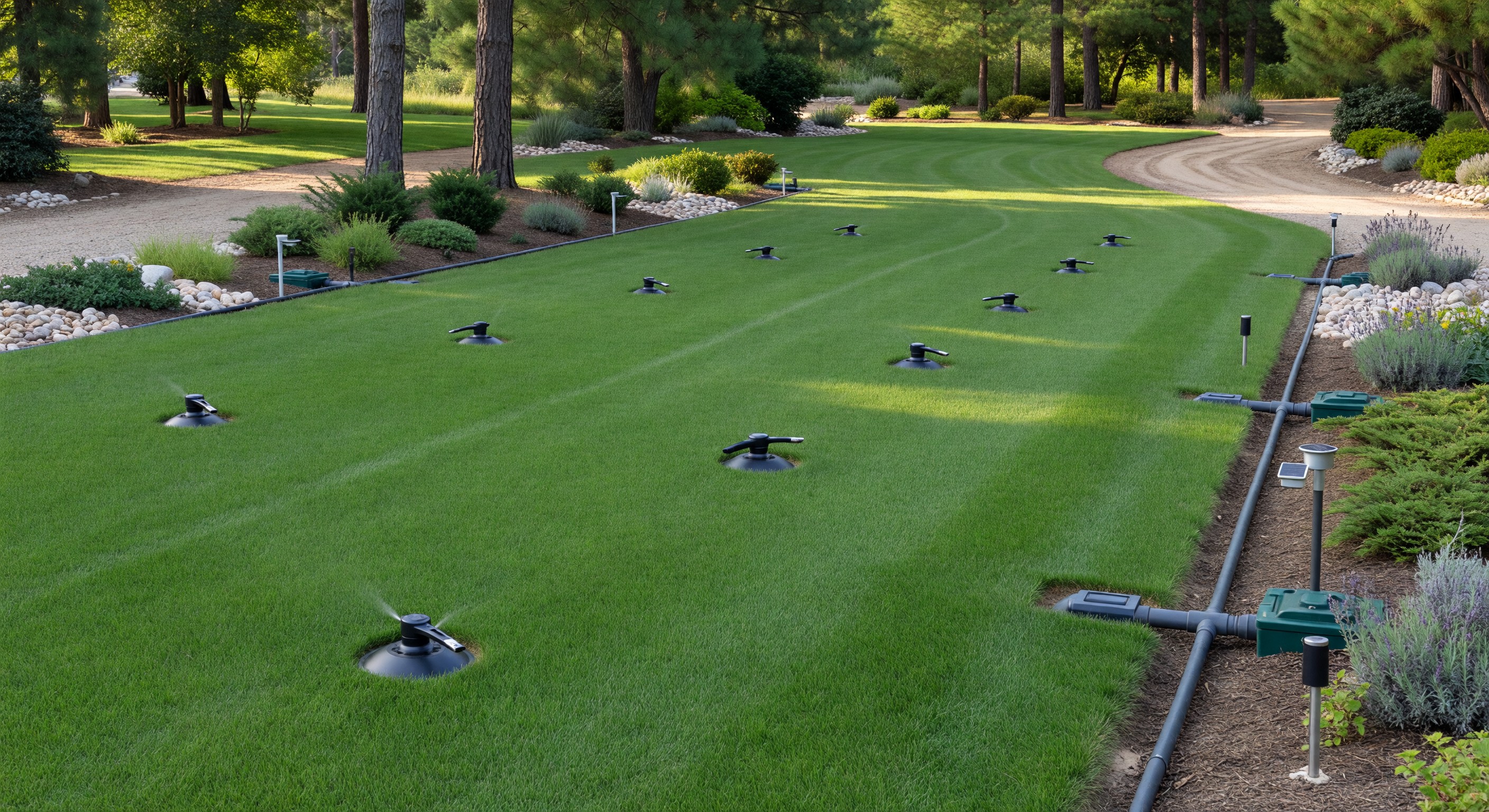
Smart irrigation controllers connect to weather data and apply that information to adjust irrigation schedules automatically. The two main approaches:
Weather-based (ET) controllers: These systems calculate evapotranspiration — the combined water loss from plant surfaces and soil evaporation — based on local weather data (temperature, humidity, wind speed, solar radiation). They automatically adjust irrigation run times to replace the ET-calculated water deficit, providing exactly what plants need based on actual conditions. ET controllers can reduce irrigation water use by 20–40% compared to fixed schedules without any manual adjustment after initial setup.
Soil moisture sensor systems: Rather than estimating plant water need from weather data, these systems measure actual soil moisture directly and irrigate only when sensors indicate the soil has dried below a target threshold. This direct measurement approach is very effective but requires sensor installation at each zone (or a representative sample of zones). Soil moisture systems are particularly good at preventing overwatering in variable soil conditions.
Combination systems: High-end smart irrigation platforms combine weather-based ET adjustment with soil moisture sensor input, using each data source to check the other. These systems are the most precise and are appropriate for campgrounds with diverse irrigation zones and high water costs.
Zone-by-Zone Design
Smart irrigation delivers its full benefit when zones are designed to match plant communities with similar water needs. An irrigation system that puts water-loving annuals in the same zone as drought-tolerant native grasses will always compromise — overwatering one or underwatering the other.
Zone design best practices:
- Group plants with similar water requirements in the same zone
- Separate shaded areas from sunny areas
- Give slopes their own zones (faster runoff means they may need shorter, more frequent cycles to prevent runoff)
- Separate high-traffic areas (which compact soil and may need more irrigation) from low-traffic areas
For campgrounds upgrading from a poorly-designed irrigation system, zone redesign during the upgrade process significantly improves the long-term performance of smart controllers.
Drip Irrigation for Targeted Application
Drip irrigation delivers water directly to plant root zones rather than spraying it through the air. Benefits:
- Reduces evaporation losses by 30–50% compared to overhead spray
- Eliminates foliar wetting that can promote disease
- Applies water where roots are, not where they aren’t
- Works well in windy conditions where spray drift wastes water
For campground applications, drip systems are most practical in defined planting beds, entrance gardens, and tree plantings. Lawn areas generally require overhead spray for even coverage. A hybrid system — drip for beds and trees, smart spray for lawn areas — optimizes water efficiency across different landscape types.
Flow Monitoring and Leak Detection
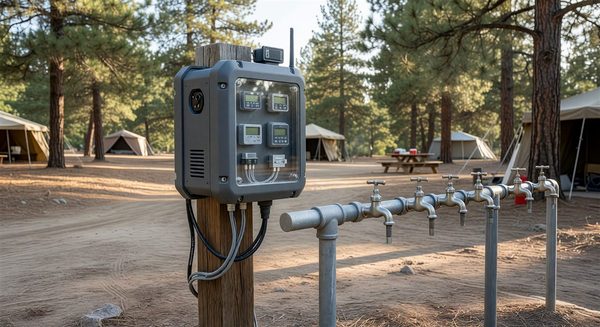
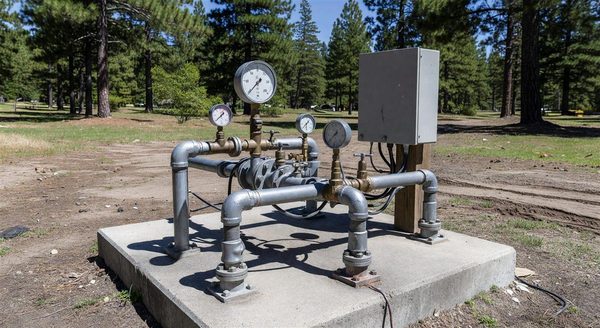
A smart irrigation system can also serve as a water leak detection system if it includes flow monitoring. Flow sensors installed at zone valves detect:
- Unusually high flow indicating a broken sprinkler head or damaged supply line
- Flow when no zone should be running (indicating a valve stuck open)
- Flow rates that don’t match expected zone output (indicating a partially blocked or damaged head)
Automated alerts from flow anomalies catch irrigation system problems quickly — before they become major water losses or dead zones in the landscape.
Integration with Campground Management
Advanced smart irrigation systems can integrate with your campground’s reservation and weather monitoring infrastructure:
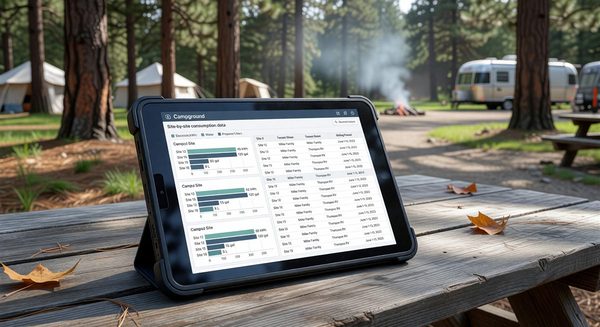
Occupancy-based scheduling: Areas of the campground that are fully booked benefit from maintained grounds; areas that are mostly empty during shoulder season might tolerate reduced irrigation frequency without guest impact. Linking irrigation scheduling to occupancy data allows prioritization during water restriction periods.
Weather station integration: Many campgrounds have on-site weather stations for monitoring purposes. Connecting irrigation control to local weather data rather than regional weather service data improves accuracy, particularly in microclimates or areas where local conditions differ significantly from the nearest weather station.
ROI and Water Savings
For a campground irrigating 5 acres of lawn and landscaping, water savings from smart irrigation can be substantial:
- 5 acres × assumed average application of 1 inch/week in summer = approximately 135,000 gallons/week during peak season
- 30% reduction from smart irrigation = 40,000 gallons/week saved
- At $0.008/gallon average water+sewer cost = approximately $320/week, or $5,000+ per 16-week summer season
Against a smart irrigation controller investment of $2,000–$8,000 (depending on zone count and sensor investment), payback within 1–2 seasons is achievable in water-stressed regions with higher water costs. In areas with lower water costs, payback extends to 3–5 years but is still favorable against the system’s 10+ year lifespan.
Frequently Asked Questions
Do smart irrigation systems work with existing irrigation infrastructure? In most cases, yes. Smart controllers replace the existing timer-based controller as a direct swap, connecting to the same zone wiring and valve system. Soil moisture sensors and flow meters can be added to existing systems without replacing valves or supply lines. A full system replacement is typically only needed if the existing irrigation design has fundamental problems (poor zone layout, inadequate coverage) that limit the effectiveness of smart controls.
Are there water utility rebates for smart irrigation? Many water utilities — particularly in water-stressed regions — offer rebates for smart irrigation controllers, soil moisture sensors, and drip conversion. Rebate amounts range from $50–$500+ per controller depending on the program. Check with your water utility before purchasing to take advantage of available incentives.
How do I manage irrigation during water restriction periods? Smart irrigation controllers with restriction scheduling allow operators to program alternate-day watering restrictions, specific day restrictions, or maximum run-time limits in compliance with utility restrictions. This is much easier to manage than manually adjusting fixed-schedule timers. Some advanced systems can receive automated restriction signals from utilities.
Should I maintain some grass lawn areas, or convert to low-water landscaping? This is a business decision that depends on your market and guest expectations. Many campground guests specifically value green, grassy settings — it’s core to the camping experience. Complete conversion to drought-tolerant landscaping may not be appropriate at most campgrounds. A more practical approach is targeting irrigation efficiency improvements for existing lawns while selectively converting high-maintenance areas (road medians, utility areas, low-visibility zones) to low-water plantings.
Further Reading from Authoritative Sources
- EPA WaterSense smart irrigation standards and water conservation guidelines — The EPA’s WaterSense program establishes efficiency standards for smart irrigation controllers and publishes authoritative guidance on water conservation practices for commercial facilities including campgrounds with significant landscaping irrigation loads.
- Irrigation technology types and evapotranspiration-based scheduling — Wikipedia’s irrigation article provides authoritative technical background on evapotranspiration-based irrigation scheduling, soil moisture sensing, and drip irrigation systems that underpin the smart irrigation approaches campground operators are implementing.