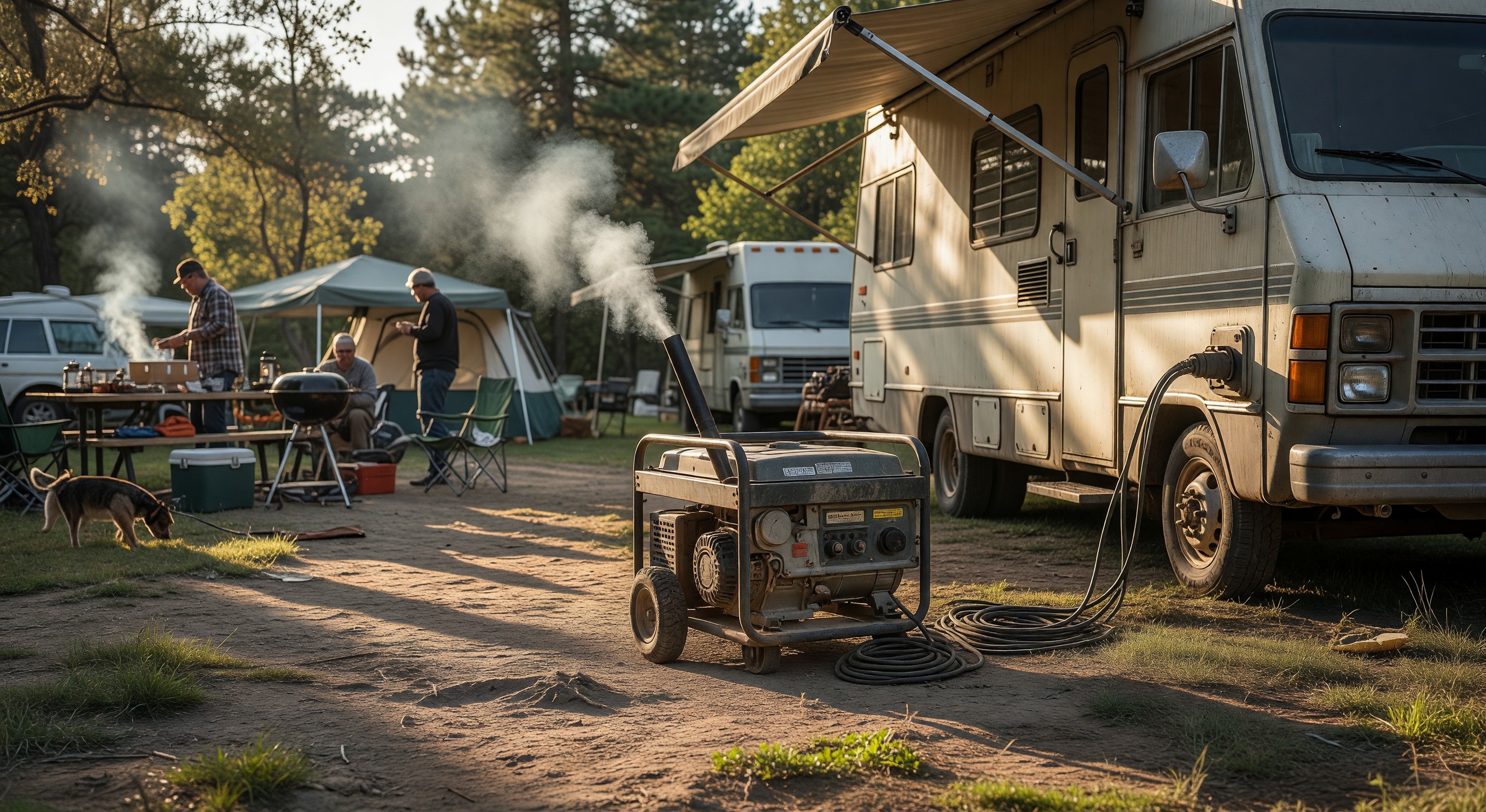
Generators are a persistent source of conflict at campgrounds. Guests who rely on generators for power — particularly campers in non-hookup sites or those who need power beyond what hookups provide — have legitimate needs. Guests who came to enjoy nature sounds and who are instead subjected to a diesel engine running 20 feet from their tent have a legitimate complaint.
Managing generators effectively requires clear policy, enforcement technology, and the infrastructure to reduce the need for generators in the first place.
Why Generator Conflicts Are So Common
Generator conflicts have intensified over the past decade for several reasons:
Bigger, more power-hungry RVs: Modern Class A and Class B motorhomes have rooftop air conditioners, residential refrigerators, and entertainment systems that exceed the capacity of shore power at some sites. These guests run generators to supplement hookup power or charge batteries.
Growth of partial-hookup and primitive sites: As glamping and nature-immersion experiences have grown, more guests are booking sites without full electrical hookups — but bringing equipment that requires power.
Different camping culture norms: Experienced full-hookup RV campers often have different expectations about generator use than tent campers or casual campers. Campgrounds that serve mixed clientele feel the tension most acutely.
Increased length of stay: As remote work and extended camping have grown, some guests run generators for extended periods in ways that would have been unusual for shorter stays.
Clear Policy as the Foundation
Technology doesn’t substitute for clear, enforced policy. Define and communicate:
Generator hours: Define specific allowed hours (e.g., 8am–10am and 4pm–7pm) and specific prohibited hours (quiet hours, meal times, early morning). Communicate these prominently — in booking confirmation, pre-arrival email, and on-site signage.
Designated generator areas: Some parks designate specific loops or sections for generator camping, separate from generator-free or electric-only areas. This is the most effective conflict prevention tool but requires site type separation that not all parks can achieve.
Generator types allowed: Quiet (inverter) generators are significantly less noisy than conventional generators. Some parks restrict generator use to inverter generators below a defined decibel level. This is harder to enforce at the gate but deters the noisiest generators.
Hookup requirements for extended stays: Guests on sites with electrical hookups should use them; running a generator when a hookup is available is difficult to justify and easy to prohibit.
Technology for Generator Management
Noise monitoring: As discussed in the guest experience section, noise monitoring systems can detect when a generator is running at an inappropriate time or at an excessive sound level. An alert to the on-call staff enables a faster response than waiting for a neighbor complaint.
Site-level electrical monitoring: Knowing which sites are drawing power from the hookup and which are not drawing power (but may be running generators) is possible with smart metering. A site that has a reservation but shows zero electrical consumption may be running a generator in lieu of shore power.
Smart pedestal power management: Some smart pedestal systems allow operators to remotely manage power delivery — turning off power to specific sites during prohibited hours, or detecting hookup status. This level of control is rare in practice but represents the direction technology is moving.
Reducing Generator Dependency Through Infrastructure
The long-term solution to generator conflicts is providing adequate electrical infrastructure so generators aren’t necessary:
Adding 50A full hookup sites: Guests who need significant power for climate control and residential appliances need 50A service. Converting partial hookup sites to full hookup reduces the population of guests who need supplemental generator power.
Site-level electrical capacity verification: Some sites may have 30A connections that physically can’t meet the needs of modern RVs. Upgrading wiring to 50A at high-use sites eliminates this gap.
Dedicated high-amperage sites for large rigs: Premium sites with verified 50A service and 30+ feet of clearance for large motorhomes are what the full-timer and heavy-use traveler segment needs.
Frequently Asked Questions
Can I ban generators entirely at my campground? Yes, if you have sufficient electrical hookup capacity to serve your expected guest mix. A generator-free policy is a premium amenity for nature-forward campgrounds and creates a more peaceful environment for all guests. The tradeoff is that guests with generator-dependent equipment (or those in primitive sites) need alternative arrangements.
How do I enforce generator quiet hours without staff available 24/7? Primarily through policy and community norms. Post quiet hour policies visibly. Empower guests to politely remind neighbors of the policy. Have a clear process for complaints that reaches on-call staff. Noise monitoring that generates automated alerts is a technological enforcement supplement, not a replacement for policy and guest culture.
What should I do when a guest legitimately needs to run their generator but it’s bothering neighbors? Offer solutions: a more isolated site, an extension cord to an electrical hookup if available, or an alternative accommodation option. A guest who has a legitimate power need and is disrupting others deserves active problem-solving rather than just a complaint response.
How do I handle a guest who disputes a generator policy violation? Apply your policy consistently and document the warning. If noise monitoring logs show the generator was running during prohibited hours, that data supports your position. For a first offense, a warning and explanation is often sufficient. Repeat offenders should be asked to remedy the situation or leave.
Further Reading from Authoritative Sources
- ARVC campground utility infrastructure standards and generator management guidance — ARVC’s utility management and operational resources for campground operators cover standby power infrastructure, including generator sizing, maintenance standards, and fuel management practices.
- NFPA 110 standard for emergency and standby power systems at campground facilities — NFPA 110 (Standard for Emergency and Standby Power Systems) governs the installation, testing, and maintenance requirements for standby generators at facilities like campgrounds.