Campground electrical systems carry genuine safety risks that distinguish them from typical commercial electrical installations. RVs draw significant power and introduce variable loads that can stress aging infrastructure. Guests may plug in equipment with unknown wiring conditions. Outdoor environments expose pedestals to moisture, corrosion, physical damage, and temperature extremes. And campground operators bear legal and moral responsibility for the safety of the electrical systems they provide.
Electrical safety at campgrounds requires both proper physical infrastructure and systematic maintenance practices. Technology has improved both sides of this equation over the past decade.
The Unique Risks of Campground Electrical Systems
Electric shock drowning (ESD): Electric shock drowning occurs when AC voltage leaks into water — swimming pools, lakes, or marina water — creating a voltage gradient that can paralyze and drown swimmers. While ESD is more commonly associated with marinas, campgrounds with swimming areas need to ensure that ground faults from nearby electrical systems cannot energize water. Proper grounding and GFCI protection on all circuits near water is essential.
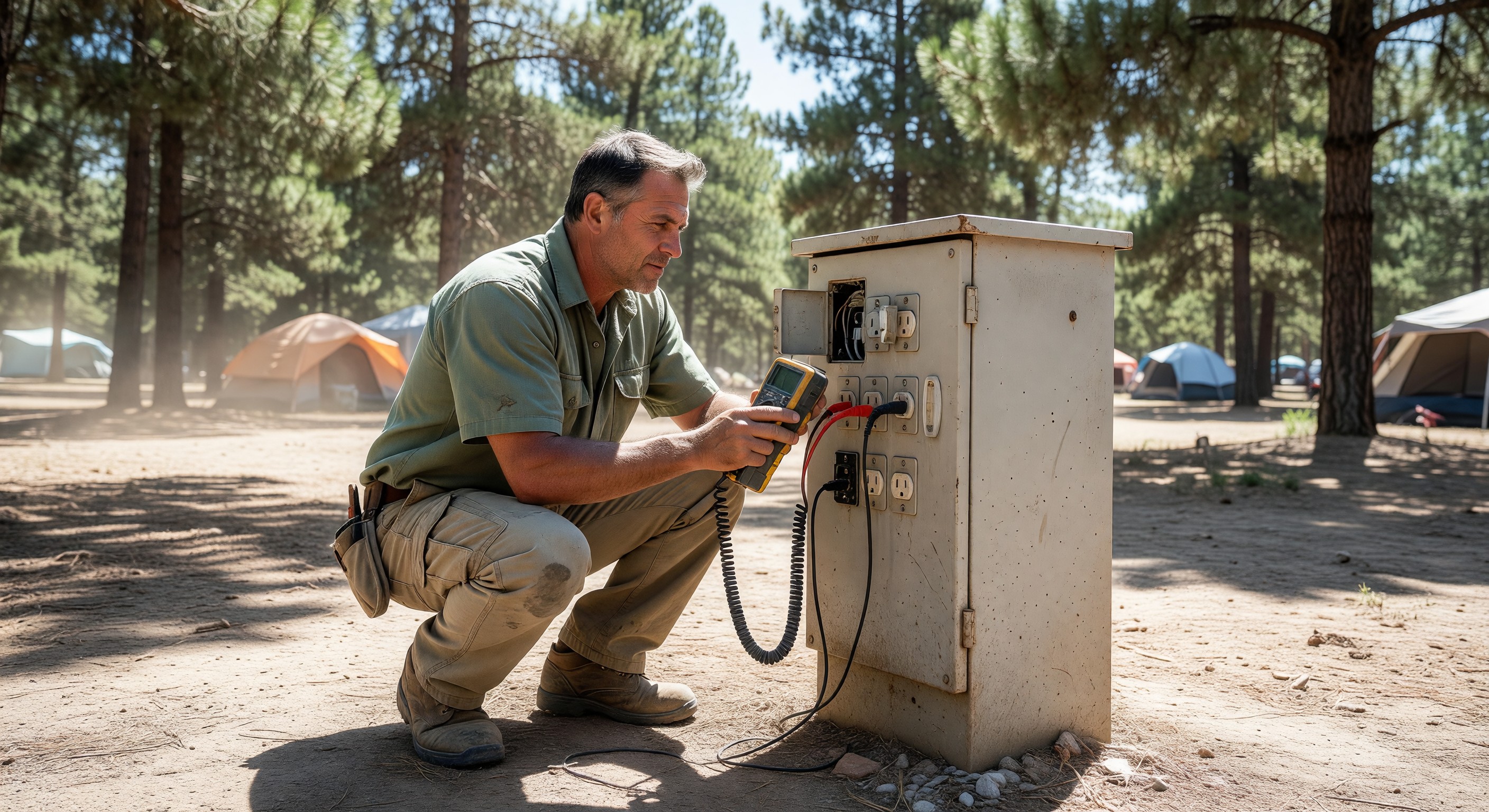
Pedestals in adverse conditions: Campground pedestals endure physical abuse from vehicles, moisture from rain and condensation, insect and rodent intrusion, and UV degradation. A pedestal that was installed to code in 1995 may have deteriorated significantly, developing ground faults, loose connections, or compromised insulation that create shock and fire risk.
RV wiring problems: Guests arrive with RVs of varying age and wiring condition. An RV with a reversed polarity connection or a failed neutral can create dangerous conditions at the pedestal. Technology that detects and reports these conditions protects both the guest and the campground.
Overloading: Guests don’t always understand their RV’s electrical demand or the capacity of the outlets they’re connected to. Multiple appliances running simultaneously — air conditioner, microwave, electric water heater, battery charger — can exceed outlet ratings, stressing connections and creating heat and fire risk.
Ground Fault Circuit Interrupter (GFCI) Protection
GFCI protection is the foundational electrical safety technology for outdoor and wet location circuits. GFCI devices monitor current flowing through a circuit and trip when they detect a difference between the current going out and the current returning — an indication that current is taking an unintended path (like through a person).
Modern electrical codes require GFCI protection on all 15-amp and 20-amp outdoor outlets in campgrounds. Requirements for 30-amp and 50-amp RV receptacles vary by jurisdiction and code version, but the trend is toward broader GFCI protection.
GFCI maintenance matters: A GFCI that trips is protecting its circuit. But a GFCI device can also fail in a mode where it no longer trips when it should — providing false safety assurance. Regular testing with a GFCI tester is the only way to confirm protection remains functional. Monthly testing of all GFCI receptacles across a campground is the recommended standard for properties that are serious about electrical safety.
Smart pedestal systems with ground fault monitoring can automate this testing and alert operators when a device fails, replacing manual monthly walk-throughs for properties with hundreds of outlets.
Arc Fault Detection and Monitoring
Arc faults — unintended electrical arcing caused by damaged insulation, loose connections, or corroded contacts — are a leading cause of electrical fires. Unlike ground faults, arc faults may not trip standard circuit breakers because the arcing current may be below breaker threshold.
Arc fault circuit interrupters (AFCIs) are designed to detect the distinctive electrical signature of arcing and disconnect the circuit. AFCI protection is increasingly required in residential wiring codes and is beginning to appear in commercial campground equipment.
Advanced smart pedestal monitoring systems can detect early-stage connection degradation before it progresses to dangerous arcing. Monitoring real-time current and voltage at each connection point, combined with anomaly detection algorithms, can identify resistance increases that indicate corroding or loosening connections before they become arc fault risks.
Campground Electrical Inspection Protocols
Even with smart monitoring, periodic physical inspection remains essential. A systematic inspection protocol protects against conditions that sensors might miss.
Annual full inspection (minimum standard):
- Visual inspection of all pedestals for physical damage, water intrusion, corrosion, and insect/rodent damage
- Thermal scanning with an infrared camera to identify hot connections
- GFCI tester check on all protected outlets
- Torque check of main connections in distribution panels
- Insulation resistance testing of feeder conductors
Post-season inspection:
- Campgrounds with extended winter closure should inspect all pedestals at season opening before connecting power
- Look specifically for damage from frost heaving, rodent nesting in winter, and UV degradation of outlet covers
Technology tools for efficient inspections:
- Infrared thermal cameras detect hot connections invisible to visual inspection. Professional-grade IR cameras start around $300-500 and are one of the best investments for electrical safety. Hot spots at connections indicate resistance — resistance generates heat — which indicates a problem before it becomes critical.
- Non-contact voltage testers confirm which circuits are energized
- Clamp meters measure actual current draw on energized circuits
- Advanced digital multimeters verify correct voltage, polarity, and ground continuity
Smart Monitoring for Continuous Safety Oversight
Smart pedestal systems with continuous electrical monitoring add a real-time safety layer between periodic inspections. Capabilities relevant to safety:
Voltage monitoring: Detects low voltage conditions (undervoltage) that can damage RV compressors and motors, and overvoltage events that can damage sensitive electronics. Alerts operators to utility supply quality issues.
Ground fault monitoring: Some systems continuously monitor for ground fault conditions at each outlet and alert operators when detected, rather than simply tripping a breaker and waiting for a guest complaint.
Polarity checking: Detects reversed polarity at RV connections — a common wiring error that can create dangerous conditions.
Overload detection: Alerts when current draw approaches or exceeds circuit ratings, before thermal damage or nuisance tripping occurs.
These monitoring capabilities don’t replace physical inspection and proper GFCI protection, but they provide visibility between inspections and can identify developing problems before they become emergencies.
Documentation and Liability Protection
Documenting electrical safety inspections and maintenance is important both for managing risk and for defending against liability claims. Key documentation practices:
- Maintain a log of all pedestal inspections with date, inspector, findings, and actions taken
- Photograph conditions found during inspections — both problems and their resolution
- Keep records of GFCI testing results
- Document any guest-reported electrical issues and the investigation and resolution
- Retain records of electrical contractor work
In the event of an electrical incident on your property, documentation demonstrating a systematic inspection and maintenance program significantly strengthens your position.
Frequently Asked Questions
How often should campground electrical pedestals be completely replaced? There’s no universal standard, but pedestals in campground outdoor environments typically reach end of useful life at 15–25 years. More important than age is condition — pedestals showing significant corrosion, physical damage, or repeated tripping should be evaluated for replacement regardless of age. When planning pedestal replacements, upgrading to smart metered pedestals at the same time captures both safety and operational benefits.
Are campground operators liable if a guest’s RV is damaged by a wiring problem at a site? This is a legal question that depends on jurisdiction and specific circumstances, and operators should consult with a lawyer familiar with premises liability. Generally, operators have a duty to provide electrical service in conformance with applicable codes and in reasonable working condition. Demonstrating regular maintenance and inspection is an important element of meeting that duty.
What should I do if a guest reports an electrical shock or burning smell? Take it seriously immediately. De-energize the circuit at the distribution panel, do not reconnect until a licensed electrician has inspected the circuit, and document everything — the guest report, when you disconnected power, what the electrician found, and what was repaired. If there’s any injury involved, contact your insurance carrier immediately.
Can wireless electrical monitoring systems replace manual pedestal inspections? No. Remote monitoring provides valuable real-time data but cannot replace physical inspection. Monitoring cannot see a corroded outlet cover, a pedestal that’s been hit by a vehicle, or insulation damage inside a conduit. Physical inspection and remote monitoring are complementary safety practices, not alternatives.
Further Reading from Authoritative Sources
- NFPA 70 National Electrical Code Article 551 requirements for campground and RV park electrical systems — NFPA 70 (National Electrical Code) is the governing standard for campground electrical installations, including site pedestal design, GFCI requirements, and service ampacity.
- OSHA electrical safety standards for campground employee electrical hazard protection — OSHA’s electrical safety standards (29 CFR 1910.303 and related subparts) govern how campground employees must be protected when working near or responding to electrical hazards.