Demand charges represent one of the most misunderstood components of commercial electricity bills — and one of the most significant opportunities for campground operators to reduce utility costs. Unlike energy charges that accumulate based on total kilowatt-hours consumed, demand charges are assessed based on your peak power consumption during any brief interval within the billing period.
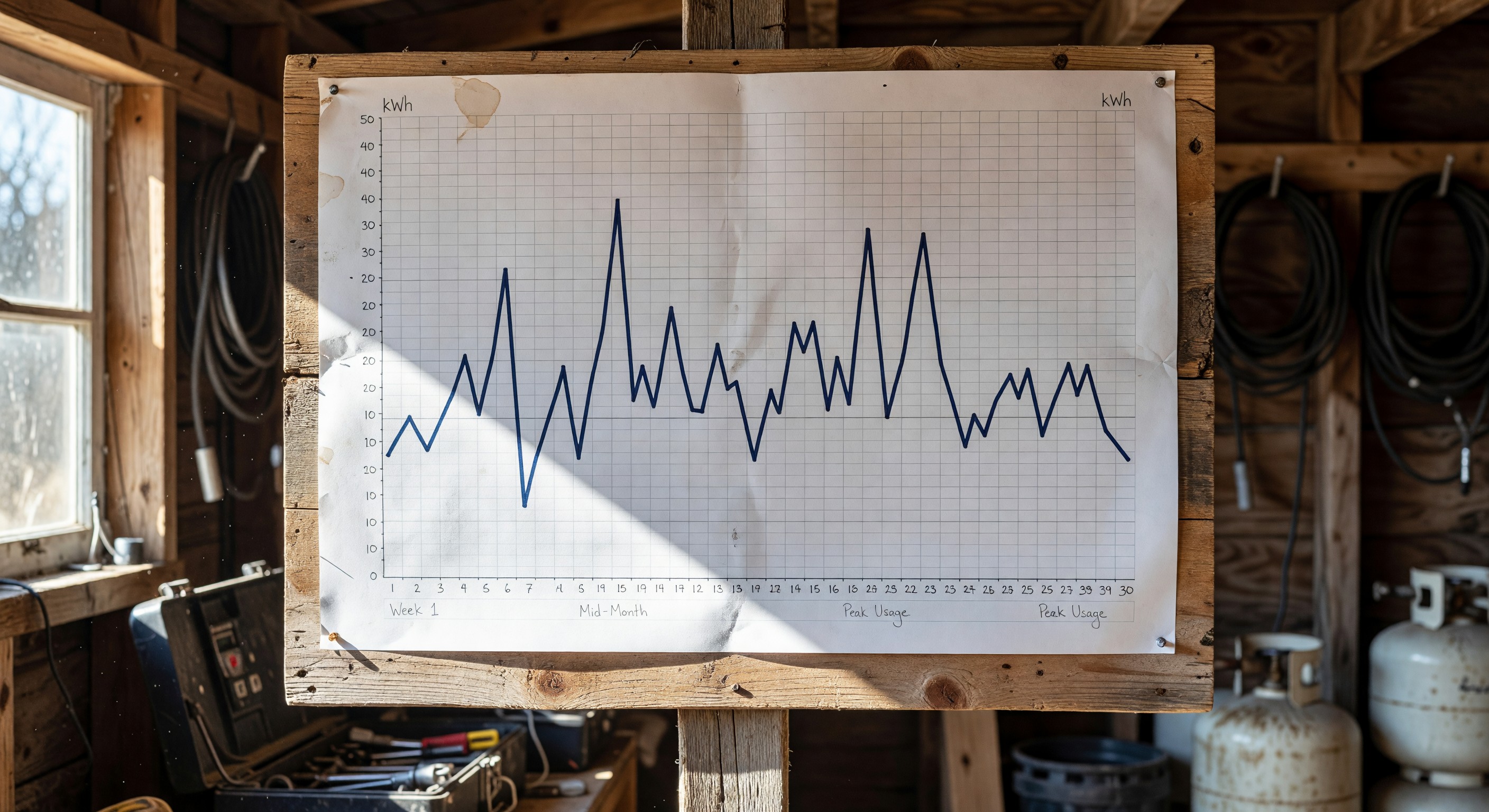
The mechanism creates a challenging dynamic: a single busy weekend afternoon where HVAC, laundry, showers, EV charging, and the camp store kitchen all hit peak load simultaneously can drive a demand charge that inflates your electricity bill for the entire month, even if your average consumption is modest.
How Demand Charges Actually Work
Your electric utility measures your power consumption continuously. On commercial rates, it typically records your peak consumption in 15-minute or 30-minute intervals throughout each billing period. The demand charge is calculated by multiplying your single highest interval reading (in kilowatts) by the demand charge rate (in dollars per kW per month).
Example: If your peak 15-minute demand during a summer month was 150 kW and your utility charges $12/kW for demand, your demand charge for that month is $1,800 — regardless of whether that peak lasted 15 minutes or the entire month.
Demand charges vary enormously by utility, rate class, and region. Some utilities charge minimal demand fees on commercial rates; others charge $15–$30/kW or more. Understanding your specific rate structure is the first step toward managing demand costs.
Reading Your Utility Bill for Demand Components
Many campground operators pay electric bills without fully understanding what they’re paying for. A commercial electric bill typically breaks out:
- Energy charge: Kilowatt-hours × $/kWh (may have time-of-use tiers)
- Demand charge: Peak kW × $/kW
- Fixed/facilities charge: Monthly customer charge independent of usage
- Transmission and distribution charges: May be assessed separately
- Taxes and fees
Request interval data from your utility — 15-minute interval consumption records for the past 12 months. Most utilities provide this at no cost for commercial accounts. This data reveals when your demand peaks occur, how high they reach, and how they correlate with your occupancy calendar. It’s essential input for any demand management effort.
Common Sources of Campground Demand Peaks
Understanding what drives your peaks allows targeted intervention:
Air conditioning startup: Large HVAC units draw 5–10× their running current during startup — a 5-second event that registers across an entire 15-minute interval if multiple units start close together. Staggered HVAC startup sequences can significantly reduce peak demand from this source.
Electric water heating recovery: After a busy morning shower rush, large electric water heater tanks draw full power for extended periods to recover temperature. If this coincides with other morning peak loads, demand spikes.
Laundry equipment: Multiple commercial dryers running simultaneously, particularly large-capacity electric dryers, create concentrated demand peaks.
EV charging: Level 2 EV charging at 7.2 kW per vehicle is a continuous draw. Five vehicles charging simultaneously adds 36 kW to demand — more than many campgrounds’ entire base load.
Pumping equipment: Water pump startups and pressure booster systems create brief high-demand events.
Technology Solutions for Demand Management
Interval metering and monitoring: If you don’t already have it, interval metering — typically provided through a smart meter installation by your utility or through third-party sub-metering — gives you real-time visibility into demand levels. Monitoring platforms display current consumption against your target demand threshold, enabling active management.
Building automation and HVAC controls: Demand response-capable thermostats and building automation systems can automatically adjust HVAC setpoints when demand approaches a preset threshold. Raising cooling setpoints by 2–3°F briefly during a demand event reduces HVAC load without significantly affecting comfort.
EV charging load management: Managed EV charging systems (discussed in detail in a separate article) are among the most effective demand management tools. They can automatically reduce charging rates across all vehicles simultaneously in response to a demand signal — cutting potentially significant load with no guest service impact.
Staggered equipment scheduling: Coordinating equipment startup times to prevent simultaneous peak loads is a low-tech but effective demand management strategy. If your laundry machines, water heater recovery, and HVAC morning startup can be offset by 30 minutes each, your morning demand peak can drop substantially.
Battery energy storage with demand management: Battery systems with real-time demand monitoring can discharge to prevent demand spikes. When the monitoring system detects consumption approaching the demand threshold, the battery discharges automatically to offset the utility demand. This is particularly effective for infrequent, unpredictable demand peaks that are difficult to prevent through scheduling alone.
Time-of-Use Rates and Demand Management
Some utilities offer time-of-use (TOU) rates where energy costs vary by time of day — with higher rates during peak demand periods (typically weekday afternoons) and lower rates overnight. TOU rates may also include time-differentiated demand charges.
For campgrounds, TOU rates create both challenges and opportunities:
- Peak rates during busy afternoon hours increase costs for occupancy-correlated loads
- Off-peak overnight rates enable cost-effective EV charging and water heating
- The spread between peak and off-peak rates creates value for battery storage that can charge overnight and discharge during expensive hours
Whether TOU rates are advantageous depends on your load profile. Campgrounds with significant overnight stays and the ability to shift loads toward off-peak hours often benefit from TOU rates. Operations with highly variable schedules that can’t predictably control demand timing may be better served by flat rates.
Setting a Demand Management Target
The first step in active demand management is setting a target peak demand — the level above which you’ll intervene. A reasonable starting target might be your average monthly peak demand from the past 12 months, with the goal of shaving peak events to that level or below.
Over time, you can work the target downward as you build confidence in your demand management systems and understand your operation’s flexibility. A 15–25% reduction in billed demand from active management is achievable at most campgrounds within the first year.
Track your progress monthly by comparing billed demand to the same month in the prior year and to your baseline. Correlation with occupancy data helps separate the effect of your management interventions from natural demand variation.
Frequently Asked Questions
Does demand management reduce my environmental impact as well as my costs? Peak demand on the electrical grid often coincides with times when the dirtiest, least efficient power plants are brought online to meet demand spikes. Reducing your peak demand reduces your direct contribution to grid peak stress and may reduce the carbon intensity of the electricity you consume. It’s a case where cost savings and environmental benefit align.
My utility doesn’t seem to have significant demand charges — should I still care about demand management? If your current rate structure has minimal demand charges, demand management provides less direct savings. However, utilities periodically update rate structures, and demand charges tend to increase over time. Building good demand visibility and management practices now prepares you for rate changes and positions you well if you add EV charging infrastructure.
Can I negotiate demand charge rates with my utility? Demand charge rates are generally set by tariff and apply uniformly across rate classes — direct negotiation typically isn’t available for standard commercial customers. However, enrolling in utility demand response programs (where you agree to reduce consumption on request during grid emergencies) can earn bill credits that effectively reduce your demand costs.
How do I know if a demand management investment is worth it at my specific campground? Start by pulling 12 months of interval data from your utility and calculating what your demand charges have been. Multiply your average monthly peak demand by your demand charge rate to see what portion of your bill is demand-driven. If demand charges represent more than 20% of your total electric bill, active demand management likely justifies investment in monitoring and control technology.
Further Reading from Authoritative Sources
- Department of Energy demand charge management and energy storage resources — The Department of Energy publishes guidance on demand charge management strategies and energy storage applications for commercial facilities, making it the appropriate federal authority for the technical and financial analysis guidance in this article.
- EPA energy efficiency resources for commercial facilities — The EPA’s ENERGY STAR program and energy management resources provide guidance on demand-side management and energy cost reduction for commercial facilities, supplementing the DOE’s technical guidance with practical efficiency frameworks relevant to campground utility management.