Two federal land agencies spent 2026 moving their campground fee collection in opposite directions, and the reasoning behind each move is more useful to a private park operator than any vendor comparison chart.
The Bureau of Land Management announced new off-grid payment kiosks at Madison River campgrounds on May 1, 2026 — solar-powered units designed to take contactless card and mobile payments in places with no cellular service, no Wi-Fi, and no external power. The same program has been expanding since the first Lower Deschutes installations, and has since reached the Las Cruces District, the Paria River District, and three monument campgrounds.
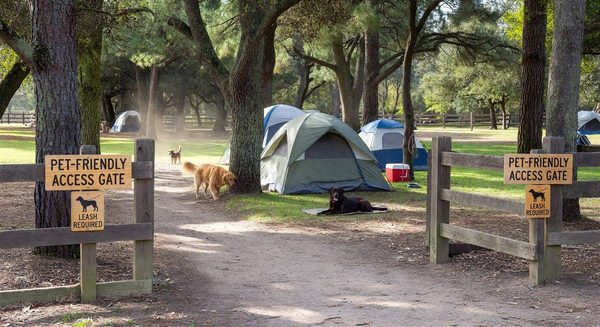
Meanwhile the Forest Service went the other way. Umpqua National Forest stopped accepting cash or check at forest-operated developed recreation sites entirely, moving to Scan & Pay. Olympic National Forest published cashless digital payment and self-service fee booth options. On the Wallowa-Whitman, the La Grande Ranger District dropped to Scan & Pay as the only payment option after fee collection tubes were stolen at two campgrounds.
Same problem. Opposite hardware decisions. The difference is worth understanding before signing a purchase order.
The BLM case: hardware because there is no signal
The BLM kiosk deployments share a defining characteristic — they are in places where a phone does not work. An off-grid solar kiosk that processes a card without cellular connectivity solves a problem that no app can solve, because the app requires the guest to have coverage or to have thought ahead.
The Recreation.gov Scan & Pay flow makes this explicit: visitors are instructed to download the app and add a payment method before heading out, then scan a QR code on arrival. That instruction is an admission. If the guest arrives without having prepared, and there is no signal, there is no transaction.
For a park with genuine coverage dead zones, a kiosk is not a legacy device. It is the only thing that captures revenue from an unprepared guest at the moment they are standing there willing to pay.
The Forest Service case: no hardware because hardware gets robbed
The La Grande decision is the clearest signal in the whole picture. The trigger was not a technology upgrade — it was theft of the collection tubes. Removing cash removed the reason to break into anything.
This is the argument that most often goes unspoken in kiosk evaluations. A payment terminal in an unstaffed campground is a piece of unattended equipment in a remote location, and it carries the maintenance, vandalism, and service-call profile of exactly that. Scan & Pay pushes the payment device into the guest’s pocket, where the operator has no exposure to it at all.
The trade is coverage. The Forest Service accepted a narrower set of guests who can transact, in exchange for eliminating a physical target and the field visits it generates.
What decides it for a private park
The federal split maps onto a straightforward test. Run these four questions against the actual site, not the brochure:
Is there reliable cell coverage at the arrival point? Not at the office, not at the highest loop — at the specific spot where an unregistered guest first stops. If the answer is no, a QR-only model silently loses those transactions and the operator never sees the ones that drove away.
How far is the site from someone who can service a terminal? A kiosk that takes two hours each way to reach turns every card-reader fault into a half-day. The BLM units are built for remoteness specifically because that travel cost is the dominant term.
Is cash still moving on the property? If so, the kiosk conversation is really a cash-handling conversation, and the security case for going cashless is stronger than the convenience case. Theft of an unattended collection point is a known failure mode with a known fix.
What share of guests are first-time or walk-up? Repeat guests and reservation holders arrive prepared and will happily scan a code. Walk-ups and first-timers will not have the app. A park whose mix skews toward drive-by arrivals needs something that works cold.
The honest middle position
Neither agency actually eliminated the other option outright at every site, and neither should a private park. Olympic National Forest published cashless digital payments and self-service fee booth options in the same announcement — the two coexist.
The version of this that works is a QR-based flow as the primary path, sized and signed for the majority of guests, with a single hardened contactless terminal at the arrival point as the fallback for anyone the app cannot reach. That is more capital than a printed sign and considerably less than terminals distributed across every loop.
Staffing pressure is what is really driving all of this. Parks are automating check-in, gate access, and guidebooks because they cannot hire the way they used to, and fee collection is simply the piece with money attached. The right question is not whether kiosks are finished. It is which unstaffed transaction the park can afford to lose, and the answer differs by site.