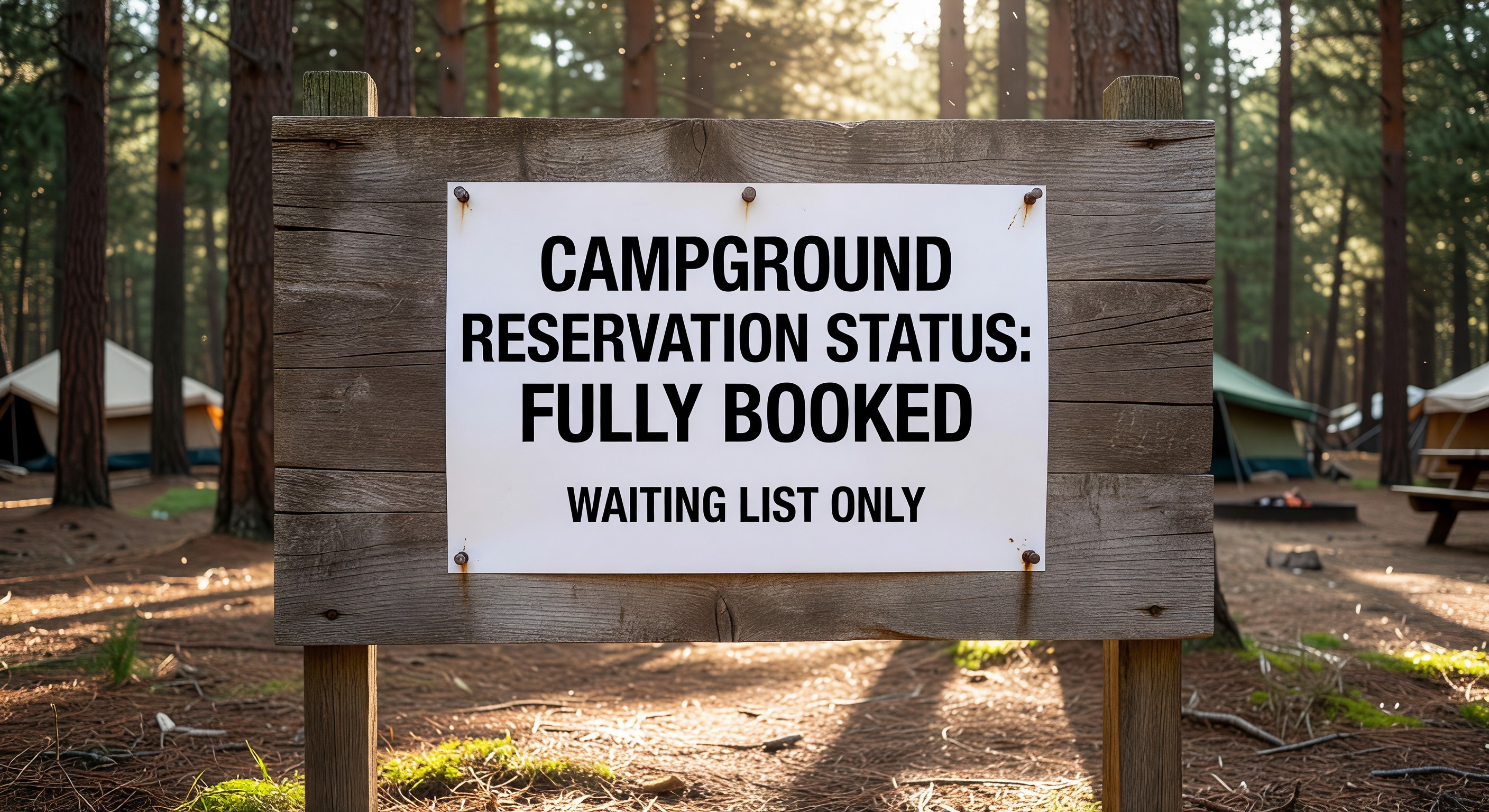
When your campground fills up — and during peak season, it will — the guests who couldn’t get a site don’t disappear. Many of them want your park specifically. They’re willing to check back, take a cancellation, or accept a different site type if it means they can stay with you.
A waitlist captures that latent demand and converts it into bookings that cancellations would otherwise destroy. Done well, a waitlist system keeps your occupancy rate near capacity through peak season even when individual cancellations would otherwise leave holes.
Why Cancellations Create More Holes Than You Think
The obvious cost of a cancellation is one empty site night. The less obvious cost is what happens when that site stays empty.
In peak season, a site that cancels on a Thursday for a Saturday arrival is nearly impossible to fill through normal booking channels on that timeline. Your website bookings may be closed within 48 hours of arrival. Your OTA channels may not surface the opening quickly enough. You end up with a prime weekend site sitting empty.
A waitlist converts this dynamic. Guests already wanting a spot get notified immediately. If even one in four waitlisted guests takes a cancelled spot, you’ve preserved significant revenue that would otherwise evaporate.
What a Campground Waitlist System Needs
Capture Mechanism
Waitlisted guests need a way to enter their interest. Options include:
- An automated waitlist form on your booking page, triggered when availability is zero for their dates
- A staff-captured waitlist for guests who call and can’t be accommodated
- OTA-platform waitlist functionality (available on some platforms)
The capture form should collect: guest name, email, phone, preferred dates, preferred site type, and flexibility range (Would you accept one day shorter? A different site type?). Flexibility information is important — a rigid “only Site 42, only exactly those dates” waitlist entry is much harder to match.
Notification System
When a cancellation opens availability, the system should:
- Identify waitlisted guests whose preferences match the opening
- Send an automatic notification (email and/or SMS) with a link to book the site
- Hold the site for a defined window (24–48 hours) before offering it to the next waitlisted guest
- If no waitlisted guest takes it within the window, release to general availability
Manual waitlist management — a staff member calls through a list every time there’s a cancellation — doesn’t scale and misses the speed advantage that makes waitlists effective. Automation is important.
Priority Rules
Define how you prioritize waitlisted guests:
First-come, first-served is the simplest approach. The guest who joined the waitlist earliest gets first notification.
Loyalty priority gives returning guests preference. If you have a membership or loyalty program, this is a meaningful benefit to offer members.
Flexibility priority routes notifications first to guests who indicated date or site flexibility, since they’re more likely to accept the cancellation opening as-is.
Most campground PMS platforms with waitlist functionality default to first-come, first-served. Custom priority rules may require manual management or workarounds.
Communicating With Waitlisted Guests
Set expectations clearly when a guest joins your waitlist:
- Explain that the waitlist doesn’t guarantee a booking
- Describe the notification process (you’ll receive an email and/or text with a 24-hour window to book)
- Note that the site that opens may differ from their first preference
- Thank them for their interest and express genuine hope that you can accommodate them
Guests who feel the waitlist process was transparent and fair are far more likely to stay positive even if they don’t ultimately get a spot.
Waitlist as a Marketing Signal
Beyond its operational value, waitlist data is useful for planning:
Demand signals for expansion. If you have 50 guests on a waitlist for a single holiday weekend, that’s a clear signal about unmet demand. This data supports the case for adding sites or units.
Insight into site type demand. If your waitlist is overwhelmingly for full-hookup RV sites while your tent sites have low demand, that information informs future capital allocation.
Geographic data on where you’re losing guests. If you track where waitlisted guests live, you have insight into the geographic reach of your unfilled demand — useful for targeted marketing.
Reducing Waitlist Need Through Better Cancellation Management
The best complement to a waitlist is a cancellation policy that reduces cancellations in the first place:
- Non-refundable deposits reduce casual bookings that cancel when other plans emerge
- Shorter refund windows encourage guests who won’t make it to cancel earlier, when the site is easier to resell
- Rebooking credit rather than cash refunds for cancellations keeps revenue in your ecosystem while giving guests flexibility
Frequently Asked Questions
Does my reservation software include waitlist functionality? Many modern campground PMS platforms include some form of waitlist management, but the sophistication varies widely. Ask specifically about automated notification, the hold window, and priority rules before assuming the feature works the way you need it to.
Should I charge a waitlist deposit? Some operators do, particularly for high-demand events. A small deposit ($10–25) that applies to the reservation if confirmed weeds out guests who listed themselves out of casual interest but wouldn’t actually take a spot. It’s worth testing but may reduce waitlist sign-ups.
How many guests should be on a waitlist per open site? The right depth depends on your acceptance rate. If you have historical data showing that about 1 in 3 waitlisted guests takes an offered spot, you’d want at least 6–10 guests per available slot to confidently fill cancellations. Track your acceptance rate over time and size your lists accordingly.
Can I run a waitlist for a specific site, or only for a site type? Both are possible, though site-specific waitlists are more complex to manage and less likely to result in matches. Site-type waitlists give you more flexibility to slot in cancellations and are generally the better operational choice.
Further Reading from Authoritative Sources
- ARVC campground waitlist management and cancellation recovery resources — ARVC publishes operational guidance on reservation management practices for campground operators including waitlist system design and cancellation recovery strategies that preserve peak-season occupancy.
- Waitlist management principles and demand capture strategies — Wikipedia’s waiting list article provides authoritative background on waitlist management principles including priority queue design and notification systems that underpin the campground waitlist strategies described in the article.