Email has been the standard channel for campground guest communication for years, but its effectiveness has been declining as inboxes have become crowded and open rates have dropped. Text messaging — SMS and MMS — is now the most reliable way to reach guests with time-sensitive information.
The numbers support this. SMS open rates consistently run above 90%, with most messages read within minutes of delivery. Email open rates for non-promotional campground communications average 30–45%. For pre-arrival information that guests need at the moment they’re driving to your park, the difference is decisive.
What to Send via Text vs. Email
Not all campground communications belong in a text message. The channel should be reserved for information that is:
- Time-sensitive — The guest needs it now or soon
- Short and actionable — SMS is not the right medium for multi-paragraph park rules
- High-priority — Information that genuinely matters for their experience
Best for SMS:
- Day-before arrival reminder with gate code
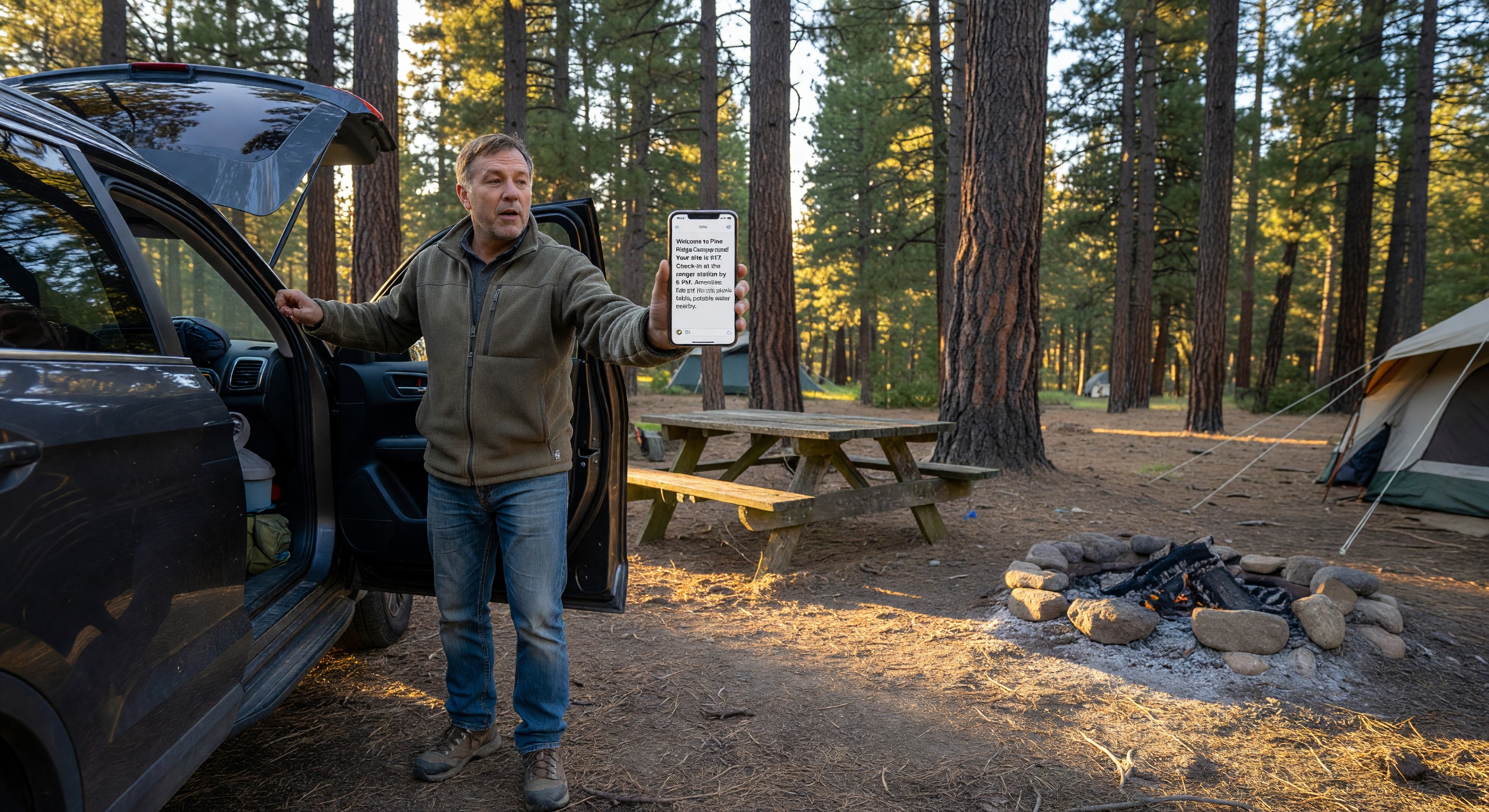
- Day-of arrival message with site number and check-in instructions
- Maintenance issue notifications (“Your site’s water hookup needs attention — please call us”)
- Weather alerts affecting the park
- Checkout reminder with checkout time and instructions
Better as email:
- Booking confirmation with all details
- Pre-arrival guide with full park information
- Post-stay review request
- Marketing and promotional communications
- Cancellation policy and terms
Implementing SMS in Your Reservation System
Most modern campground PMS platforms include SMS capability, though the implementation quality varies significantly. When evaluating, look for:
Two-way SMS: Guests should be able to reply to your text and have it route to your staff for response. One-way broadcast texting creates frustration when guests respond to a message and hear nothing back.
Automated triggers: SMS should send automatically based on reservation events (booking created, X days before arrival, check-in day) without staff manually initiating each message.
Customizable templates: Standard templates that you can personalize with park-specific information, tone that matches your brand, and site-specific details merged from the reservation record.
Opt-out compliance: Your SMS system must honor opt-outs and remove guests who unsubscribe from future messages. This is a legal requirement under the TCPA (Telephone Consumer Protection Act) in the US.
If your PMS doesn’t include SMS, third-party platforms like Podium, Textline, or SimpleTexting can be connected with some configuration.
Building an SMS Communication Sequence
A well-designed SMS sequence for campground arrivals looks like:
T-7 days: Optional — “Your reservation at [Park] is one week away! Any questions? Reply to this message or call [number].”
T-1 day: “You’re arriving tomorrow at [Park]! Your site is [number] in [loop]. Gate code: [code]. Check-in opens at [time]. See you soon!”
Day-of arrival (late afternoon if not yet checked in): “Hope you’re on your way! If you have any trouble finding your site, call or text [number] and we’ll help.”
Day-of checkout: “Today is your last day with us — checkout is by [time]. We hope to see you again! [link to review page]”
Managing Inbound Replies
The biggest operational challenge of two-way SMS is managing the inbound channel. Guests who receive your text and have questions will reply. You need a defined process:
Dedicated inbox: SMS responses should route to a monitored inbox — not a staff member’s personal phone. This ensures coverage during staff transitions and gives you a record.
Response time expectation: Set an expectation in your texts about response time (“We monitor texts during office hours, 8am–8pm”). Guests who expect immediate 24/7 response and don’t get it will be frustrated.
After-hours protocol: For urgent after-hours situations, your text reply should include an emergency number. Routine questions can wait for morning.
Compliance Basics
SMS marketing and automated messaging has regulatory requirements:
- Written consent is required before sending marketing texts. Include an opt-in checkbox in your booking form: “I’d like to receive text updates about my reservation.”
- Transactional messages (booking confirmation, arrival info) require consent that is typically implied by the booking, but explicit consent is safer.
- Opt-out must be honored immediately — when a guest replies STOP, they must be removed from SMS communications.
- Your business name must be included in each message so recipients know who is texting them.
Frequently Asked Questions
Do I need a separate phone number for campground SMS, or can I use my existing number? You should use a business number, not a personal cell phone, for campground SMS. Most SMS platforms provide a dedicated business number. This protects staff privacy and ensures continuity when staff changes occur.
What if a guest doesn’t have a cell phone or prefers not to receive texts? Make SMS opt-in, not mandatory. Guests who prefer email or phone should receive the same essential information through those channels. Text messaging is the preferred channel for a majority of guests, but don’t make it the only channel.
How do I handle guests who are in areas with poor cell service? Service gaps are a real limitation of SMS for remote campgrounds. Where possible, send time-sensitive information before guests reach low-coverage areas. Email confirmations serve as a backup record guests can reference offline.
Is there a cost to running SMS communication through my PMS? Most PMS platforms that include SMS charge per-message fees or include a message bundle. Costs typically range from $0.01–$0.05 per message. Budget based on your message volume — for a 500-site park with high occupancy, monthly SMS costs can reach $200–$500. The ROI relative to improved guest experience and reduced inbound calls is typically positive.
Further Reading from Authoritative Sources
- FCC Telephone Consumer Protection Act requirements for SMS marketing consent and opt-out — The FCC enforces the Telephone Consumer Protection Act, which governs campground SMS communications to guests.
- ARVC campground guest communication standards and SMS technology guidance — ARVC’s operational and technology resources for campground operators cover guest communication channel strategy, including SMS implementation guidance and best practices.