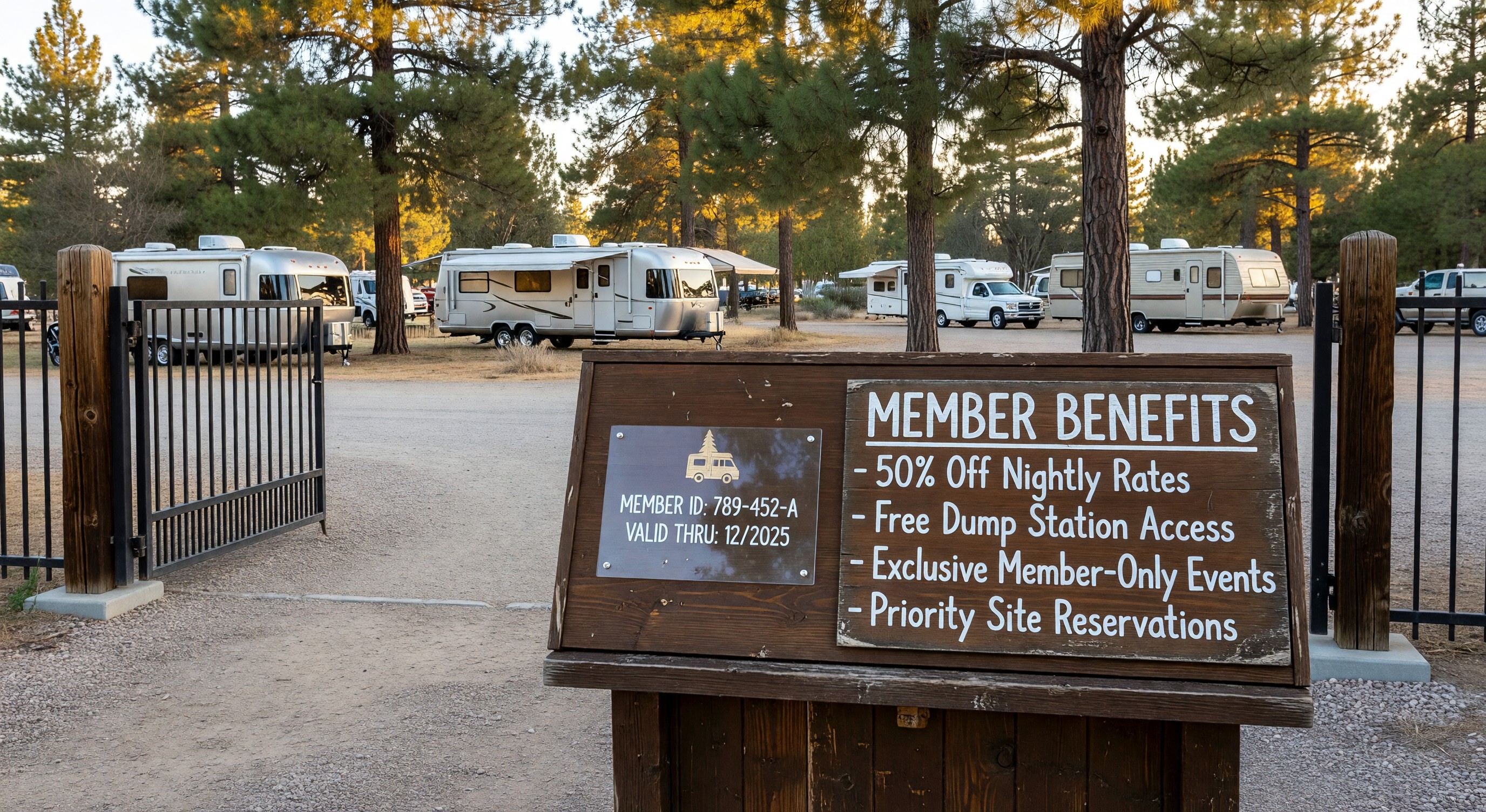
Subscription and membership models have become increasingly popular across the travel and recreation industry. In camping, they take several forms: third-party camping clubs like Good Sam and Thousand Trails, park-specific annual passes, and newer tech-enabled camping membership products that have emerged in the past few years.
For campground operators, memberships represent an opportunity to build recurring revenue, increase guest loyalty, and smooth out occupancy variability. They also introduce operational complexity and carry pricing trade-offs worth understanding before committing.
Types of Camping Membership Programs
Third-party camping clubs: Good Sam, Thousand Trails, and similar organizations sell memberships to campers and contract with parks to accept those memberships at a discounted rate. The park gets exposure to the club’s member base; the member gets discounted access. Parks typically receive a lower net rate per member-booking night.
Park-specific annual passes: A park sells an annual membership directly — typically offering a set number of nights, priority site selection, or a percentage discount on all bookings. Revenue is collected upfront; the benefit is earned over the membership year.
Tech-enabled camping clubs: Newer platforms like Collective Retreats and private membership campground networks sell access to a curated network of properties. These tend to target higher-income travelers with premium properties and higher membership fees.
Loyalty/frequent camper programs: Less formal than true memberships — accumulated night credits, tier-based discounts, or anniversary rewards. These function as a retention tool rather than a revenue model.
The Financial Structure of a Park-Direct Membership
A park-direct annual membership might look like this:
- Membership fee: $299/year
- Benefit: 10 nights at 30% off standard rates, priority site selection, and waived reservation fees
- Breakeven: A member who takes their full 10 nights saves more than the $299 membership cost (assuming a $40/night rate × 30% = $12 discount × 10 = $120 — actually below the membership cost in this example, so the math needs calibrating to your rates)
The operator collects $299 upfront as recurring revenue. If the member takes all 10 nights, the operator receives those nights at a 30% discount to standard rates. If the member takes only 5 nights, the park effectively received $299 for 5 discounted nights — a favorable outcome.
Designing the membership so that the breakeven requires members to actually visit regularly is important. A membership that’s profitable only if members don’t use it is not a sustainable loyalty model.
Technology Requirements for Running a Membership Program
A park-direct membership program requires:
Membership tracking in your PMS: The system needs to know who is a member, when their membership expires, and what benefits they’re entitled to. When a member books, the system should automatically apply their discount and track usage against their annual entitlement.
Member portal or identification: Members need a way to identify themselves at booking (membership number, linked account, QR code) and at arrival. Staff need a reliable way to verify membership status at the front desk.
Automated renewal workflow: Membership programs require renewal communication — reminders before expiration, renewal payment processing, and updated membership credentials after renewal. Manual renewal processes don’t scale beyond a small number of members.
Reporting on member behavior: How often are members visiting? What’s the average nights per active member? What’s the renewal rate? These metrics tell you whether the program is healthy and whether the economics are working.
Joining a Third-Party Network
Joining an established camping club like Good Sam offers instant access to a large established member base without building your own membership infrastructure. The trade-offs:
Pros: Immediate exposure, established booking flow, no technology investment, known demand from active member base.
Cons: Reduced net revenue per booking, less control over the guest relationship, rate parity requirements in some agreements, commission or fee structures that may be unfavorable.
Before signing with a third-party camping club, model the expected revenue at the discounted member rate across your projected volume. Compare it to what you’d receive from a direct booking after any OTA commission. The question is whether the incremental volume from the club’s member base justifies the rate reduction.
Automation and Sustainability
The biggest operational risk of a membership program is unsustainable manual management. If your membership program requires staff to manually apply discounts, track entitlements, and process renewals, it will either consume significant time or fail to deliver consistently — both outcomes that undermine the program’s value.
Invest in PMS functionality that automates membership management before launching a program. The automation requirements are similar to those for a loyalty program but with added financial complexity around entitlement tracking.
Frequently Asked Questions
What membership price is appropriate for a park-direct program? Price the membership at a level where a member who visits 3–4 times per season breaks even on the fee. If the membership costs more than a reasonably active member can recoup in benefits, uptake will be low and renewal rates will be poor.
Can I run a membership program alongside OTA listings? Yes, but watch for rate parity conflicts. If an OTA agreement requires that your OTA-listed rate be as low as your lowest publicly available rate, your member discount may create a conflict. Review your OTA agreements before launching a membership that includes rate discounts.
How do I handle membership in my reservation system if my PMS doesn’t natively support it? A workaround is to track membership in a separate spreadsheet and have staff apply discounts manually at booking. This works at small scale (under 50 members) but creates consistency and audit trail problems. If your PMS lacks membership functionality, evaluate whether an upgrade is warranted.
What renewal rate should I expect for a membership program in its first year? First-year renewal rates for well-designed camping membership programs run 50–70%. Members who visited multiple times and got clear value from the membership renew at much higher rates than those who visited once. Program economics typically improve significantly after year two as your active member base matures.
Further Reading from Authoritative Sources
- ARVC campground membership program design and third-party club resources — ARVC publishes guidance on campground membership program design and tracks industry trends in loyalty and subscription camping, providing the authoritative industry context for evaluating both park-direct and third-party membership program options.
- Subscription business model economics and renewal rate fundamentals — Wikipedia’s subscription business model article provides authoritative background on the recurring revenue economics, renewal rate dynamics, and automation requirements that determine whether a campground membership program is financially sustainable.