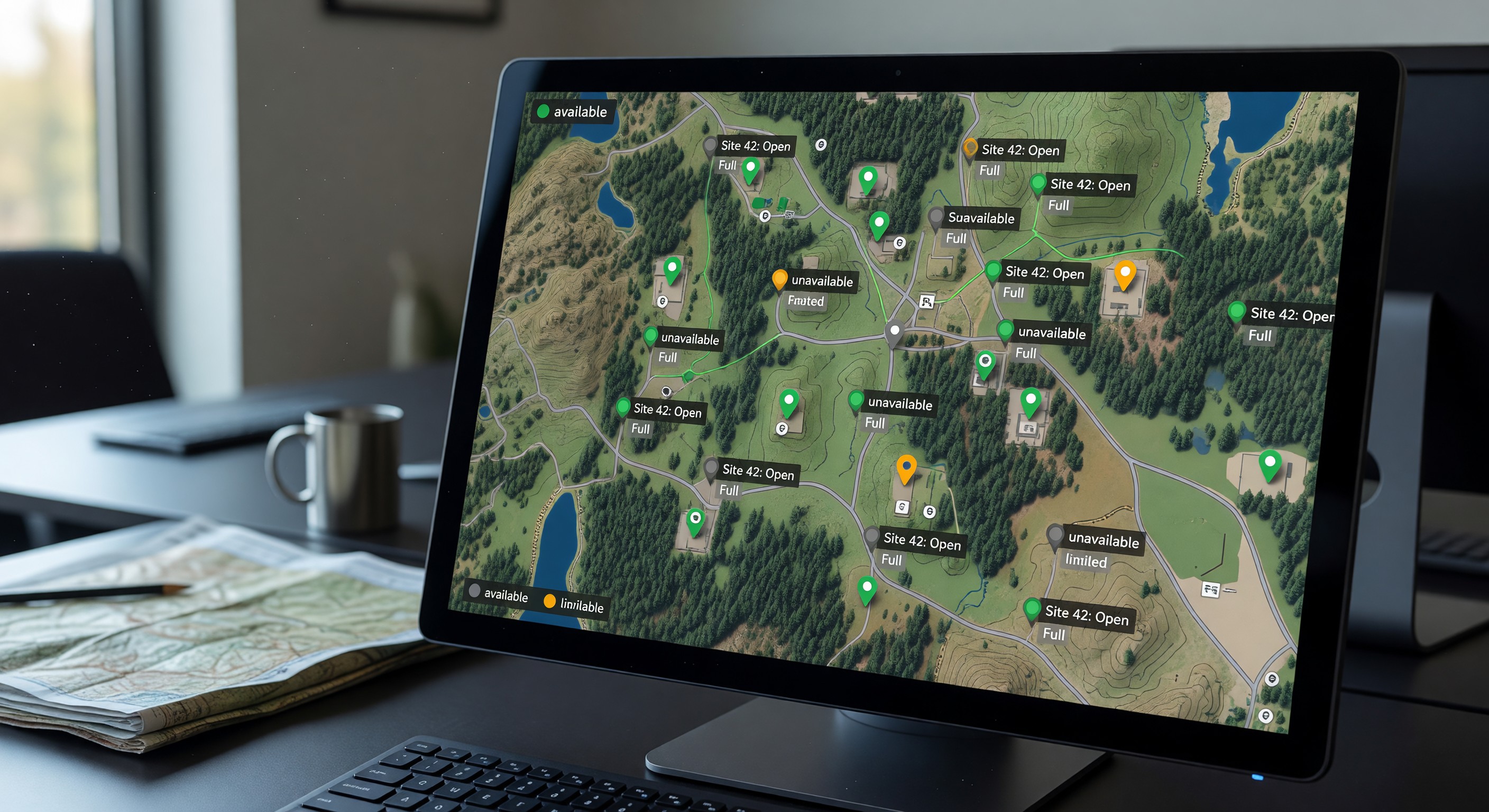
The campground industry has seen significant consolidation over the past several years. Private equity groups, regional chains, and franchise operators now manage portfolios of parks that range from two or three properties to dozens. Managing reservations across a portfolio is a fundamentally different challenge from running a single park — one that requires purpose-built tools and deliberate operational processes.
If you’re operating multiple parks or planning to expand, understanding the technology landscape for multi-property reservation management will save you from costly decisions later.
The Core Problem: Fragmented Inventory
The simplest approach to multi-park management is running each property independently — separate PMS platforms, separate booking pages, separate guest databases. This works at two or three parks with strong independent identities, but it breaks down quickly as you scale.
The problems with fragmented systems:
No shared guest view. A loyal guest at Park A who would be interested in Park B is invisible across the portfolio. Marketing to that guest requires extracting and reconciling data from multiple systems.
No portfolio-level reporting. Understanding your total occupancy, revenue, and performance trends requires manually pulling reports from each system and combining them — a time-consuming process prone to error.
Staff can’t work across properties. If a guest wants to stay at multiple properties on one trip, staff can’t see the full itinerary or process it in a single transaction.
Inconsistent guest experience. Each property’s booking flow may look and behave differently, reducing brand coherence.
What Multi-Park PMS Platforms Provide
A purpose-built multi-property PMS addresses these issues with:
Unified guest database. All guest records exist in a single system, with stay history visible across all properties. You can identify your most loyal multi-property guests and market to them as a portfolio.
Portfolio-level dashboard. Total occupancy, revenue by property, and combined reporting give ownership and management a real-time portfolio view without data compilation work.
Cross-property booking. Staff can book a guest into multiple properties in a single workflow. Guests traveling an itinerary that includes two of your parks can be served without friction.
Shared rate management. Seasonal rate updates, promotion campaigns, and pricing rules can be applied across properties simultaneously rather than park-by-park.
Consolidated OTA channel management. Rather than managing channel connections separately for each property, a centralized channel manager pushes inventory to OTAs across the portfolio.
Guest Loyalty Across a Portfolio
One of the highest-value capabilities of a multi-park system is portfolio-wide guest loyalty. A guest who has stayed at three of your properties should earn recognition and benefits that reflect their relationship with your brand — not just their most recent individual stay.
Features to look for in multi-park loyalty:
- Stay count and revenue accumulation across all properties
- Status tiers visible to front desk staff at all locations
- Portfolio-wide benefits that any property honors (early check-in, site upgrade when available, loyalty rate)
- Centralized communication that references the guest’s full history
Building this loyalty capability is one of the most effective differentiators for multi-park operators competing with independent parks.
Centralized vs. Decentralized Operations Models
Multi-park operators have choices about how centralized operations should be:
Centralized reservations: All bookings handled by a central reservations team (phone and chat). Individual parks handle arrivals and in-person management but don’t manage their own booking intake.
Decentralized reservations: Each park manages its own reservations with the multi-park PMS as the shared technology layer. Portfolio coordination happens through reporting and shared guest data, not centralized staff.
Hybrid: Centralized handling for group bookings, last-minute availability, and complex multi-park itineraries. Property-level staff handle routine individual bookings.
The right model depends on your operating cost structure, the independence of your park brands, and your staffing model. Large portfolios with strong central infrastructure often benefit from centralized reservations. Smaller portfolios where each park has a strong local identity often do better decentralized.
Technology Integration Considerations
Multi-park systems must integrate with property-level technology that may vary across the portfolio:
- Point-of-sale systems at camp stores may differ
- Gate and access control systems from different eras
- Property-specific amenity management tools
- Accounting systems that may roll up to a parent entity
Before selecting a multi-park PMS, inventory the technology at each property you’ll need it to integrate with, and confirm native integrations or API capability for each.
Frequently Asked Questions
Can I run a multi-park portfolio on standard single-property software? In the early stages, yes — many operators start with each property on the same platform but configured independently. The limitations become apparent as you grow: no shared guest view, no portfolio reporting. Plan for a dedicated multi-property platform by the time you reach four or five properties.
Do multi-park platforms cost significantly more than single-park software? Usually yes, both in absolute terms and per-park. The additional capability justifies the cost for portfolios generating sufficient revenue, but very small portfolios may find the ROI marginal.
How should I handle branding — should all parks share one brand or maintain separate identities? This is a strategic question that affects your technology choices. If parks share a brand, a unified booking experience makes sense. If parks maintain distinct local identities, you may want property-specific booking pages that are powered by the same underlying system but present differently to guests.
What’s the best time to invest in a multi-park platform — before or after acquiring additional properties? Before is strongly preferable. Migrating from property-specific systems to a unified platform after the fact is more disruptive and expensive than starting unified. If you’re planning to grow, invest in multi-park infrastructure when you acquire your second property.
Further Reading from Authoritative Sources
- ARVC multi-park campground management and technology resources — ARVC provides guidance for multi-property campground operators and tracks technology adoption among portfolio operators, making it the most relevant trade authority for multi-park reservation management strategy.
- Multi-property PMS architecture and portfolio management capabilities — Wikipedia’s PMS article covers multi-property management capabilities and the technical architecture that enables portfolio-level reporting and unified guest profile management across campground networks.