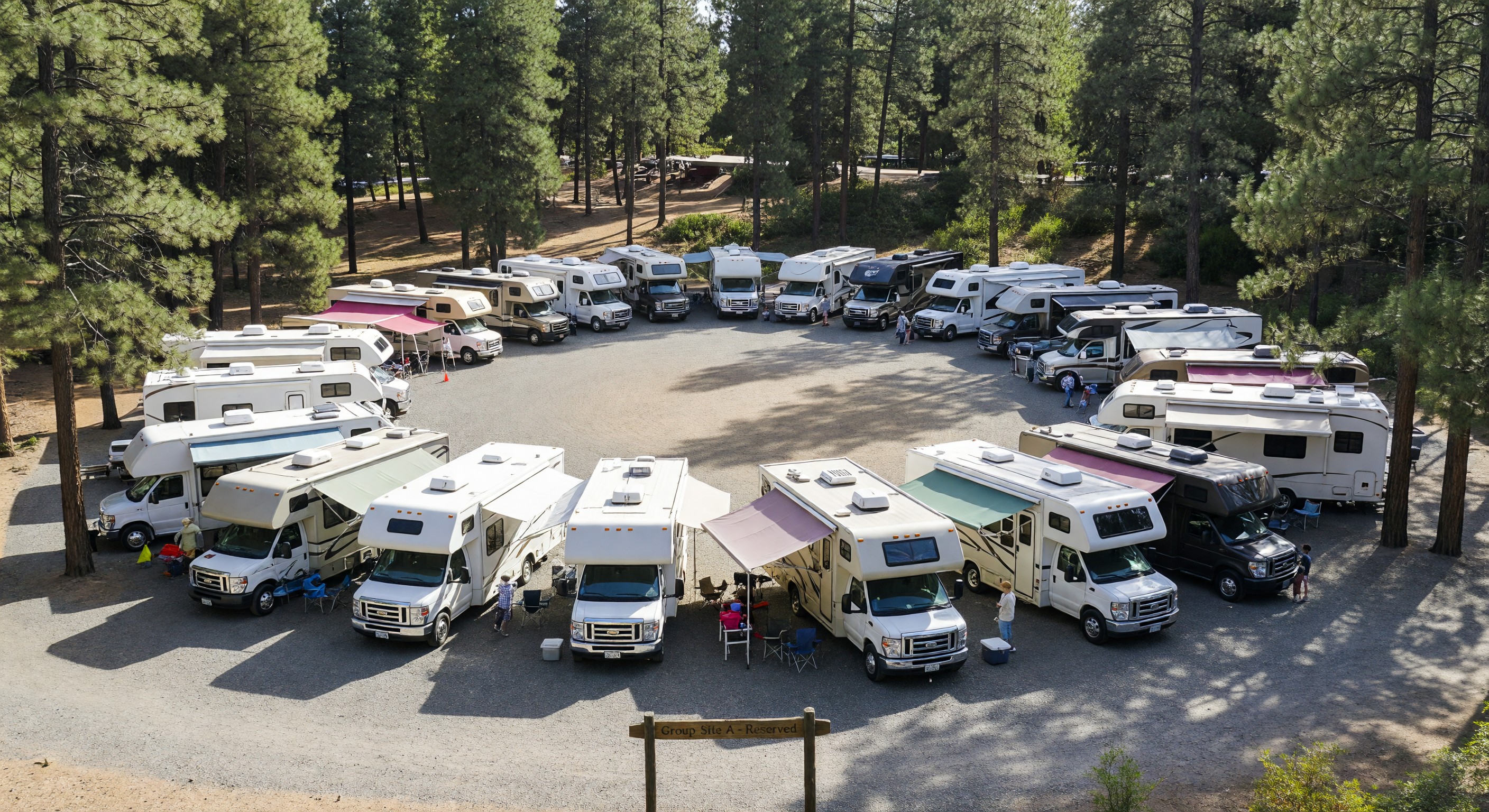
Group reservations — whether for family reunions, motorcycle rallies, scouts troops, corporate retreats, or wedding parties — can represent a significant revenue event for a campground. They can also represent a significant operational headache if you don’t have the right systems and policies in place.
Managing groups requires different processes than individual site bookings at almost every stage: inquiry, quoting, deposit collection, coordination during the stay, and checkout. Here’s how to approach each.
Defining “Group” for Your Operation
The first step is deciding what constitutes a group booking for your park and what different handling that triggers. Common thresholds:
- 5+ sites: Group coordinator contact required, group rate available
- 10+ sites: Deposit required to hold block, dedicated host assigned
- 20+ sites: Custom contract, specific loop or section assignment, meal packages available
Set these thresholds based on your capacity and the operational complexity that large groups create. A 30-site park might define “group” at 5 sites. A 300-site resort might not trigger special handling until 15.
The Group Inquiry and Quoting Process
Most groups don’t book through your standard online reservation flow — they contact you directly to ask whether you can accommodate their needs. This inquiry should trigger a structured quoting process:
- Capture the key details: Number of sites needed, site type preferences, arrival/departure dates, special requirements (outdoor amphitheater, group fire pit, catering).
- Check availability in your system. Don’t quote a group before confirming you can hold the inventory.
- Prepare a written quote that includes the block price, deposit requirements, payment schedule, and cancellation terms. A group that doesn’t get a written quote often comes back weeks later disputing what was agreed.
- Set a quote expiration. A held block with no commitment deadline ties up inventory indefinitely. Standard practice is 14 days to respond before the block is released.
Deposit and Payment Structures
Group bookings warrant different payment terms than individual reservations:
Deposit to hold. Require a non-refundable or partially refundable deposit to hold the block — typically 25–50% of the estimated total. This qualifies the group’s seriousness and compensates you for turning away other business.
Final payment timeline. Collect the balance 30–60 days before arrival, not at check-in. This avoids the logistical chaos of collecting payment from a group coordinator at the gate.
Per-site vs. per-person pricing. Some operators price groups per site; others charge per person above a base rate. Per-site pricing is simpler to administer. Per-person pricing captures more revenue when groups bring large numbers of people per site.
Security deposit for groups. Consider a refundable damage deposit for large groups, particularly events with alcohol. This deposit should be a separate charge from the booking deposit, with clear terms for its return.
Technology for Group Management
Standard campground reservation software often handles individual bookings well but falls short on group management. Look for:
Block booking capability. The system should allow you to hold a defined block of sites under a single group reservation record, rather than requiring you to create individual reservations for each site.
Group coordinator account. Some platforms let you create a coordinator login where the group organizer can view site assignments and communicate with individual campers in the block — useful for large groups where sub-coordination is needed.
Group-specific pricing. You should be able to apply a group discount or flat group rate to the block without manually adjusting each individual reservation.
Payment tracking. The system should track deposit receipt, balance due date, and balance receipt against the group record.
If your PMS lacks strong group functionality, a supplementary approach — a CRM or even a well-structured spreadsheet — can bridge the gap while you handle group payments outside the main system.
Coordinating During the Stay
Large groups need a designated point of contact during their stay. Assign a host who:
- Greets the group coordinator on arrival
- Confirms site assignments and resolves any questions
- Is available (by phone or radio) throughout the stay for issues
- Documents any damage or policy violations
Groups that feel well-supported are far more likely to return and to generate referrals. Groups that feel ignored become the source of negative reviews and disputes.
Handling Partial Cancellations
Groups frequently reduce their headcount after booking. Your group contract should specify how partial cancellations are handled:
- Is the deposit refundable if the group drops below a minimum size threshold?
- What happens to sites that fall out of the block — can the park resell them to other guests?
- Is there a deadline after which the block size is locked?
These terms need to be explicit before you sign the agreement.
Frequently Asked Questions
Should I charge groups a different rate than individual campers? Group rates depend on your market position and capacity constraints. During peak season when individual bookings would fill those sites anyway, there’s less reason to offer a discount. During shoulder periods, a modest group discount can fill inventory that might otherwise go empty.
What’s the best way to collect payment from individual members of a group? Generally, the group coordinator collects payment from members and pays you a single lump sum. Avoid collecting individual payments from a dozen different group members — the coordination cost is high and disputes are common.
How do I handle groups that are louder or more disruptive than expected? Your standard park rules apply. Having a designated group host who addresses issues early — before other guests complain — prevents escalation. A clause in the group contract confirming they’ve read your noise and conduct policies helps enforce this.
Can reservation software handle the complexity of large group logistics? Most standard campground PMS platforms handle simple group blocks reasonably well. For truly complex events — multi-day festivals, large family reunion weekends with programmed activities — you may need supplementary event management tools alongside your reservation system.
Further Reading from Authoritative Sources
- ARVC campground group reservation management standards and model agreement resources — ARVC’s operational resources and model documents for campground operators include guidance on group reservation management, from agreement structure to site assignment logistics.
- Go RVing consumer research on group camping behavior and family reunion travel patterns — Go RVing’s consumer research documents the growth of group camping — family reunions, club rallies, and organized outdoor events — and the expectations of group organizers.