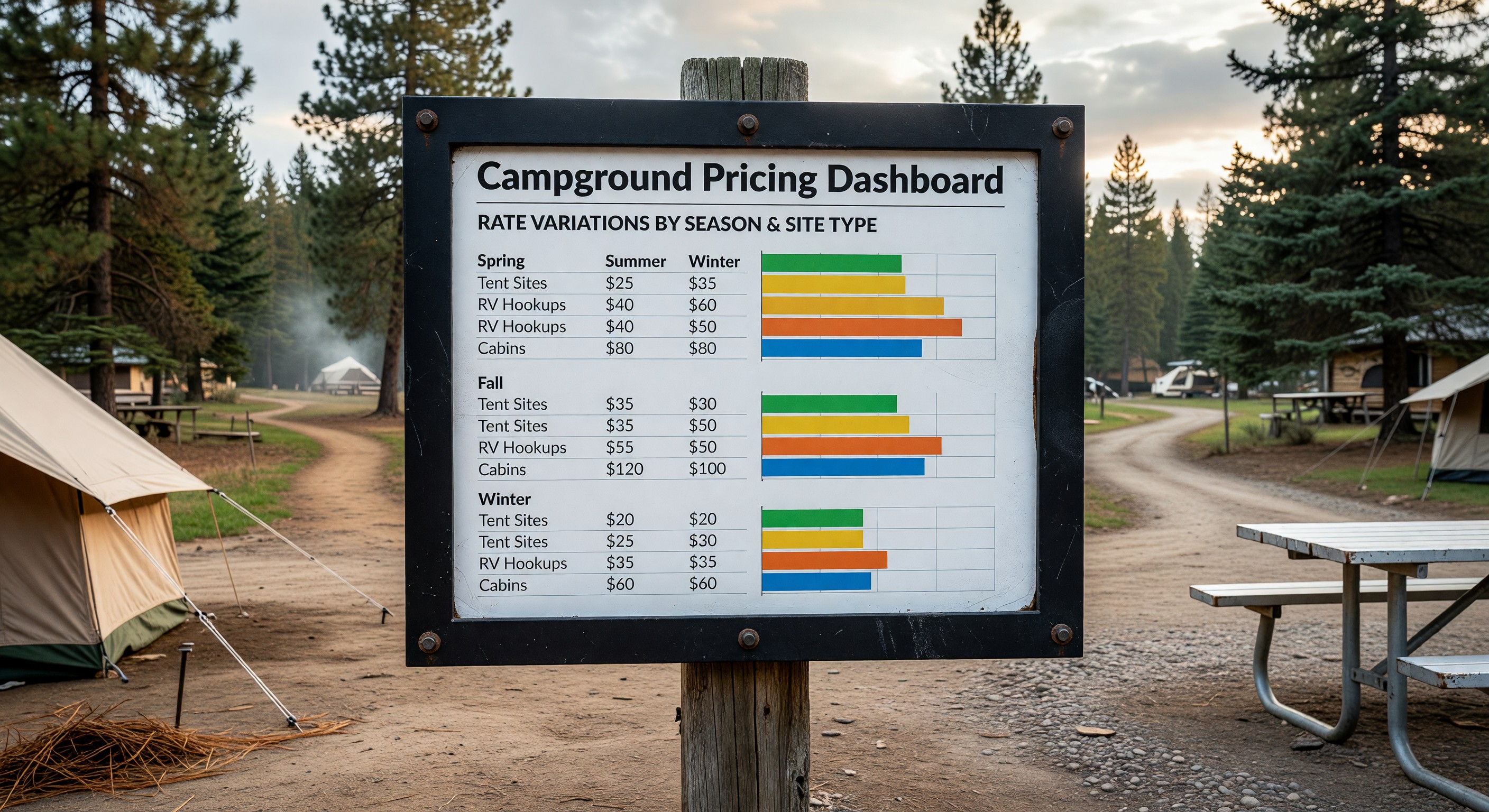
Fixed nightly rates are the simplest pricing strategy for a campground — set a number, publish it, and stick to it. But fixed rates leave revenue on the table during peak weekends and can make it harder to fill sites during slow periods. Dynamic pricing offers an alternative: rates that flex based on demand, availability, occupancy, and time until arrival.
Airlines and hotels have used dynamic pricing for decades. The outdoor hospitality industry has been slower to adopt it, but that’s changing as more reservation platforms add yield management tools.
What Dynamic Pricing Actually Means
Dynamic pricing — sometimes called yield management or demand-based pricing — is a system that automatically or semi-automatically adjusts your nightly rates in response to variables you define.
In a simple implementation, you might charge $15 more per night on Friday and Saturday than on weekday nights. That’s a form of dynamic pricing, even if it’s manually configured.
More sophisticated implementations adjust rates based on:
- Remaining availability: As a weekend fills up, rates rise automatically. Last-minute sites command premium prices.
- Days until arrival: Rates may drop as the arrival date approaches and sites are still vacant, encouraging last-minute bookings.
- Seasonal demand curves: Rates follow a pattern across the calendar based on historical occupancy data.
- Competitor pricing: Some advanced platforms can monitor comparable properties and adjust your rates in response.
The Business Case for Dynamic Pricing
The core argument is straightforward. If your park is 100% booked on the Fourth of July weekend regardless of what you charge, you’re leaving money on the table at a fixed rate. If your park is 40% occupied on a Tuesday in October, a moderate discount might fill those sites with guests who would otherwise stay elsewhere.
Dynamic pricing, done well, should increase total revenue compared to fixed rates — both by capturing premium rates when demand is high and by stimulating bookings when it’s low.
Real-world results vary. Parks with genuine peak-season demand and meaningful off-peak vacancy stand to gain the most. Parks in locations with consistently steady demand or very short operating seasons may see more modest benefits.
Getting Started Without Sophisticated Software
You don’t need an advanced platform to begin experimenting with demand-based pricing. Start manually:
- Identify your peaks. Holidays, regional events, and summer weekends are the obvious candidates. These are periods where you could likely charge more.
- Identify your valleys. Shoulder season weekdays, the weeks between holiday weekends, and early/late season dates where you struggle to fill sites.
- Test modest adjustments. Raise peak rates 15–25% and see whether occupancy holds. Offer a 10% discount on slow periods and measure the lift.
- Track the results. Keep a simple log of rates charged versus occupancy by period. Over time, you’ll develop an intuition for your market’s elasticity.
Once you’ve validated that your guests respond to price signals, it makes more sense to invest in software that automates the adjustments.
Software Tools for Campground Yield Management
Several campground reservation platforms now include built-in dynamic pricing tools:
Rule-based pricing lets you define conditions and rate adjustments: “If availability for this site type drops below 20%, increase the rate by $20.” These rules run automatically once configured.
AI-assisted pricing analyzes your historical data and adjusts rates algorithmically. These tools are more sophisticated but require sufficient historical data to be effective and carry some risk of unexpected rate swings.
Integrated competitor monitoring is available on some platforms and pulls competitor rate data to inform your pricing. It’s useful but worth verifying that your designated “competitors” are truly comparable properties.
What to Watch Out For
Guest perception. Some campers are sensitive to rate variability, particularly returning guests who feel loyal to your park. Avoid raising rates so aggressively that you alienate your core audience. Transparency helps — noting that rates vary by season and demand is better than surprising guests with dramatically different prices visit to visit.
Minimum stay requirements. Dynamic pricing is often paired with minimum stay requirements during peak periods (two-night minimums on holiday weekends, for example). This combination improves average revenue per reservation and prevents one-night gap bookings that are hard to sell around.
Cancellation policy alignment. If dynamic pricing means your rates fluctuate, guests may attempt to cancel and rebook at lower rates. Your cancellation policy should account for this.
Frequently Asked Questions
Will dynamic pricing confuse my guests? It can, if poorly communicated. Be clear on your booking page that rates vary by date. Many guests are accustomed to this from hotels. Providing a calendar view that shows rates by date is helpful for guest expectations.
How much can I realistically increase revenue with dynamic pricing? Results vary widely. Parks with strong peak demand and weak shoulder periods often report 10–20% total revenue increases in the first year of implementation. Parks with more even demand may see smaller gains.
Do I need to set rates manually every week? Not with rule-based or AI-assisted tools — these adjust automatically based on conditions you define. With manual dynamic pricing, you’ll need to review and update rates regularly, which can become a significant time commitment.
Should I display the original “rack rate” with a strikethrough to show discounts? Some operators do this, and it can be effective for communicating value during off-peak promotions. Be careful not to inflate rack rates artificially, as this can damage trust if guests do the math.
Further Reading from Authoritative Sources
- ARVC campground dynamic pricing standards and revenue management education — ARVC’s revenue management educational resources and benchmarking data provide campground operators with industry-standard frameworks for dynamic pricing implementation.
- Go RVing consumer research on campground price sensitivity and booking lead time behavior — Go RVing’s consumer research on price sensitivity and booking behavior among RV travelers informs the guest communication and transparency recommendations for dynamic pricing.