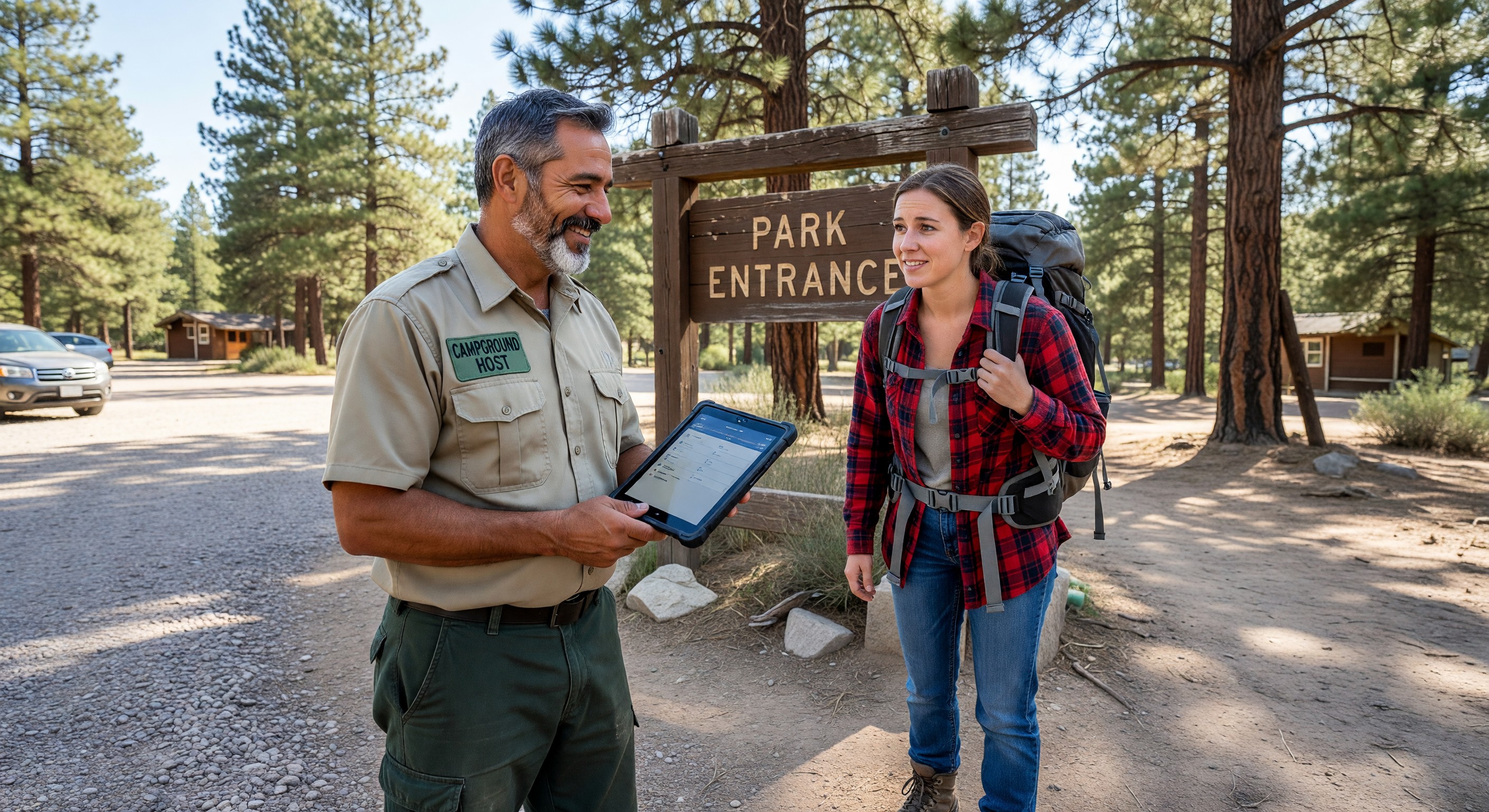
As campgrounds invest more in online reservation systems and digital-first arrival experiences, walk-in guests — those who arrive without a prior reservation expecting to find a site — can become operationally awkward to handle. The systems optimized for advance reservations weren’t always designed with spontaneous arrivals in mind.
Walk-ins aren’t going away. Spontaneous weekend trips, itinerary changes, and travelers who simply don’t plan ahead represent a meaningful share of campground traffic in many markets. How you handle them — efficiently and without creating booking conflicts — is worth thinking through deliberately.
Setting a Walk-In Policy That Matches Your Demand
Before worrying about the mechanics of handling walk-ins, decide on your policy:
Close to walk-ins during peak season: Parks that reliably sell out their advance inventory have little reason to hold sites for walk-ins. A “reservations only” policy during peak periods is appropriate, and a clear sign or website notice prevents wasted arrivals.
Walk-in only after a cutoff time: Some parks accept advance reservations until a day or two before arrival and then release remaining inventory to walk-ins. This balances the efficiency of advance booking with the revenue capture of same-day fills.
Always accept walk-ins: For parks with consistently lower occupancy or in markets where spontaneous camping culture is strong, walk-ins are an important revenue source that should always be accommodated when sites are available.
Your policy should be visible at your park entrance, on your website, and in your Google Business Profile listing — walk-ins who drive an hour only to find a reservations-only sign are unlikely to become loyal guests.
Processing Walk-Ins in Your Reservation System
When a walk-in arrives and a site is available, the process should:
Check real-time availability in your PMS — never assign a site verbally without confirming it’s available in the system. A site that shows free may have an advance reservation checking in later that day.
Create the reservation in the system before the guest drives to the site. This is the critical step that most walk-in errors skip — if the guest drives off with a site assignment before the booking is entered, you create a window where that site could be assigned to another guest.
Collect payment upfront. Walk-in reservations should require payment at the time of arrival. Allowing walk-ins to pay at checkout introduces collection risk.
Issue the same documentation a pre-booked guest would receive — a confirmation with their site number, dates, and your park rules.
Self-Service Walk-In Kiosks
Some parks have implemented self-service entry kiosks that allow walk-in guests to check availability and complete a booking without staff interaction. These work similarly to hotel check-in kiosks:
The guest approaches the kiosk, selects available dates (typically just the current night), chooses an available site, completes payment via credit card, and receives a printed or digital confirmation with their site assignment and gate access code.
Kiosks work best in parks with consistent staffing gaps during late-evening hours, where walk-ins might arrive after the front desk closes. They reduce friction for adventurous campers and capture revenue that would otherwise be lost to an unattended entrance.
The technology investment is real — expect $3,000–$8,000 for a ruggedized outdoor kiosk with PMS integration — but for high-traffic parks with late-arrival walk-in demand, the payback period is typically short.
Handling Walk-Ins When You’re Officially Full
When your advance reservations fill your park and walk-ins arrive, have a script:
- Acknowledge that you’re fully booked
- Offer to put them on the waitlist for cancellations
- Recommend nearby alternatives you have a relationship with (reciprocal referrals with neighboring parks are good business)
- Note when you typically open for next-season reservations, if they’re locals planning ahead
A guest who receives a warm, helpful response even when you can’t accommodate them is more likely to return and book in advance next time. A guest who encounters a dismissive “we’re full” interaction tells others.
Frequently Asked Questions
Should I hold a portion of my inventory specifically for walk-ins? Only if walk-in demand in your market is significant and consistent. Setting aside sites for walk-ins when advance reservations might fill them is a revenue trade-off. Track your walk-in volume over a season before making this decision.
How do I prevent staff from assigning a site verbally and then discovering it’s booked? Strict protocol: no verbal site assignments without system confirmation first. This requires staff training and consistent enforcement. The system is the authority; staff memory or paper notes are not.
What if a walk-in arrives and all sites are technically booked but some guests don’t arrive until late? This is a judgment call. Most parks don’t release reserved sites for walk-ins until the advance guest has become a confirmed no-show (per your policy, usually after 9 PM). Walking the risk of both guests wanting the site is a real problem if the advance guest does show up late.
Can I accept online bookings the same day and call them “walk-ins”? Yes — same-day booking availability on your website or OTAs serves guests who plan at the last minute without requiring them to physically arrive first. This is often a better option than a kiosk and converts more spontaneous guests than requiring a physical walk-in.
Further Reading from Authoritative Sources
- ARVC campground walk-in reservation management and front desk operations standards — ARVC’s operational standards and member resources cover front desk best practices for campground operators, including walk-in reservation procedures, PMS entry protocols, and payment collection policies.
- Go RVing consumer research on same-day and spontaneous camping trip behavior — Go RVing’s consumer research on trip planning behavior documents the prevalence of spontaneous and same-day campground decisions among RV travelers, informing walk-in demand forecasting and inventory allocation decisions for campground operators.