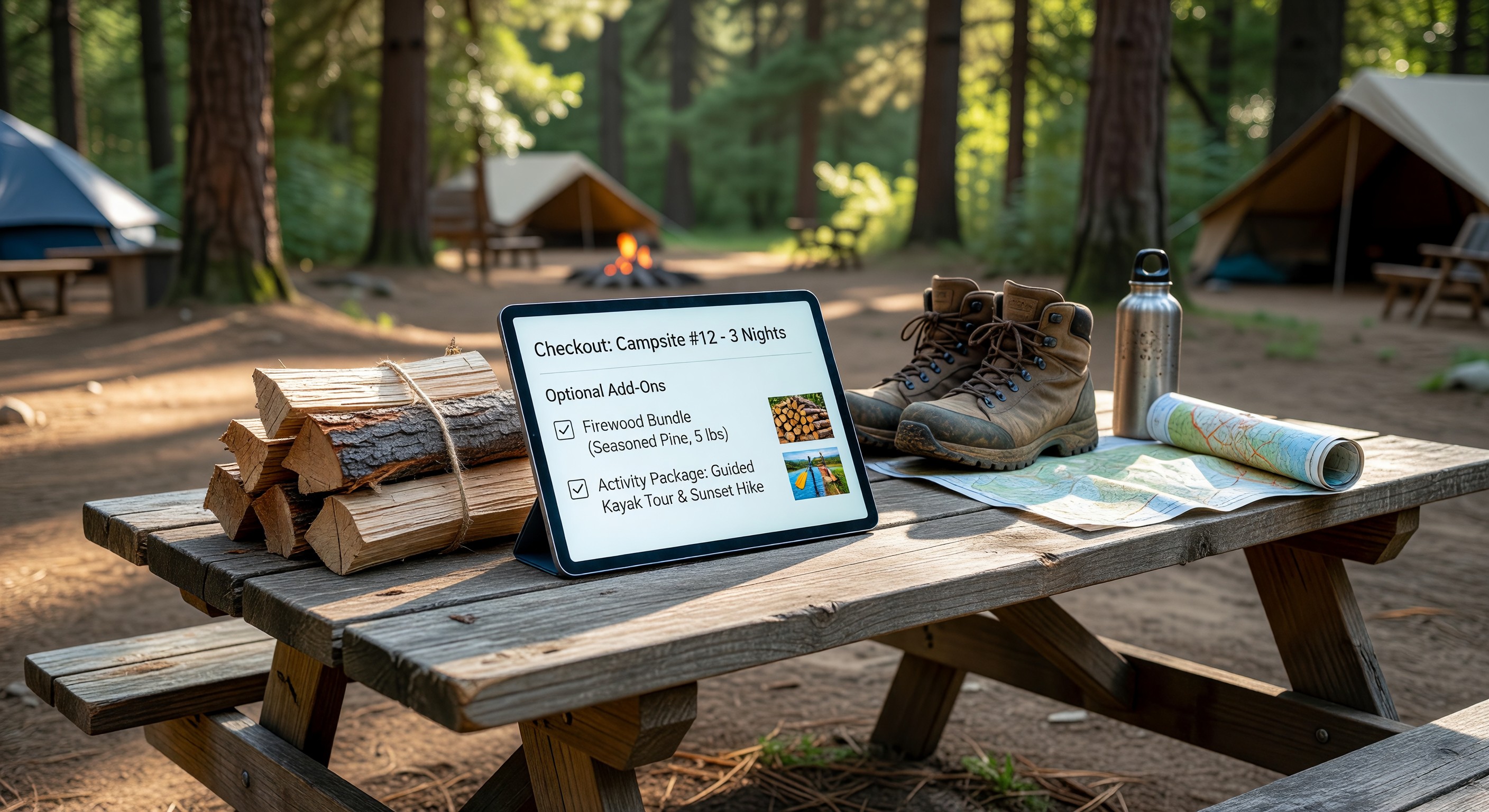
The moment a guest completes a campground booking, they’re in their highest-enthusiasm state about the upcoming trip. That enthusiasm is a natural opening for thoughtful add-on offers that enhance their experience while generating incremental revenue for your park.
Done well, booking-time add-ons feel like a service to the guest — “here are the extras that will make your stay better.” Done poorly, they feel like a checkout gauntlet of unwanted upsells. The difference lies in relevance, simplicity, and restraint.
What Add-Ons Work at Campground Booking
The best add-ons are ones that guests would either buy on arrival anyway, or would value having arranged in advance:
Firewood bundles. This is the most universally successful campground add-on. Guests who plan to have campfires will buy firewood regardless — letting them prepay for it at booking guarantees the sale and eliminates the “I forgot to grab firewood” stress on arrival.
Welcome packages. A curated package placed in or near the site on arrival — s’mores kit, local snacks, a small bottle of wine, a park map and recommendations guide — creates a “wow” moment that drives reviews and return bookings. The per-unit cost is manageable at $20–$40 and the perceived value is higher.
Equipment rentals. Kayak, bicycle, or golf cart rentals offered at booking secure the reservation before these items are taken by other guests. Guests value the certainty; you value the committed revenue.
Activity passes. If you offer programmed activities (guided hike, fishing clinic, pool access for non-site-holders), pre-booking passes fills activity capacity and provides useful attendance data.
Pet fee pre-payment. For parks that charge a pet fee, collecting it at booking reduces friction at check-in and eliminates the awkward moment when a guest shows up with a dog and the fee hasn’t been discussed.
Early check-in / late checkout. Offered for a fee, these options are highly valued by guests who need flexibility. At $15–$25 per request, they’re a low-effort revenue add.
How to Present Add-Ons Without Creating Friction
The add-on screen in your booking flow should:
Come after the core booking is confirmed. Don’t introduce add-ons during site selection or at payment — present them as an optional enhancement step after the guest has committed.
Show no more than four to six options. Decision fatigue is real. A long list of add-ons reduces conversion on all of them. Curate to your highest-value offerings.
Display clear photos and descriptions. Guests can’t touch or see the product. A good photo of the welcome basket or the kayak makes the add-on tangible and desirable.
Make skipping easy. A clear “Continue without add-ons” option is important. Guests who feel trapped in an upsell flow abandon bookings.
Price them honestly. Add-on prices should feel fair relative to what the guest would pay on-site. Price gouging on add-ons damages trust.
Operational Requirements
Add-on sales require operational follow-through. When a guest purchases a firewood bundle or a welcome basket at booking, your operations team needs to see that order and fulfill it:
- Add-on purchase reports should be part of your daily arrival manifest workflow
- Fulfillment tasks should be assigned to specific staff roles
- Missing fulfillment is a significant guest experience failure — build audit checks into your arrival day process
Most modern campground PMS platforms include add-on functionality with fulfillment reporting. If yours doesn’t, a basic spreadsheet process can bridge the gap but requires more manual management.
Tracking Add-On Revenue
Track add-on revenue separately from site revenue in your reporting. Key metrics:
Add-on attach rate: Percentage of reservations that include at least one add-on purchase. A rate of 20–35% is achievable for well-presented add-on programs.
Average add-on revenue per reservation: How much incremental revenue does each reservation generate from add-ons?
Most popular add-ons: Which items consistently sell? Prioritize these in your presentation and ensure reliable inventory.
Seasonal variation: Add-on purchasing may vary by season — campfire wood sells more in fall; kayak rentals peak in summer. Adjust what you feature accordingly.
Frequently Asked Questions
Can I offer add-ons on a recurring basis, not just at initial booking? Yes, and this is worth doing. Include a link in your pre-arrival email to an “enhance your stay” page where guests can add purchases 3–7 days before arrival. Some guests who declined at booking will add items when the trip is more imminent.
What if a guest purchases an add-on but conditions make it unusable (e.g., rain on a kayak day)? Have a clear policy for add-on refunds and communicate it when the add-on is purchased. A partial credit or a rain check for a future use is often well-received. Rigid no-refund policies on weather-dependent add-ons create bad experiences and negative reviews.
Should I offer add-ons to all guests or only certain segments? Start with all guests and segment later. Targeted add-on offers (campfire packages only to sites with fire rings; kayak rentals only to waterfront sites) improve relevance and conversion as you gather data.
How do I handle add-on inventory when physical stock is limited? For inventory-constrained add-ons (limited kayaks, limited welcome baskets), set maximum daily purchase limits in your system and disable the add-on once the limit is reached for a given date. Running out of a purchased add-on is a significant service failure.
Further Reading from Authoritative Sources
- ARVC campground ancillary revenue and add-on program resources — ARVC publishes guidance on campground ancillary revenue programs including add-on and upsell strategies adapted to the outdoor hospitality industry’s specific inventory types and guest expectations.
- Upselling and cross-selling techniques in hospitality booking flows — Wikipedia’s upselling article provides authoritative background on the consumer psychology and presentation principles underlying effective booking add-on programs, supporting operators in understanding why the specific design recommendations in the article improve conversion.