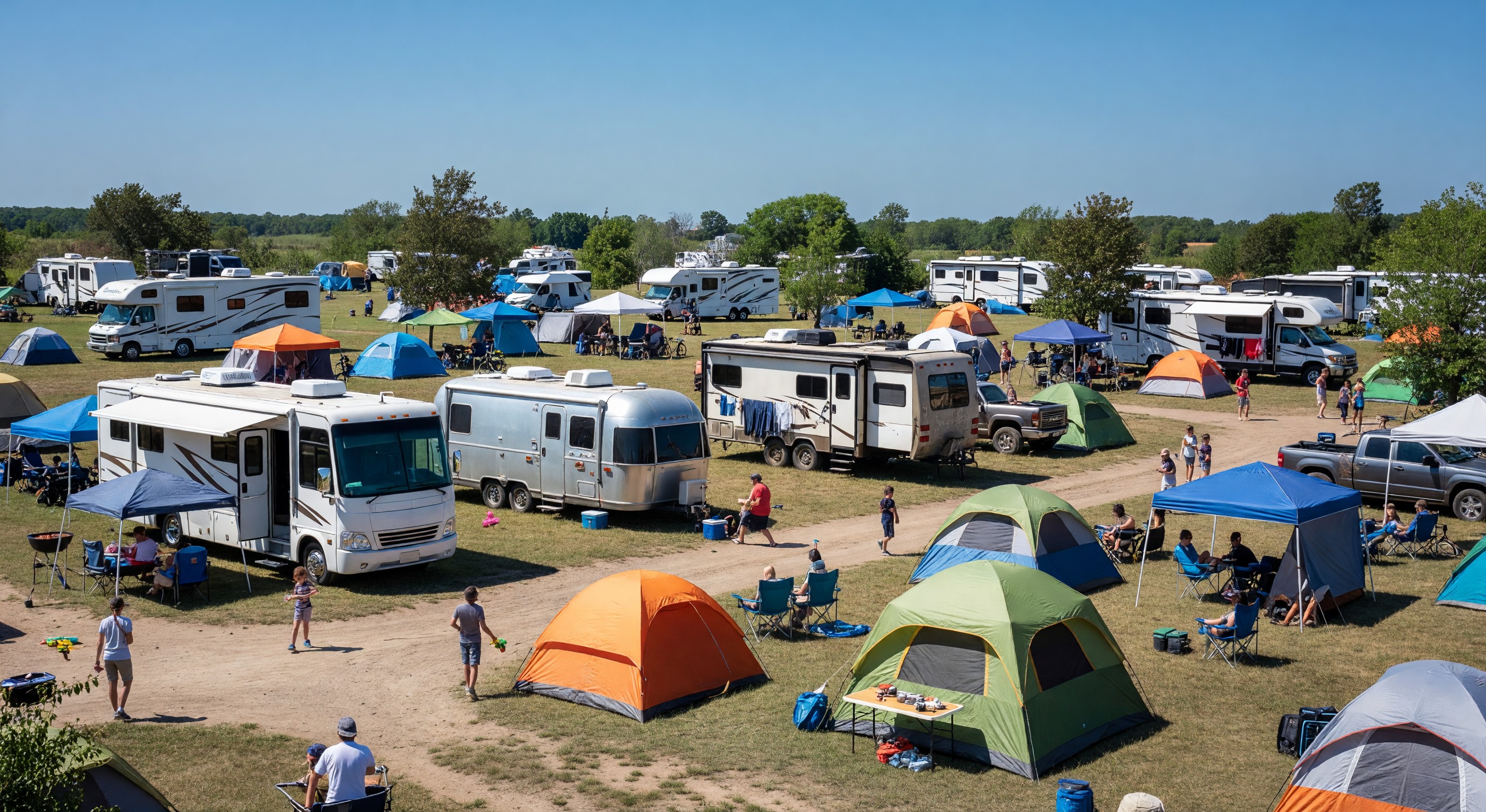
The 2021 camping season began with a peculiar mix of signals. Vaccination rates were rising, indoor travel was cautiously resuming, but outdoor recreation remained the preferred option for a substantial share of the traveling public. For campground operators, the season brought unprecedented demand in some markets alongside genuine uncertainty about whether pandemic-era booking patterns were permanent shifts or temporary anomalies.
Looking at the 2021 booking landscape helps operators understand both what happened and what behaviors carried forward into subsequent seasons.
The Surge Was Real — and Unevenly Distributed
Drive-to campgrounds near major population centers saw extraordinary demand in the first half of 2021. Parks within three to four hours of large metros — particularly in the Mountain West, Pacific Northwest, and Northeast — were often booked out weeks in advance. Destination parks in iconic locations (national park gateway towns, coastal areas) were similarly constrained.
Meanwhile, parks in less-trafficked regions with limited natural draws saw more modest lift. The pandemic travel surge wasn’t uniform — it was heavily concentrated in outdoor destinations that were already popular, making popular parks more expensive to access and more likely to sell out.
New Campers Changed Booking Behavior
The pandemic introduced millions of people to camping who had never camped before. These first-time campers behaved differently from experienced campers in ways that affected reservation systems:
Earlier booking windows. Experienced campers, accustomed to last-minute availability, were caught flat-footed by how quickly parks filled. This pushed experienced campers to book earlier, while new campers — unsure of what they were doing — often booked early to lock in their spot before they fully understood what they needed.
Higher cancellation rates. First-time campers who booked early often cancelled as their plans clarified or as they realized they’d booked something that didn’t fit their setup. Parks with flexible cancellation policies saw higher turnover than usual.
Different site preferences. New campers disproportionately wanted hookup sites, cabins, and glamping-style accommodations. Primitive tent sites saw less demand relative to previous years.
How Operators Adapted Their Booking Systems
Parks that handled the 2021 surge well shared some common practices:
Shorter booking windows with rolling releases. Rather than opening a full season of availability all at once, some parks released availability on a rolling 30–60 day window. This reduced the ability of guests to hold prime sites months in advance while leaving flexibility for last-minute bookings.
Stricter minimum stay requirements. Two-night minimums on weekends and three-night minimums on holiday weekends reduced the gap-booking problem and improved revenue per reservation.
Tightened cancellation policies. Parks that had previously offered full refunds regardless of timing moved toward policies that retained deposits for cancellations within 14 days. This reduced the cancellation churn that came with first-time campers booking and second-guessing.
Waitlist functionality. Parks that added waitlists for fully booked dates found that cancellations were quickly absorbed rather than leaving holes in the booking calendar.
Technology That Made a Difference
Operators who had already invested in flexible reservation software before 2021 had a significant advantage. The ability to quickly update availability windows, change cancellation policies, and add minimum stays without manual intervention saved staff hours during a period when many parks were already short-staffed.
Platforms that provided automated communication — waitlist notifications, pre-arrival reminders, check-in instructions — reduced inbound calls that would otherwise have overwhelmed front desk staff.
Parks still on paper-based systems had a difficult season. High demand masked some of the operational inefficiency in the short term, but the stress on staff and the missed revenue opportunities from poor inventory management were real.
What the 2021 Season Signaled Going Forward
Several patterns from 2021 proved durable:
Outdoor recreation participation increased at a demographic level. People who discovered camping in 2020 and 2021 continued camping, though the frenzy of the first COVID summers moderated. New camper cohorts gradually became experienced campers with more predictable booking behavior.
Demand for non-primitive accommodations — cabins, glamping tents, park models — continued to grow beyond 2021 levels. Parks that invested in adding inventory in these categories saw sustained returns.
The online booking expectation became universal. Operators who added or improved online booking capabilities during 2021 saw the lift carry forward as an ongoing baseline improvement.
Frequently Asked Questions
Did the camping boom of 2021 create lasting demand increases? The extreme highs of 2020–2021 moderated, but participation stayed elevated above pre-pandemic levels. Most operators report that their long-term baseline demand is higher than it was before 2020.
How should I set booking windows for a busy park? There’s no universal answer, but a rolling 60–90 day window is a reasonable starting point for high-demand parks. Test different window lengths over a season and measure how it affects fill rates and revenue.
Should I adjust my cancellation policy in response to changing demand? Yes, and regularly. During high-demand periods, stricter policies are appropriate. During slower seasons or uncertain economic climates, more flexibility may improve bookings. Treat your cancellation policy as a variable you tune, not a permanent fixture.
What’s the best way to handle guests who try to rebook at lower prices after cancelling? Some cancellation policies explicitly address this by forfeiting deposit credit if the guest rebooks the same dates at a lower rate. Whether to implement this depends on how your pricing is structured and how common the behavior is at your property.
Further Reading from Authoritative Sources
- ARVC campground industry demand trends and post-pandemic booking data — ARVC tracked industry-wide demand patterns during the 2020–2021 pandemic camping surge and publishes data on how booking trends and guest demographics shifted, providing the authoritative industry context for the 2021 recovery season analysis.
- Go RVing new camper research and outdoor recreation participation trends — Go RVing conducts and publishes consumer research on new and returning camper demographics and preferences that directly supports the new-camper behavior patterns and demand shifts described in the 2021 booking trends article.