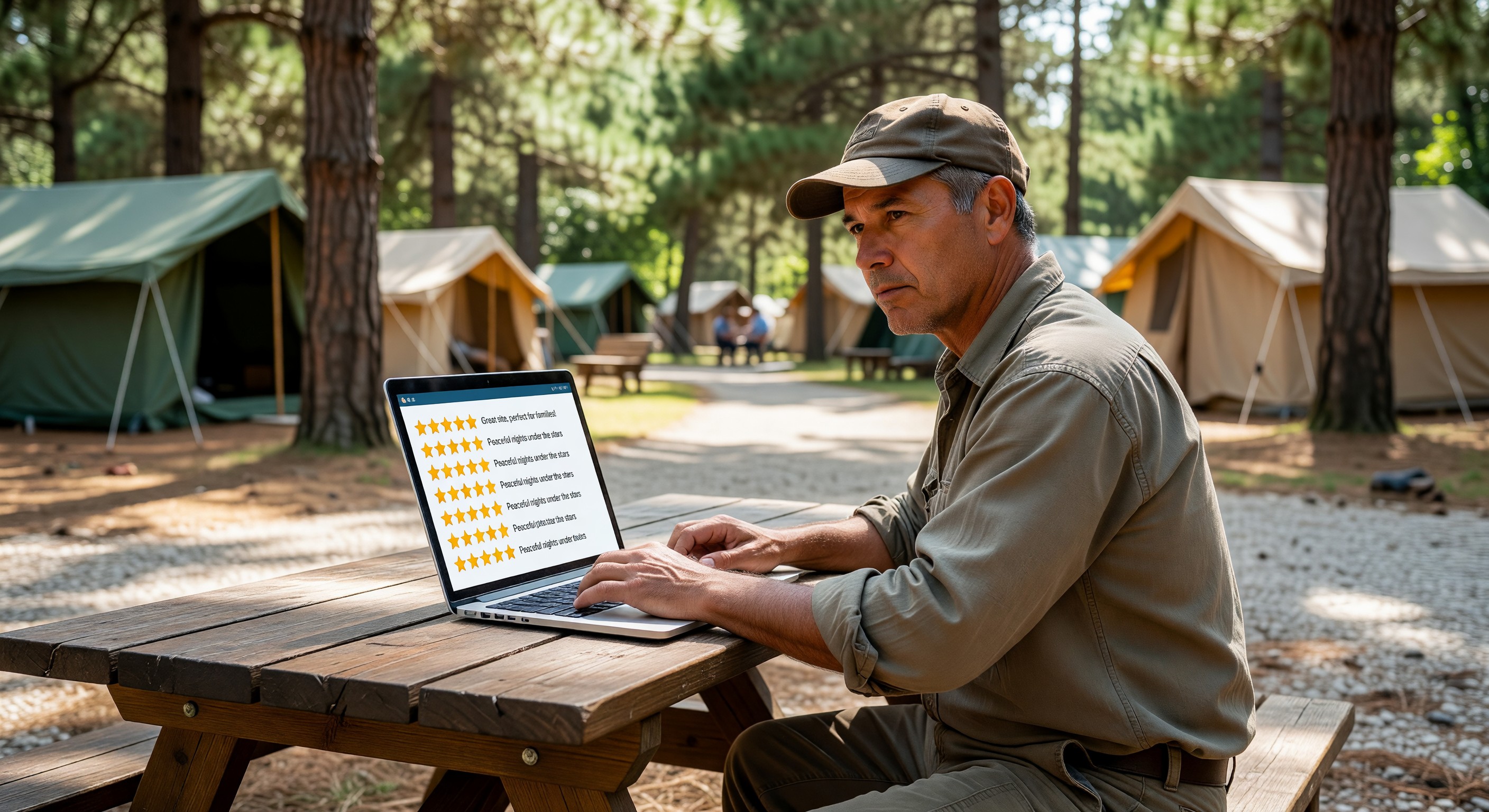
Online reviews are the single most influential factor in a prospective camper’s decision-making process. A survey of outdoor recreation travelers consistently shows that more than 85% read reviews before booking, and a meaningful percentage cite reviews as the primary factor in their choice between comparable parks.
For campground operators, reviews are no longer a passive byproduct of operations. They’re a business asset that requires active management — generating positive feedback from satisfied guests, responding thoughtfully to all reviews, and using review content to identify and address operational gaps.
Where Campground Reviews Live
The major platforms where campground reviews are published:
Google Business Profile is the highest-priority platform for most parks. Google reviews appear prominently in search results and influence local search ranking. A park with 400 reviews averaging 4.7 stars will outperform a competitor with 40 reviews at 4.9 stars in visibility — volume and recency matter alongside rating.
TripAdvisor retains a significant audience, particularly for older travelers and international visitors. Many travelers who don’t use other platforms regularly use TripAdvisor for outdoor hospitality research.
The Dyrt is the dominant camping-specific review platform. Its audience is campers specifically, making reviews here highly relevant and trusted by the camping community.
Hipcamp and Campspot include reviews as part of their marketplace listing. These reviews stay within the platform but influence guests searching those channels.
Facebook and Yelp also accumulate campground reviews, though with lower camping-specific relevance.
Generating Reviews Systematically
The most common reason parks have fewer reviews than they deserve is that they don’t ask. Most satisfied guests won’t leave a review unless prompted. The standard for review generation:
Post-checkout email: Send a review request 24–48 hours after checkout while the experience is fresh. Include a direct link to your Google Business Profile review form — don’t make guests search for where to leave the review. A sentence like “It takes about 2 minutes and makes a real difference for a small park like ours” personalizes the ask effectively.
In-person prompt at checkout: A front desk sign or a brief mention from staff (“If you enjoyed your stay, a Google review would mean a lot to us”) plants the seed. Many guests will follow through on an email reminder they’d otherwise ignore.
On-receipt or camp store receipt: A QR code linking to your review page on checkout receipts captures guests who are in a transactional mindset.
Avoid incentivizing reviews: Offering discounts or gifts in exchange for reviews violates Google’s policies and the FTC’s endorsement guidelines. Ask for honest reviews — the quality and authenticity will show.
Responding to Reviews Effectively
Every review — positive and negative — deserves a response. Here’s the framework:
Positive reviews: Thank the guest specifically (reference something from their review, not a generic “Thanks for staying!”), express genuine enthusiasm for their feedback, and invite them back. These responses take 30–60 seconds and demonstrate to prospective guests that you’re engaged.
Neutral reviews (3 stars): Acknowledge what went well and what didn’t. If they mentioned a specific issue, address it — either explaining what you’ve done to fix it or acknowledging it as an area you’re working on.
Negative reviews: Respond within 24 hours if possible. Thank the guest for their feedback (even if you disagree with it). Address the specific issue factually and without defensiveness. Explain what corrective action is being taken. Offer a path to resolution (“Please contact us directly so we can make this right”). Prospective guests reading negative reviews pay as much attention to how you respond as to the complaint itself.
Never argue or get defensive in public responses. Even when a reviewer is factually wrong, a combative response damages your reputation with the audience reading it, not just the reviewer.
Using Review Content for Operations
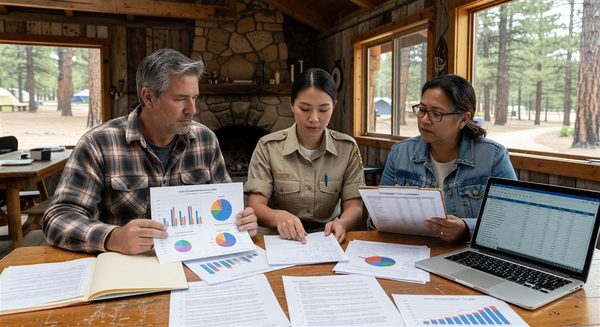
Reviews are a continuous stream of guest experience data — treat them as such. Build a regular review analysis process:
Monthly review audit: Read all new reviews from the past 30 days. Categorize positive and negative mentions by theme: staff, cleanliness, site quality, amenities, wifi, noise, check-in process.
Track recurring themes: A single complaint about noisy neighbors is noise; five complaints in a month indicate a pattern worth investigating. Track the frequency of complaint themes over time.
Share feedback with staff: Review themes should reach the staff members who can act on them — maintenance, front desk, hospitality. Anonymized positive feedback is valuable for staff morale; specific negative feedback is valuable for training.
Close the loop: When you fix an issue that was mentioned in reviews, a brief response update on those reviews (“We’ve since addressed this — our restroom renovation was completed in October”) demonstrates responsiveness.
Frequently Asked Questions
How many Google reviews does a campground need to be competitive in local search? There’s no absolute threshold, but parks with fewer than 50 reviews are at a disadvantage relative to competitors with hundreds. Aim to build to 100+ reviews and then focus on maintaining volume and recency.
Should I respond to reviews from years ago? Current reviews take priority. For older reviews (over a year), respond only if there’s something specific and useful to add — don’t respond to stale reviews just to show activity.
What if a competitor is leaving fake negative reviews? Flag the reviews through the platform’s reporting tool. Google and TripAdvisor have processes for investigating and removing reviews that violate their policies. Document your evidence before reporting. This process is slow, but is the appropriate channel — don’t respond publicly in a way that escalates the dispute.
Can I ask guests to update negative reviews after I’ve resolved their issue? You can, and it sometimes works. After resolving a complaint, contact the guest and let them know. If they had a good resolution experience, some will update their review voluntarily. Don’t pressure them or make the ask feel transactional — simply inform them and leave the decision to them.
Further Reading from Authoritative Sources
- ARVC campground reputation management and review guidance — ARVC provides reputation management guidance for campground operators and tracks how online review scores correlate with occupancy and revenue performance across the industry, making it the most relevant trade authority for review management practices.
- FTC guidelines on endorsements, testimonials, and review solicitation — The FTC’s Endorsement Guides establish the legal framework for review solicitation practices, including prohibitions on incentivized or selectively solicited reviews that campground operators must understand to avoid compliance risk.