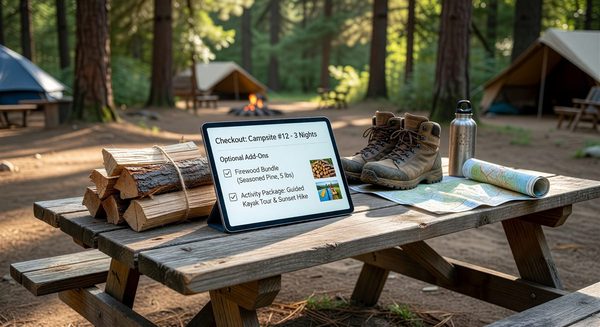
Most campgrounds focus almost exclusively on site-night revenue. But the guests who love your park and want to share the experience with family and friends represent an untapped market for ancillary digital products — and the technology to sell them is built into most modern reservation platforms.
Gift certificates are the most obvious product, but experience packages, glamping bundles, and digital park memberships can all be structured as purchasable digital products that generate revenue even when sites are fully booked or between seasons.
Gift Certificates: The Simplest Starting Point
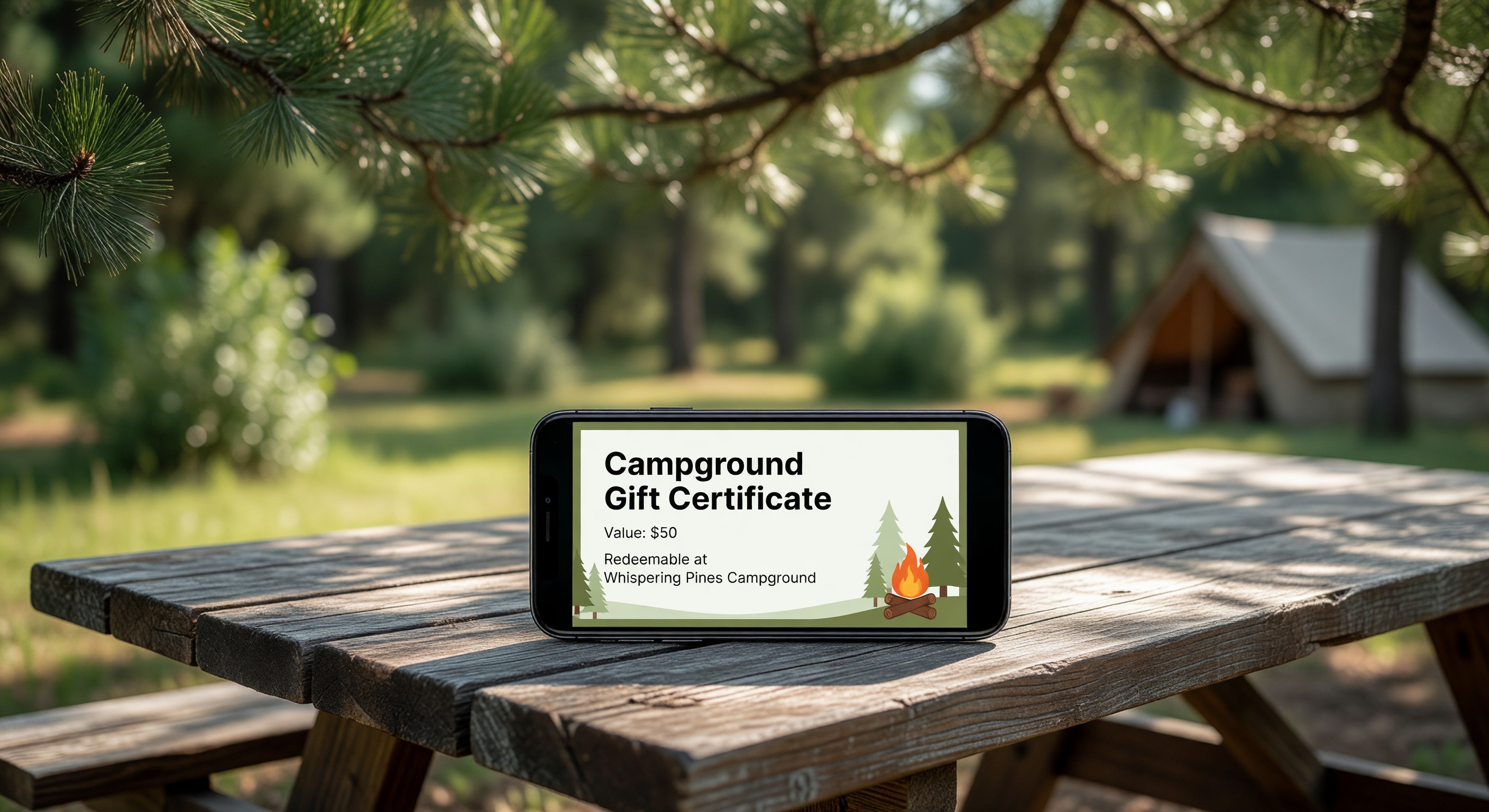
A campground gift certificate is straightforward: a purchasable dollar credit that can be applied toward a future reservation. The guest experience is similar to buying a gift card at retail — choose an amount, provide recipient information, purchase, and the recipient gets a code they can apply at booking.
Why gift certificates work for campgrounds:
Gift-givers — family members funding a camping trip, friends chipping in for an experience — are often willing to pay for the camping experience in advance, converting future revenue into present cash. The “spoilage” rate (certificates purchased but never redeemed) adds pure margin. And recipients who receive camping gifts as a nudge often book trips they might not have initiated themselves.
Setting up gift certificate sales:
Most campground PMS platforms include gift certificate functionality. The setup involves:
- Enabling digital gift certificates in your merchant settings
- Defining denomination options (fixed amounts like $50, $100, $200, or a custom entry)
- Setting expiration terms (most states have regulations limiting expiration periods — check your jurisdiction)
- Configuring the delivery email that sends the certificate to the recipient
- Embedding a purchase widget on your website (usually a simple link or button)
Promote gift certificates aggressively in the weeks before major gift-giving seasons: Christmas, Mother’s Day, Father’s Day, graduation season. A homepage banner and a brief email to your past-guest list during these windows is often enough to generate meaningful volume.
Experience Packages as Digital Products
Beyond simple dollar credits, you can package experiences as purchasable digital products:
The “Weekend Escape” package: Site for two nights (specific dates or flexible use) + s’mores kit + park map + two activity passes. Priced as a bundle at a slight premium to the à la carte value.
The Glamping Anniversary Package: Two nights in a specific unit + welcome flowers + local wine + late checkout privilege. Purchasable as a gift or self-use.
The Family Adventure Package: Primitive tent site + two kayak rentals + campfire cooking kit + activity badges for kids. Appealing as a birthday gift for families.
These packages need to be managed carefully in your inventory system — the site component requires date availability when the recipient redeems — but they command premium pricing and generate buzz.
Seasonal and Off-Peak Digital Products
Digital products can also smooth out seasonal demand variability:
Winter membership: A modest annual fee that provides the member with early access to spring booking windows, a small site discount, and a newsletter with park updates. Sold during the off-season, it generates winter cash flow and builds loyalty.
Reservation deposit credits: Allow guests to purchase future reservation credit at a modest discount during the off-season — essentially a pre-paid site deposit. “Buy $200 in camping credit now, receive $220 worth at your next stay.” This pulls forward revenue from guests who were going to return anyway.
Technology and Platform Considerations
The main technology requirement is a payment flow that operates outside of the standard site-booking checkout:
- Your website’s e-commerce capability: Gift certificates need to be purchasable without the buyer needing to select specific dates. Some PMS platforms handle this natively; others require integration with an e-commerce tool.
- Unique redemption codes: Each certificate should have a unique code the recipient enters at checkout. Codes should be single-use and tied to a specific dollar value.
- Expiration tracking: Your system needs to track issued certificates, redemptions, and expired balances. This is both an accounting and a customer service requirement.
Frequently Asked Questions
Do campground gift certificates expire? Laws vary by state and province. Many jurisdictions require that gift certificates remain valid for at least 5 years, and some prohibit expiration entirely for cards over a certain value. Check your local regulations before setting any expiration terms.
Can I sell gift certificates through my existing website if my PMS doesn’t support them natively? Yes. Third-party platforms like Square, Shopify (for simple digital products), or dedicated gift card platforms can sell certificates that you honor manually. This requires more internal process management but works at small scale.
How do I handle a gift certificate when the recipient wants to book a date that’s unavailable? The certificate is a dollar credit, not a specific site reservation. The recipient is subject to normal availability constraints. Communicate this clearly in the certificate terms — “Redeemable toward any future reservation, subject to availability.”
Should I discount gift certificates to drive purchase volume? Discounting certificates (e.g., “$100 certificate for $85”) is a common promotional tool that can drive volume. The risk is training guests to wait for discounts rather than paying face value. Test limited-time promotions during gift-giving seasons rather than permanently discounting.
Further Reading from Authoritative Sources
- Gift card regulations and state law requirements for expiration terms — Wikipedia’s gift card article provides authoritative background on the consumer protection laws governing gift certificate expiration that campground operators must comply with before launching digital gift certificate programs.
- ARVC campground ancillary revenue and digital product resources — ARVC tracks revenue diversification trends across the campground industry and provides guidance on ancillary revenue strategies including digital product programs that campground operators can implement.