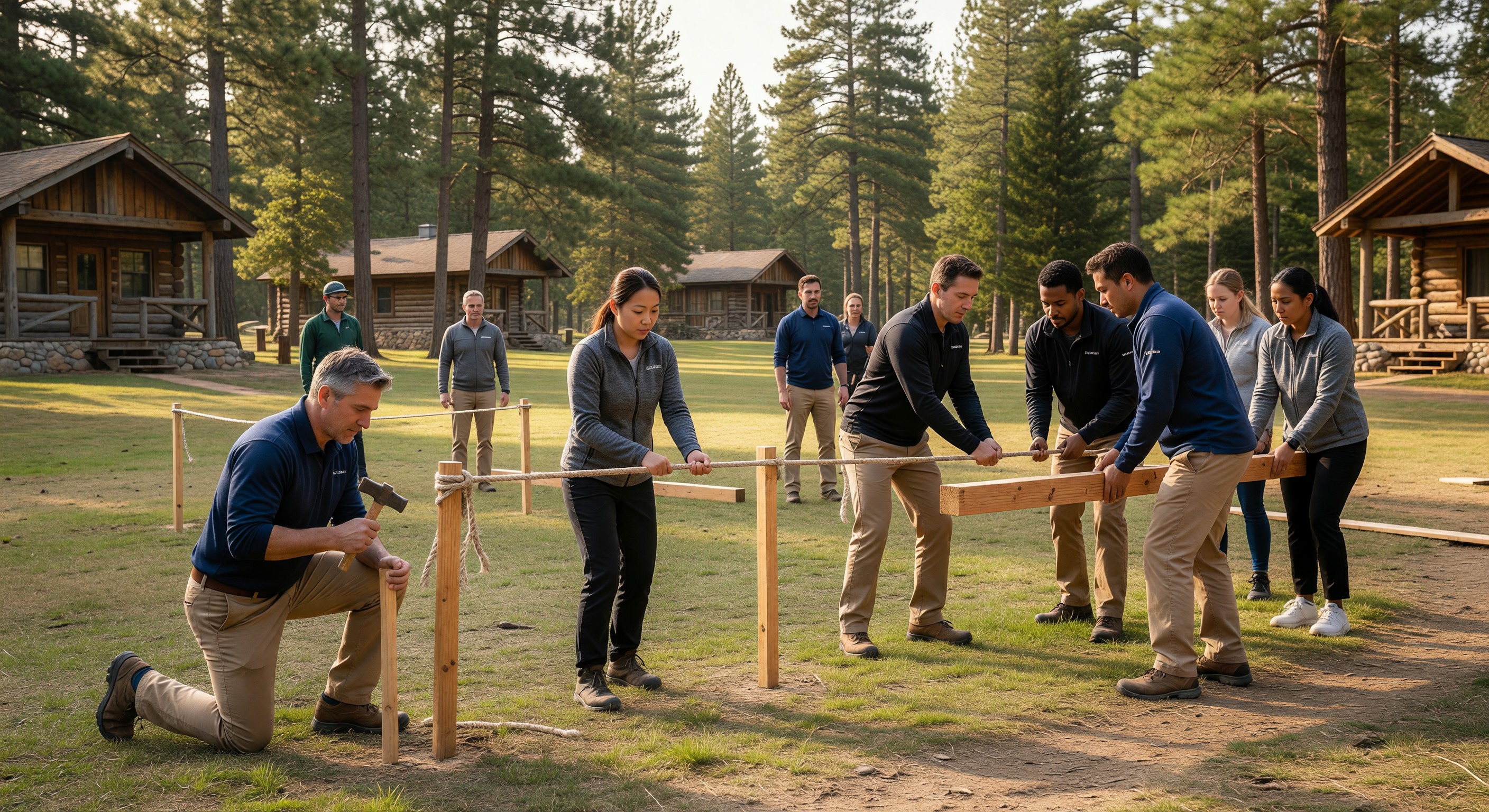
Corporate retreat bookings are among the most valuable non-recreational demand sources for campgrounds and outdoor properties. A company booking a 20-person team for a two-night Thursday-Friday retreat occupies sites on your hardest-to-fill nights, generates high per-person revenue, and potentially repeats annually.
The corporate retreat market is also genuinely underserved by most campgrounds — operators who don’t actively pursue it leave meaningful revenue on the table.
Why Corporate Retreat Demand Is an Opportunity
Corporate team retreats have shifted significantly toward outdoor and nature-based settings. The appeal is practical: a campground or outdoor retreat property removes teams from their normal work environment, creates natural opportunities for informal interaction, and is perceived as a creative and refreshing alternative to a hotel conference room.
From an operator perspective, corporate retreats are attractive because:
They fill weekday slots. Corporate retreats typically happen Thursday-Friday or mid-week — your lowest-demand period. A corporate booking that fills a Wednesday-Thursday night represents demand you weren’t going to capture through recreational camping.
Revenue per person is higher. Corporate retreat budgets typically include accommodation, catering (if you offer it), activities, and AV equipment. The revenue per person per night is substantially higher than recreational camping.
They repeat. A company that has a positive retreat experience at your property often returns annually. Corporate clients with a positive experience also refer other companies.
What Corporate Retreat Clients Need
Companies booking outdoor retreats have specific requirements that differ from recreational campers:
Meeting/event space. Even outdoor retreats typically need a covered space for presentations, workshops, or facilitated sessions. A pavilion, lodge, or large tent that can be set up with tables and basic AV capability is essential.
AV and power access. Projectors, screens, and reliable power for laptops are baseline expectations. WiFi that actually works for a group is equally important.
Catering capability. Full catering from your team or the ability to bring in a catering vendor (with appropriate facilities — a commercial kitchen or at minimum an outdoor prep area) is highly valued. Coordinating their own food for a team is a logistical burden that clients willingly pay to avoid.
Team activities. Guided experiences — ropes courses, kayaking, archery, cooking classes — are often the selling point of the retreat. If you can bundle activities into a retreat package, you provide more value and capture more of the client’s budget.
Reliable check-in and logistics support. Corporate clients expect a professional coordinator experience, not a walk-in to an unstaffed park.
Building a Retreat Package and Pricing
Create a defined “Corporate Retreat Package” that bundles the elements companies typically need:
- Site block for stated capacity (6–20 people is common)
- Use of meeting/event space for X hours
- Catering (meals included or catering vendor coordination)
- One guided team activity
- Welcome/farewell logistics support from your team
Price this as a per-person package rather than site-by-site. Corporate clients budget per head; a per-person price makes their approval process easier.
Marketing to Corporate Clients
Dedicated page on your website. A page specifically for corporate and team retreats — separate from your general campground booking page — signals that you serve this market. Include specific details about capacity, facilities, and packages.
Direct outreach to local businesses. Identify businesses within a reasonable drive (under 2 hours) and reach out to HR departments and office managers. A brief, specific pitch (“We offer fully coordinated outdoor team retreats for groups of 10–30, weekdays available”) is more effective than generic marketing.
LinkedIn targeting. Corporate decision-makers are on LinkedIn. A modest LinkedIn advertising campaign targeted to HR professionals and executive assistants in your regional metro area can generate leads cost-effectively.
Corporate event planning communities. Event planning professionals source outdoor venues regularly. Presence in corporate event planning directories and relationships with local event planners creates referral channels.
Frequently Asked Questions
Do I need a commercial kitchen to host corporate retreats? Not necessarily, but you need some food preparation capability or a clear arrangement with catering vendors. If your facilities don’t support food service, build partnerships with local catering companies who can deliver and serve on-site.
What liability coverage do I need for corporate groups? Your standard general liability policy may or may not cover corporate events — verify with your insurer. Additional coverage or a certificate of insurance naming the corporate client may be required. This is a routine request from corporate bookers and worth having ready.
How do I handle a corporate client who wants customization I can’t easily provide? Be honest about what you can and can’t do, and offer alternatives. A client who wants a specific catering menu you can’t prepare in-house might be satisfied with you coordinating a catering vendor. A client who wants an activity you don’t offer might accept a substitution. Corporate clients often have more flexibility than their initial requests suggest.
Should I require a larger deposit for corporate bookings than recreational bookings? Yes. Corporate bookings involve significant resource allocation (blocking sites, arranging catering, staffing). A 50% deposit to hold is standard and expected by corporate clients accustomed to event booking norms.
Further Reading from Authoritative Sources
- ARVC campground group booking and event hosting resources — ARVC provides guidance on group booking programs and event hosting for campground operators, and tracks the corporate retreat segment as a growing revenue category in the outdoor hospitality industry.
- Go RVing group and corporate outdoor experience trends — Go RVing’s consumer research covers group and corporate use of campground facilities, providing the demand-side perspective on why corporate buyers are increasingly considering outdoor hospitality venues for retreat events.