If your campground accepts bookings from multiple online sources — your own website, one or more OTAs, perhaps a vacation rental platform like Airbnb — you’re operating what the hospitality industry calls a multi-channel distribution strategy. The operational challenge of keeping inventory synchronized across those channels is exactly what channel management tools are designed to solve.
Understanding how channel management works — and when you need a dedicated tool versus a native PMS connection — helps you build a distribution strategy that maximizes reach without creating double-booking risk.
The Double-Booking Problem
Imagine you have 10 available sites for the July 4th weekend. Those sites are listed on your website, on Hipcamp, and on Airbnb (for your glamping units). If two guests book the same unit simultaneously on different platforms, you have a double-booking — and one of those guests is going to have a very bad day.
The traditional solution — manually updating availability on each platform after every booking — doesn’t scale and doesn’t solve the simultaneous booking problem. Two bookings that arrive within minutes of each other will both confirm before you can update the other platforms.
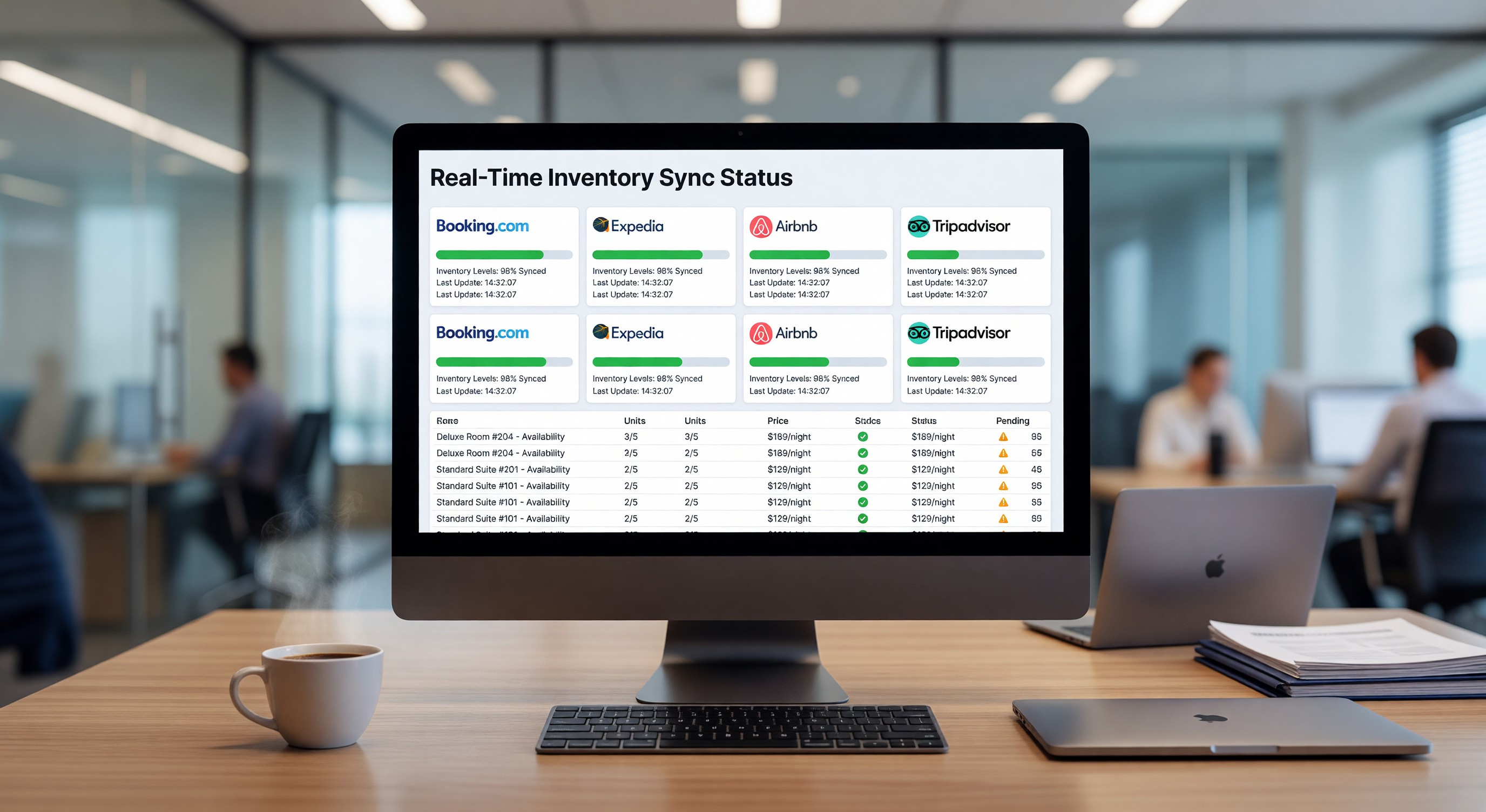
A channel manager solves this by making all channel connections real-time and bidirectional: every booking on any channel immediately removes that inventory from all other channels.
How Channel Management Works
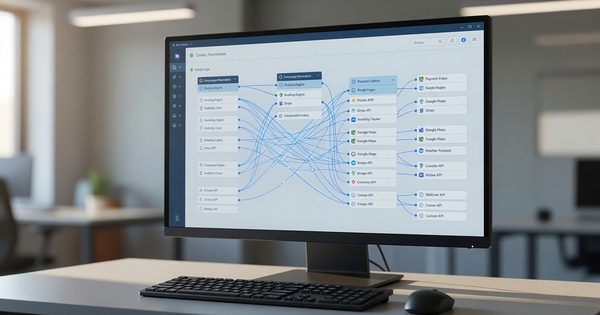
A channel manager sits between your primary reservation system (your PMS) and each booking channel:
- Your PMS is the master of your inventory
- The channel manager connects to your PMS via API and knows your real-time availability
- The channel manager pushes your availability to each connected OTA and booking channel
- When a booking comes in on any channel, it flows back to the channel manager, which removes that inventory from all other channels and creates the reservation in your PMS
The key is that inventory is managed in one place — your PMS — and distributed everywhere through the channel manager. Updates to rates, availability, and minimum stays propagate to all channels automatically.
Channel Manager vs. Native PMS Connections
Many campground PMS platforms include direct connections to common OTAs — this is often called “native integration.” When native integrations exist and are reliable, they eliminate the need for a separate channel manager.
The question is whether the native connections cover all the channels you use. Common scenarios:
Native integration is sufficient: Your PMS connects directly to Hipcamp, Campspot, and one other OTA you use. No external channel manager needed.
Channel manager is needed: You want to connect to Airbnb and Booking.com, which your PMS doesn’t natively support. A channel manager with broader connectivity fills the gap.
Standalone channel manager: Some parks use a third-party channel manager as the hub and connect their PMS to it, along with all their OTAs. This gives maximum channel flexibility but adds a layer of complexity.
Choosing Channels Worth Managing
Not every OTA is worth the channel management complexity it adds. Evaluate each channel on:
- Booking volume: How many bookings actually come through this channel?
- Guest quality: Do guests from this channel match your target market and generate appropriate average booking value?
- Commission cost: What does the channel actually cost per booking, net of its traffic benefit?
- Audience overlap: If you’re already on two similar platforms with overlapping audiences, adding a third may not move the needle
Start with the one or two channels that drive meaningful volume and add incrementally. Track the booking source on every reservation to understand channel contribution.
Rate Parity Across Channels
Some OTAs include rate parity clauses requiring that you not offer lower rates on competing channels. If you’re subject to rate parity agreements, your channel manager needs to maintain consistent rates across those connected channels.
Where you have flexibility, consider channel-specific pricing:
- Your direct booking site can offer a small discount to incentivize guests away from OTAs
- OTAs may be appropriate for last-minute inventory at market rates
- Premium channels that attract higher-value guests may support premium pricing
Common Channel Management Mistakes
Setting it and forgetting it. Channel managers require monitoring. A failed sync, an API change, or a rate update that didn’t propagate can create inventory mismatches. Check your channel management dashboard weekly.
Not mapping site types correctly. When setting up channel connections, site types in your PMS must map correctly to equivalent categories on each OTA. A mismatch creates booking confusion and potential overselling.
Underestimating commission calculation. Track the actual net revenue per booking by channel after commissions. A channel that looks busy may be delivering lower net revenue than your direct bookings.
Frequently Asked Questions
Do I need a channel manager if I only use one OTA? Probably not. If you’re using a single OTA with a native connection to your PMS, the native integration typically handles real-time sync. A separate channel manager adds value when you’re managing multiple channels that your PMS doesn’t natively support.
What’s the cost of a channel manager for a campground? Pricing varies significantly. Standalone channel managers typically charge $50–$200/month plus a per-booking fee or percentage of revenue. Some PMS platforms include channel management in their base pricing. Compare total cost of ownership, not just the monthly fee.
How do I test that my channel connections are actually real-time? Make a test booking on one channel (using a test credit card or reversing it immediately) and verify that availability updates on all other channels within a few minutes. A same-day test across all channels is the most reliable verification.
Can a channel manager handle vacation rental platforms alongside camping OTAs? Some can. Platforms like Lodgify, Guesty, and Cloudbeds were built for vacation rental multi-channel management and have been adding campground/outdoor hospitality connections. These may serve parks with significant glamping or cabin inventory better than camping-specific tools.
Further Reading from Authoritative Sources
- ARVC campground OTA channel management standards and distribution strategy resources — ARVC’s technology and operational resources cover OTA channel management, distribution strategy, and PMS integration evaluation for campground operators.
- Go RVing consumer research on OTA campground booking behavior and platform preferences — Go RVing’s research on how RV travelers use OTA platforms to discover and book campgrounds informs channel prioritization decisions for operators.