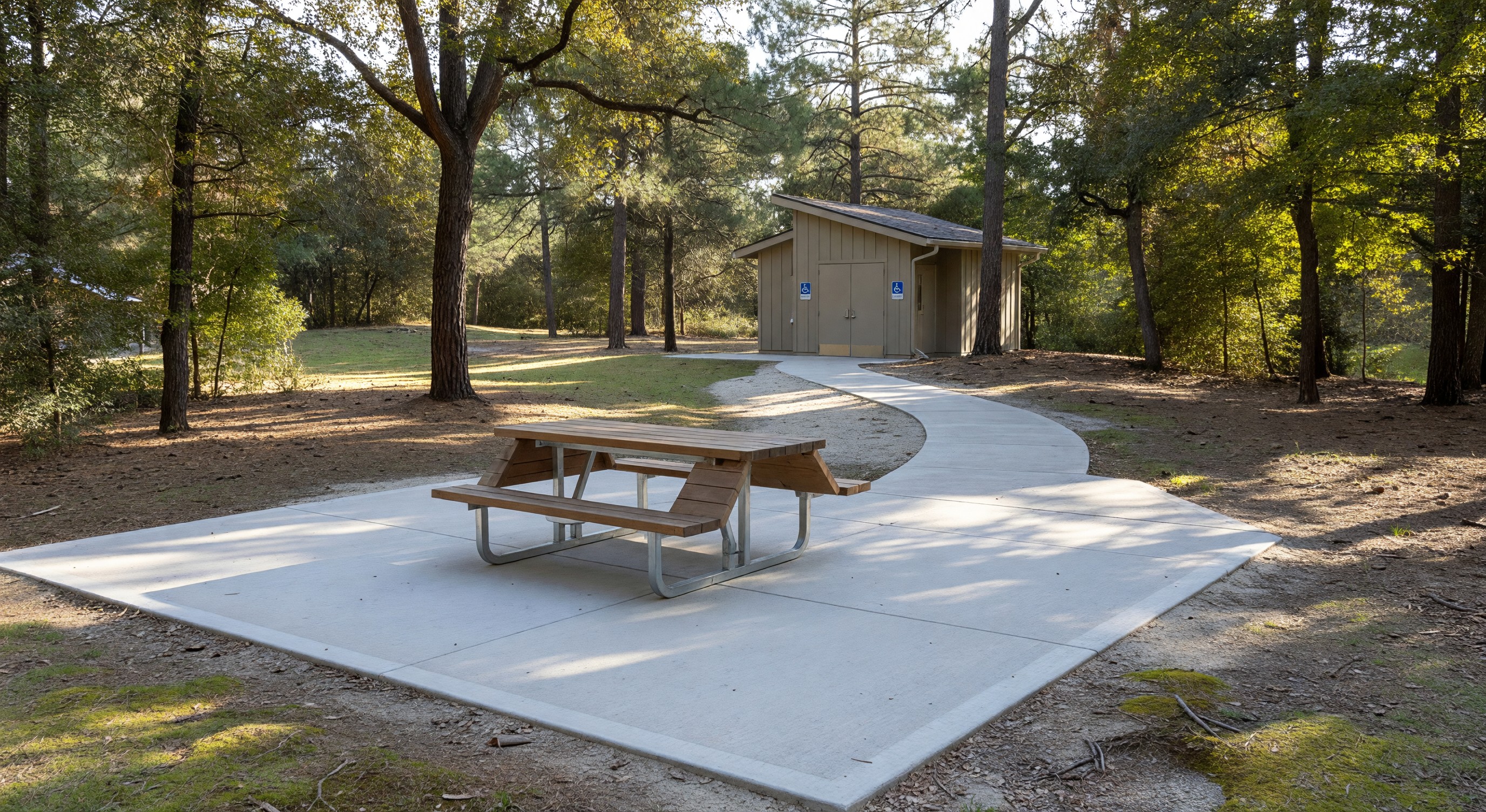
Accessibility in camping isn’t just a compliance requirement — it’s a growing market segment. Americans with disabilities, older campers with mobility limitations, and families with members who use mobility equipment are active, enthusiastic outdoor recreationalists who face real barriers at many campgrounds.
For operators, providing genuinely accessible facilities and managing accessible site reservations correctly is both the right thing to do and good business. Here’s what you need to know.
ADA Requirements for Private Campgrounds
The Americans with Disabilities Act requirements for privately operated campgrounds are different from those for federal and state public lands. Private campgrounds that are open to the public are covered under the ADA as places of public accommodation, but the specific technical requirements vary based on whether facilities were built before or after the ADA took effect and whether significant renovations have occurred.
For public accommodations, the ADA requires:
- Accessible routes connecting parking to facilities
- Accessible restroom and shower facilities
- Sufficient accessible sites with appropriate surface conditions, clearances, and amenities
- Accessible pathways to any facilities offered to guests
The 2010 ADA Standards for Accessible Design and the 2010 ADA Outdoor Developed Areas regulations (for campgrounds, picnic areas, and trails) provide specific technical guidance. The Forest Service and National Park Service guidelines, while written for public lands, offer a useful practical reference even for private operators.
Consulting with an accessibility specialist who can evaluate your specific facilities is advisable for operators undertaking significant renovations or new construction.
Managing Accessible Site Inventory
From a reservation management perspective, accessible sites require specific handling:
Don’t merge accessible and standard site inventory. Accessible sites should be a distinct category in your reservation system with clear accessibility feature attributes documented. Guests who need accessible features must be able to identify and select appropriate sites.
Establish a priority reservation policy. A common and defensible practice is to hold accessible sites for guests who require them for some advance period (e.g., 30 days before the arrival date) before releasing them to general availability. This ensures that guests with disabilities, who often need more lead time to arrange travel, can access appropriate sites.
Document accessibility features at the site level. Each accessible site should have documented: surface type and firmness, slope, width of access route, pad dimensions, picnic table accessibility, proximity to accessible restrooms, and any specific equipment (accessible fire ring height, beach wheelchair access, etc.).
Train staff to discuss accessibility needs. When guests call with accessibility questions, staff should be able to discuss specific features at the site level, not just answer “yes, we have accessible sites.”
What “Accessible” Actually Means — Site Features
The word “accessible” covers a wide range of needs. Different guests need different things:
Mobility accessibility: Hard or firm surface pad, level or near-level surface, clear route to restrooms and facilities, accessible picnic table, appropriate turning radius for wheelchairs.
Visual accessibility: Larger site numbers with high contrast, audio guidance options, braille at key sign locations (registration desk).
Hearing accessibility: Visual fire alarms in restroom/shower facilities, TTY communication options at the front desk.
Not all accessible sites serve all needs equally. Some guests who use wheelchairs have very different requirements than guests with vision or hearing impairments. Documenting the specific accessibility features at each designated accessible site helps guests self-select the right accommodation.
Reservation System Accessibility
The booking process itself should be accessible — the ADA’s public accommodation requirements extend to your website and booking tools:
- Your booking website should be WCAG 2.1 Level AA compliant (screen reader compatible, keyboard navigable, adequate color contrast)
- Booking forms should be compatible with common assistive technologies
- A phone booking option must be available for guests who can’t use online tools
- All required information should be accessible without relying on color alone
Many campground booking platforms are not fully ADA-compliant for the booking interface itself. If yours isn’t, ensure a fully functional phone booking option is available and well-publicized.
Frequently Asked Questions
Am I required to have accessible campsites if I operate a small private campground? Generally yes, if your campground is open to the public. The ADA applies to places of public accommodation regardless of size. The number of accessible sites required scales with your total capacity, and specific technical requirements may vary based on when facilities were built and the nature of your terrain. Consult with an ADA specialist for guidance specific to your situation.
Can I charge more for accessible sites? No. The ADA prohibits charging a higher rate for accessible sites. You may charge the standard rate for the site type (an accessible cabin can be priced the same as comparable non-accessible cabins), but the accessibility features cannot be a basis for surcharging.
What should I do if all of my accessible sites are booked by guests who don’t use them? This is a frustrating but common operational challenge. Options include: implementing a tighter hold-for-need policy, moving accessible sites off general inventory until closer to the date, or adding a brief “accessible site need” acknowledgment at booking. Legal counsel familiar with ADA hospitality requirements can advise on the most defensible approach.
How do I handle a guest who requests a specific accommodation I don’t currently offer? Make reasonable accommodations where possible. Document the request and your response. Where a specific accommodation genuinely isn’t feasible (significant construction would be required), clearly explain what you can offer as an alternative. Genuine good-faith engagement with accessibility requests protects you legally and is the right approach for your guests.
Further Reading from Authoritative Sources
- ADA Title III accessible campsite requirements for public accommodations — ADA.gov is the official U.S.
- Access Board outdoor developed area campsite accessibility standards — The U.S.