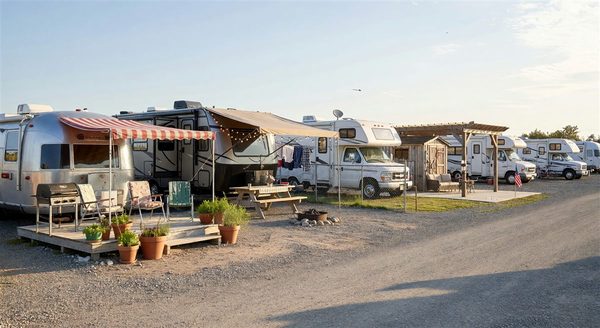
In April 2026, Kampgrounds of America and Wild Energy announced an integration between KOA’s K2 KampSight property management system and Wild Energy’s smart utility metering platform. The stated purpose is narrow: KOA campgrounds can capture remote electric meter readings for long-term guests inside K2, so staff no longer walk the loops reading pedestals by hand. The broader significance is that metered utilities are moving from a separate system into the reservation record, and that changes how parks should evaluate both.
What has been announced, and what has not
According to Wild Energy’s announcement and its K2 integration page, meter readings from Wild Energy smart meters flow into K2 and line up with guest reservations, so usage can be billed back to long-term guests on actual consumption. The integration was first introduced to KOA franchisees at the 2025 KOA Expo, and Wild Energy says it is onboarding KOA locations. KCN Campgrounds, which operates several KOA parks, is quoted by Wild Energy as expecting bill-backs for long-term guests to become more seamless.
Some details are not public. Wild Energy’s integration page describes both electric and water metering on its platform, while the press release refers only to electric readings; we could not confirm whether water reads are part of the K2 integration at launch. Neither company has published technical specifics such as how often readings sync, whether billing is generated automatically or reviewed by staff, or what the integration costs. All claims about performance come from the vendor. Franchisees evaluating it should ask Wild Energy and KOA directly for those details in writing.
Why manual meter walks are the problem worth solving
Long-term and seasonal sites are where utility costs most often leak. A nightly guest’s electricity is usually bundled into the rate. A monthly or seasonal guest running air conditioning through a summer, or electric heat through a shoulder season, can consume far more than any flat fee covers, which is why many parks submeter those sites.
The manual version of submetering has three failure points:
- Reading. Someone walks to each pedestal, reads a dial or display, and writes the number down. Reads get missed, transposed or estimated when weather or staffing intervenes.
- Matching. The reading has to be attached to the right guest for the right period. When a guest moves sites mid-stay or a site turns over between reads, that match is easy to get wrong.
- Billing. Someone calculates usage, applies the rate, and adds a charge to the folio, often by re-keying data from a spreadsheet into the reservation system.
Remote metering fixes the first step on its own. Integration with the PMS is what fixes the second and third, because the reading is attached to the reservation by the system rather than by a person.
Why this is turning into a PMS feature
The K2 integration is the most visible example, but it follows a pattern. Wild Energy’s own published integration list names connections with several other reservation platforms, including Campspot, Newbook and CampLife, and CampLife has announced that users can sync electricity usage from Wild Energy’s meters into its property management system. RoverPass has announced a beta of its own smart metering system. Newbook’s published guidance argues that operators should look for tools that capture and store readings directly within the PMS.
The reasons this is consolidating into the reservation system are practical:
- The reservation is the billing record. Usage that lives in a separate portal has to be moved into the folio by someone. Usage that arrives on the reservation does not.
- Site moves and turnovers are already tracked there. The PMS knows who was on site 42 between which dates, which is the information needed to split a meter reading correctly.
- Disputes are easier to resolve. A guest questioning a utility charge can be shown readings tied to their stay dates rather than a spreadsheet extract.
Comparing paths: franchise and independent
For KOA franchisees
The K2 path is straightforward on paper: Wild Energy hardware, integrated with the system KOA already provides. Questions worth asking before committing:
- Does the integration cover water as well as electric at your location, or electric only?
- Is billing generated automatically on the folio, or presented for staff review first?
- What is the per-meter hardware cost, the recurring platform fee, and any integration fee?
- What happens to meter data and billing if a pedestal loses connectivity?
For independent parks
Independents have more combinations to evaluate and a different trap to avoid. The trap is buying meters first and checking integration later. A metering platform that does not integrate with your reservation system gives you remote reads but leaves the matching and billing steps manual.
A sensible order:
- Confirm which metering vendors your current reservation platform integrates with, and what each integration actually does (reads only, or reads plus automatic billing).
- Ask the metering vendor for the same list from their side. The two lists do not always agree, and a vendor’s partner page is a claim, not a contract.
- Check recurring costs. Industry coverage notes that many metering providers charge monthly fees for billing software or PMS integrations, while some hardware vendors, such as EKM, advertise billing software with no recurring fee but may not integrate with your PMS. Price the full stack over several years.
- Check the network. Remote meters need a path back to the platform, whether Wi-Fi, cellular or a mesh. A park with weak Wi-Fi at the far loops may need to fix connectivity before metering works reliably there.
- If you plan to change reservation platforms in the next few years, make metering integration a requirement in that evaluation rather than a separate project.
What to do with it this off-season
For parks with a meaningful share of monthly or seasonal guests, the off-season is the time to quantify the problem. Pull last season’s long-term stays, estimate the staff hours spent reading and billing meters, and compare billed utility revenue against the electric bill for those loops. If the gap is large, integrated telemetry has a direct payback case. If it is small, a remote-read system without full integration may be enough.
The KOA announcement does not prove that integrated metering pays for itself at every park. It does show that the major reservation platforms now treat utility data as part of the guest record. Parks evaluating any PMS in 2026 should ask about it, even if they are not ready to install a single meter.