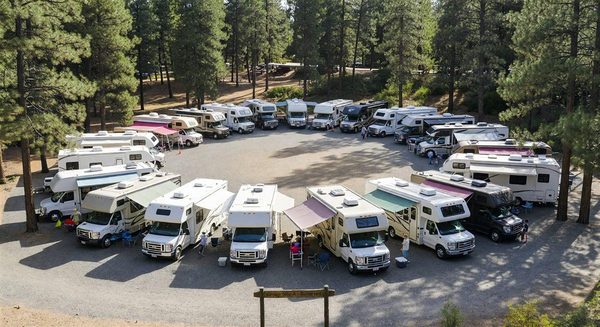
Campspot named the “Together-Trip” as the defining travel trend for 2026 in a report released in late November 2025. The traveler side of the research is easy to quote: 82% of respondents expect a desire for connection to shape their 2026 travel plans. The more useful half for operators is the companion survey of Campspot campground owners, because it shows what parks are already doing and where technology fits into it.
What the two surveys found
The traveler survey covered more than 1,600 U.S. travelers. Beyond the 82% headline, it found:
- 75% want a stronger sense of community in their everyday lives.
- 85% regularly meet new people while camping, averaging four new friends from camping alone.
- 73% have received an act of kindness from another camper, and 92% say they have paid one forward.
- 83% say they feel like a better version of themselves at a campground.
The operator survey reported that 85% of owners deliberately create opportunities for guests to interact, 78% offer features such as communal fire pits, holiday celebrations or community dinners, and 44% have seen increased guest interest in community-focused experiences over the past 18 months.
Two caveats before building a budget on these figures. First, the traveler sample was drawn from Campspot’s own customers, so it reflects people who already book campgrounds online, not the wider travel market. Second, the operator sample size was not published in the coverage we could find, and the 78% figure bundles fire pits, holiday events and dinners into one category. It does not tell you how many parks have communal fire pits specifically.
The trend is mostly physical, not digital
The striking thing in the operator data is how little of it involves technology. Fire pits, holiday events and shared meals are layout and staffing decisions. That is a useful corrective to vendor pitches framing community as a software feature. Guests meeting four new people per trip are doing it at the fire ring and the dog park, not in an app.
Where technology earns a budget line is in the logistics around those physical spaces: getting groups booked together, telling guests what is happening, and managing shared facilities so they do not become a source of conflict.
Reservation tools: booking people together
Group and adjacent-site booking
A Together-Trip often starts as a multi-family or multi-rig booking. If a park’s reservation system cannot hold adjacent sites under one group, take a single deposit, or let each party pay its own share, the group either books elsewhere or the front desk handles it by phone. Questions to put to a current or prospective vendor:
- Can a group leader reserve a block of named or adjacent sites in one transaction?
- Can individual parties pay separately while staying linked to the group?
- Can the site map show which sites are physically next to each other, or is adjacency only known to staff?
Parks that already handle groups well usually have the capability; the gap is often that adjacency data was never entered into the site inventory. That is setup work, not a new purchase.
Bookable shared spaces
If communal fire rings, pavilions or a group kitchen are part of the offer, they become contested at peak. Selling or reserving time slots through the same reservation platform used for sites keeps the record in one place and avoids a paper sign-up sheet at the office. Check whether your platform supports non-site inventory (add-ons or bookable amenities) before buying a separate scheduling tool.
Messaging: telling guests what is happening
The 85% of operators who create interaction opportunities need a way to announce them. A community dinner nobody hears about is just staff cooking for themselves.
Most parks already have the channel: the confirmation email, a pre-arrival message, and in many cases two-way text messaging through the reservation platform. The budget question is whether that channel can send segmented messages, for example to guests currently on property, or to a specific loop, rather than broadcasting to every past and future guest. Event announcements to people who left yesterday are noise.
A weekly events calendar linked from the pre-arrival message, plus a same-day text for anything time-sensitive, covers most parks. Separate community apps add a login and a download for guests who, by Campspot’s own data, are trying to talk to the people next to them.
Site layout and infrastructure: the overlooked costs
Connection-focused amenities have infrastructure implications that rarely appear in the original proposal:
- Lighting. A communal fire area used after dark needs path lighting that does not flood nearby sites. Low, shielded fixtures on a timer are cheap; retrofitting after complaints is not.
- Power and connectivity at gathering spaces. Pavilions used for dinners and events often need power for cooking equipment and sometimes Wi-Fi coverage for presentations or payment terminals. Running conduit while the area is being built is far cheaper than trenching later.
- Noise management. Shared spaces generate noise into quiet hours. If the park uses noise monitoring, place a sensor near the gathering area so staff get early warning rather than morning complaints.
- Fire safety. Communal fire rings concentrate risk. Burn-ban notifications pushed through the guest messaging channel are one of the most practical uses of the tools above.
A budget framework that avoids inventing amenities
The risk in any trend report is building what the survey implies rather than what your guests use. A simple sequence keeps spending tied to evidence:
- Audit current use. Which shared spaces fill up at peak, and which sit empty? Front-desk staff usually know.
- Fix the booking path first. If groups cannot book together online, that gap costs revenue regardless of any amenity.
- Use the messaging tools you already pay for before adding a new platform.
- Spend on physical improvements (fire rings, seating, lighting, power at pavilions) where the audit shows demand.
- Measure. Track group bookings, shared-space reservations and event attendance across one season before expanding.
Campspot’s data supports a trend that most parks were already serving with a fire pit and a potluck. The technology budget that follows from it is modest: make group booking easy, make announcements reach the right guests, and wire the gathering spaces properly the first time. Anything beyond that should wait until your own occupancy data, not a national survey, says guests are asking for it.