Waste management is an operational necessity at every campground and a significant factor in both operating costs and environmental impact. The daily rhythm of trash collection, recycling management, organic waste handling, and the associated labor, equipment, and hauling costs add up to a meaningful operational expense — and a source of guest complaints when it goes wrong.
Technology and systematic approaches to waste management help campground operators reduce costs, maintain cleaner facilities, and support sustainability commitments that resonate with an increasingly eco-conscious guest base.
Understanding Your Waste Generation
Before optimizing waste management, understand your baseline: how much waste your campground generates, when it’s generated, and what it consists of.
Waste volume measurement: If you’re not tracking total waste volume, start. This might be as simple as recording the number of trash bags collected each day, or as sophisticated as weighing collection containers before and after emptying. Volume data reveals patterns — peak generation days, high-waste areas — that inform collection scheduling.
Waste stream composition: Conducting a periodic waste audit — sampling and categorizing what’s in your trash — reveals what percentage is recyclable, organic, or actually non-recyclable waste. Many campgrounds find 30–40% of their trash stream is recyclable materials that could be diverted at lower cost than landfill disposal.
High-waste locations: Some areas of a campground generate disproportionate waste: picnic areas, bathhouses, play areas, campfire rings. Understanding which locations fill fastest informs container placement and collection frequency.
Smart Waste Monitoring
Smart waste monitoring sensors installed inside or on trash containers provide fill-level data — typically via ultrasonic sensors — that indicates when containers need emptying. This data is transmitted to a management dashboard that staff can check before dispatching collection routes.
Benefits of fill-level monitoring:
- Reduce empty-haul trips — don’t collect containers that are half-empty
- Prevent overflow — get alerts when high-traffic containers are filling faster than expected
- Optimize collection routes based on actual fill levels rather than fixed schedules
- Provide data for capacity planning (where do we need larger containers or more frequent collection?)
Campground-appropriate smart waste monitoring systems are available from several providers, with sensors typically costing $150–$400 per container and software subscriptions running $20–$50 per container per month. The ROI case is clearest in larger operations where collection labor is a significant cost and where variability in waste generation by area is high.
Recycling Program Management
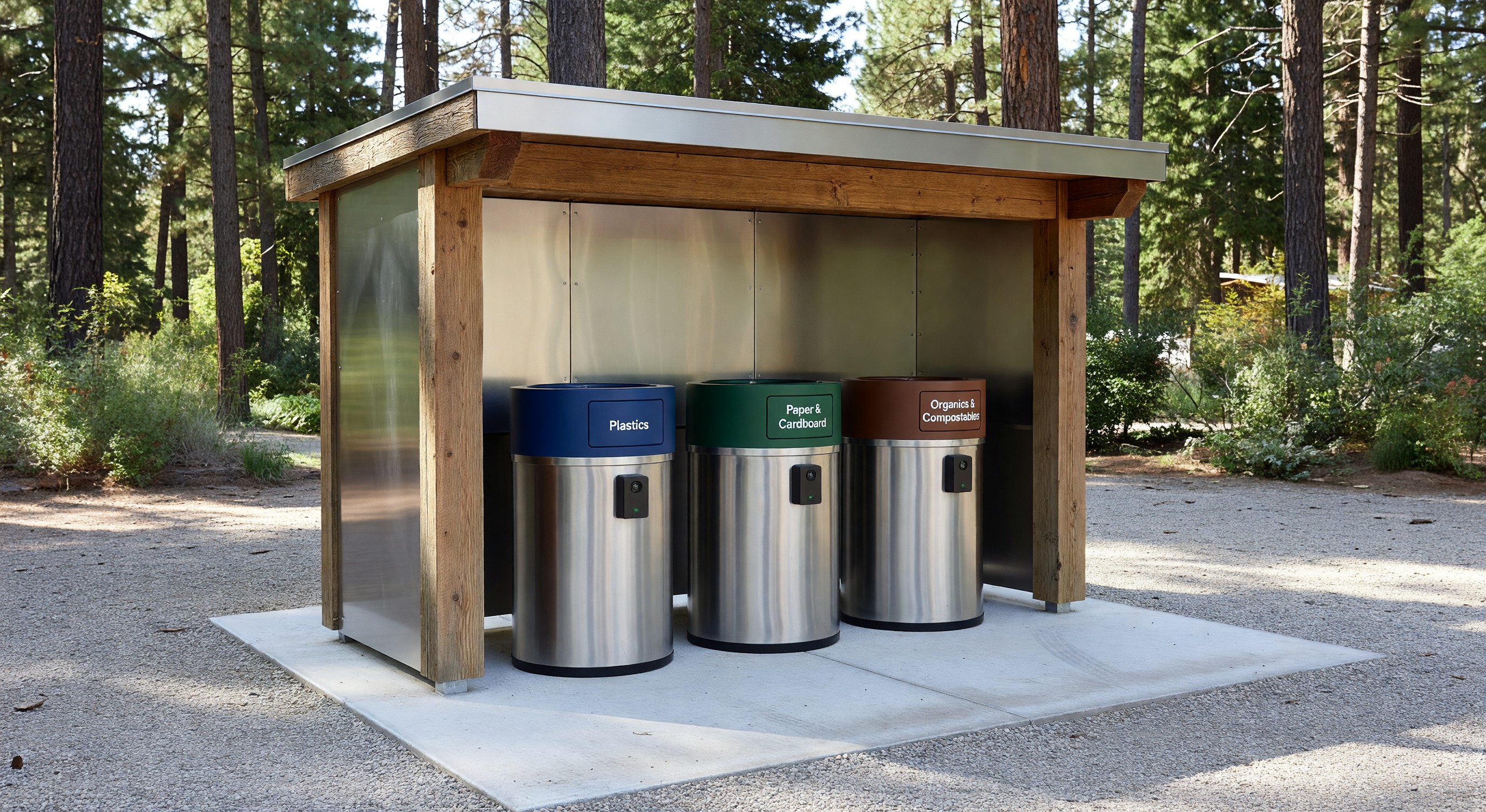
A functional campground recycling program requires guest education, proper container infrastructure, and a collection process that actually keeps recyclables separate through hauling.
Container placement: Recycling containers should be paired with trash containers at every waste station — if guests must travel further to recycle than to trash, most will trash. Matching container sizes and placement makes recycling the path of least resistance for motivated guests.
Signage and education: Clear visual signage showing which materials go in which container, with pictures rather than just text, reduces contamination. Contamination — non-recyclable materials in the recycling stream — is the most common failure mode in campground recycling programs. It results in haulers rejecting loads or charging contamination fees that can negate the recycling cost savings.
Hauler coordination: Verify with your hauler whether they accept single-stream recycling (all recyclables mixed) or require separation (paper separate from plastic/glass/metal). Some haulers require bailing or specific container types for recyclables. These requirements should drive your container and collection design.
Organic waste: Campground food waste — from camp store operations, communal cooking areas, and cabin kitchen waste — can be composted rather than landfilled in many areas. Partnering with a local composting facility or installing on-site composting for food waste diverts a significant waste stream and may reduce hauling costs.
Collection Route Optimization
Efficient trash collection routes minimize labor time while ensuring all containers are collected before overflow. In a campground with dozens of trash stations across multiple loops, poorly planned routes waste significant labor time in unnecessary backtracking.
Route mapping: Document your current collection route explicitly — which containers, in what order. Then evaluate whether the route could be optimized by changing the collection sequence or the direction of travel.
Timing optimization: Schedule collection for times that minimize guest impact and maximize efficiency. Pre-8am collection before guest activity peaks, and post-checkout collection in loops that turned over that day, are generally the most efficient approaches.
Container sizing calibration: If consistently under-filling or over-filling specific containers, resize to match actual demand. Over-sized containers in low-traffic areas are wasted capital; under-sized containers in high-traffic areas create overflow problems.
Addressing Campground-Specific Waste Challenges
Campfire ash disposal: Campfire ring ash requires specific management — it must be completely cold before disposal and kept separate from general trash (hot ash in a trash bag is a fire hazard). Designated ash disposal stations with metal containers prevent the common problem of guests putting hot ash in trash cans.
Pet waste: Campgrounds with pets need pet waste stations with bag dispensers and dedicated collection containers. Positioning pet waste stations near common pet walking routes (perimeter areas, dog-walk paths) encourages use. Collection frequency for pet waste containers needs to be higher than general waste due to odor.
Dump station waste: RV sewage from the dump station goes to your sewer or septic system, not solid waste. Gray water from dump station rinsing similarly. Any solid material that ends up in dump station waste collection is a biohazard waste issue requiring specific disposal protocols.
Recycling drop-off abuse: Campground recycling stations near road frontage or accessible to non-guests sometimes become informal public drop-off points, with non-guests adding materials — sometimes non-recyclable — to campground containers. Security lighting and camera coverage at waste stations near public access points reduces this issue.
Frequently Asked Questions
Is a campground recycling program worth the additional cost and management? The economics depend on your local hauling rates for recyclables vs. trash. In many markets, recycling is cheaper per volume than trash hauling, particularly for glass and cardboard. Even where recycling costs more, the marketing and sustainability value resonates with eco-conscious guests. The operational cost is primarily in guest education and container management, which is modest.
How do I reduce waste from camp store packaging? Look for products with less packaging, offer products in concentrated forms (cleaning supplies, condiments), provide reusable options (coffee mugs for purchase, refillable water stations), and ensure your store packaging ends up in recycling rather than trash wherever recyclable. Camp store waste is a small percentage of total campground waste at most operations, but visible sustainable choices in the store communicate values.
What’s the standard frequency for campground trash collection? Peak season typically requires daily collection from high-traffic areas (bathhouses, picnic areas, camp store). Lower-traffic loops may need collection every 2–3 days. Shoulder season collection frequency can be reduced as occupancy drops. The primary driver should be fill levels — overflow is the problem to prevent, and collection frequency should be calibrated to prevent it at reasonable labor cost.
Do campground waste management practices affect state licensing? In many states, campground licensing or permit conditions include specific requirements for waste disposal. Health department regulations typically require covered trash receptacles and adequate capacity for the number of guests served. Verify your specific state and local requirements and ensure your waste infrastructure meets them.
Further Reading from Authoritative Sources
- EPA solid waste management and recycling regulations — The EPA regulates solid waste management, recycling program standards, and the environmental requirements for waste disposal that campground operators must comply with, making it the authoritative source for the regulatory framework governing campground waste management.
- ARVC campground waste management and sustainability operations guidance — ARVC provides operational waste management guidance for campground operators and tracks sustainability practices across the industry, making it the most relevant trade authority for the waste management technology and operational practices in this article.