Training seasonal employees is one of the most repetitive and time-consuming operational tasks campground operators face. Every spring, a cohort of new or returning seasonal staff need to learn your systems, policies, and procedures — often in a compressed timeline just before peak season begins. And the quality of that training determines the guest experience for the entire season.
Technology tools for training — digital learning platforms, video documentation, knowledge bases, and structured onboarding workflows — help campground operators deliver more consistent training with less manager time investment.
The Training Challenge at Campgrounds
Campground training has characteristics that make it more challenging than training in most business contexts:
Seasonal compaction: Training happens in a narrow window before season opening, when operational preparation is also at peak intensity. There’s pressure to compress training or cut it short to meet operational demands.
High turnover: Many campground seasonal positions see significant year-over-year turnover, meaning a portion of the training audience is entirely new each season. Even returning employees need refreshers on anything that changed.
Diverse role requirements: Front desk staff, maintenance technicians, activities coordinators, and camp store staff need completely different training. Building separate role-specific training is more work but produces better-prepared employees.
Manager dependence: Most campground training is delivered person-to-person — the manager or senior staff walking a new employee through procedures. This doesn’t scale and creates inconsistency when different trainers emphasize different things.
Documenting Standard Operating Procedures
Before training technology can help, you need documented procedures to train from. For most campgrounds, this is the missing foundation.
What to document:
- Front desk procedures: Reservation check-in workflow, how to handle walk-in requests, gate code issuance, cash handling, shift handover
- Maintenance procedures: Daily inspection routes, how to respond to guest-reported issues, equipment-specific maintenance tasks
- Safety procedures: Emergency response for different scenarios, pool water testing, incident reporting
- Guest communication standards: Phone greeting scripts, how to handle complaints, escalation procedures
Documentation formats: Written procedures work for step-by-step processes. Video is more effective for demonstrating physical tasks (how to operate the riding mower safely, how to clean a bathhouse efficiently, how to test and adjust pool chemistry). Both have a place in a comprehensive training library.
Tools for building a procedure library: Google Docs or Notion for written procedures, YouTube (unlisted videos) or Loom for recorded video demonstrations, a shared drive for central storage. Purpose-built tools like Trainual, Tettra, or Process Street provide more structured frameworks for procedure documentation and training assignment.
Digital Onboarding Workflows
Digital onboarding platforms streamline the new employee intake process — the paperwork and administrative tasks that precede actual training.
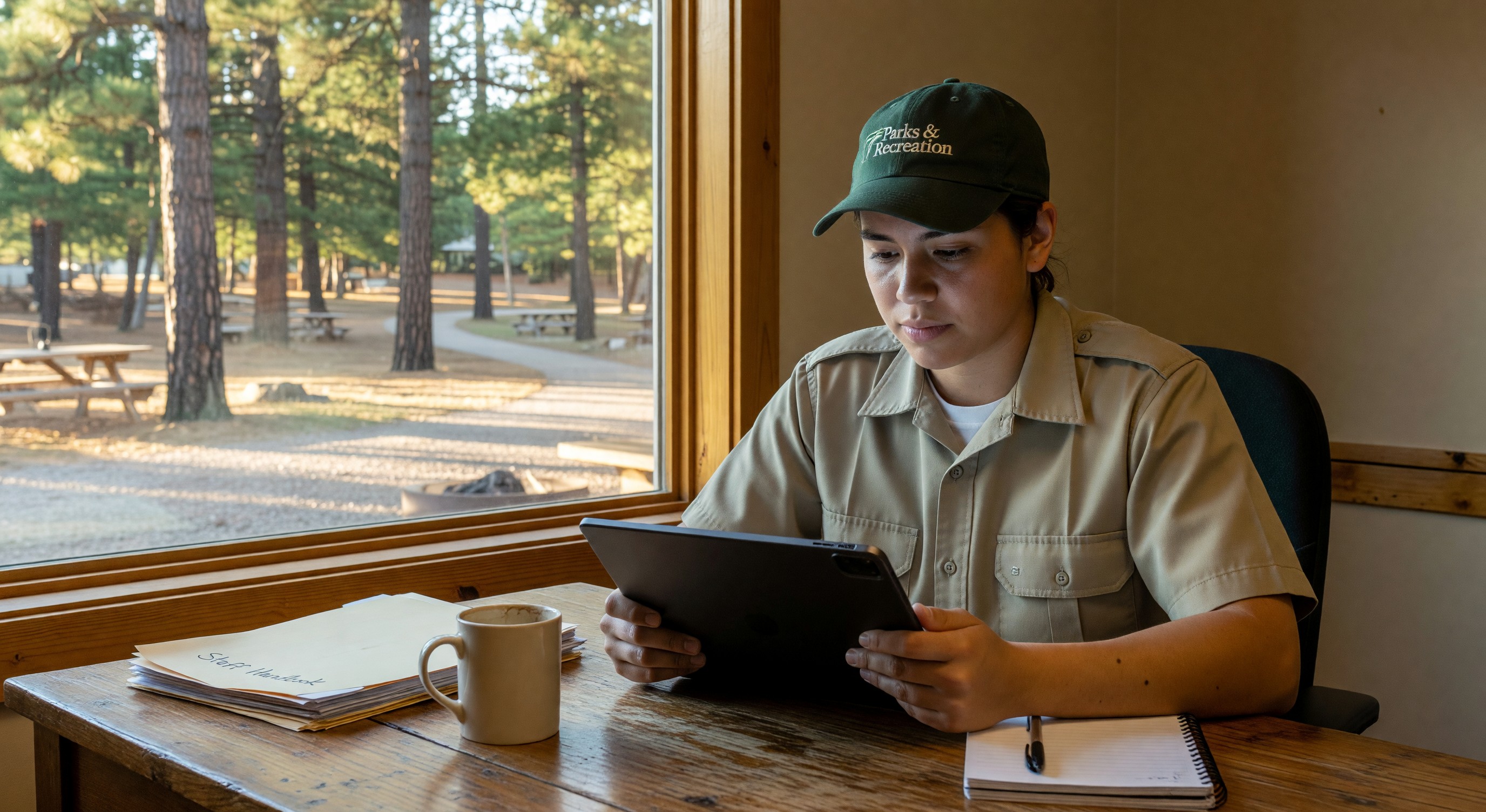
Pre-start onboarding: New hires complete I-9, W-4, direct deposit, and policy acknowledgment forms before their first day. They review the employee handbook and acknowledge key policies. By the time they arrive for their first shift, administrative tasks are complete and training time can focus on operational content.
Role-specific training assignments: On day one, the system assigns role-specific training modules — a front desk employee gets different assignments than a maintenance technician. Progress tracking lets managers see which modules have been completed and which are outstanding.
Knowledge checks: Short quizzes after key training content confirm comprehension and provide documentation that training was completed and understood. This documentation is particularly relevant for safety-related training.
Video Training for Practical Skills
Text procedures tell employees what to do; video shows them. For the hands-on aspects of campground operations, video training is significantly more effective than written procedure alone.
High-value campground training videos:
- Equipment operation (lawn mowers, utility vehicles, golf carts)
- Pool chemistry testing and adjustment
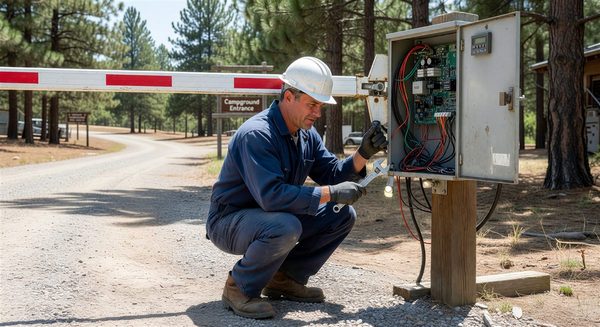
- Gate system operation and troubleshooting
- Bathhouse cleaning procedure and standards
- Trash collection route and separation procedures
- Golf cart or utility vehicle safe operation
Creating these videos requires an initial time investment — filming and basic editing — but that investment is recovered over multiple seasons and cohorts of new employees who can learn from the video independently without requiring a manager’s time.
Filming can be done on a smartphone with basic audio (ring light optional, but helpful for indoor shots). Editing with tools like iMovie, CapCut, or Descript requires no video production experience. Upload to YouTube as unlisted or to a shared drive for access control.
Microlearning and Just-in-Time Training
Long training sessions have limited retention value. Microlearning — short focused training segments delivered at the point of need — is more effective for practical skill development.
For campground operations, just-in-time training works well for:
- Pre-shift reminders for specific tasks or policy points
- Quick reference guides for situations that arise infrequently (refund processing, handling a reservation dispute)
- Seasonal updates — a brief refresher on what changed since last season
Chatbot or searchable knowledge base tools allow employees to quickly find answers to specific questions rather than needing to find a manager. A campground-specific internal FAQ — covering the questions new staff ask most often — reduces the interruptions that distract experienced staff during busy periods.
Tracking Training Completion
Documentation of training completion serves both operational and legal purposes. Operational: knowing that a specific employee has completed safety training before being assigned to work with pool chemicals. Legal: demonstrating that required safety training was provided if an incident raises questions about employee preparation.
Minimum documentation:
- Training completion log for each employee with date and initials
- Signed acknowledgment for key policies (safety, harassment, emergency procedures)
- Certification records for formal training (first aid, CPR, forklift operation if applicable)
Digital training platforms create this documentation automatically. For campgrounds using less formal training approaches, a simple spreadsheet tracking which employees have completed which training modules provides adequate documentation.
Frequently Asked Questions
How long should campground staff onboarding take? For a front desk role, plan for 16–24 hours of structured training before independent operation — typically spread over 2–3 days. Maintenance roles may require more (especially if operating specialized equipment), activities roles may require less. Rushing past this investment to get employees “productive” faster typically results in more errors, more manager time spent correcting problems, and higher early-season turnover.
Should returning seasonal employees go through the same training as new hires? Not exactly the same, but returning employees should complete a refresher that covers: what changed since last season (new systems, policy updates, new amenities), key safety procedures (annual refresher regardless of experience), and anything specific to their role that benefited from retraining. A condensed returning-staff training that takes 4–6 hours provides value without over-investing in training veterans.
How do I train employees for situations that only arise occasionally? Written scenario guides — “what to do if…” documents for unusual situations — are effective reference tools for low-frequency events. Tabletop exercises (discussing how to handle scenarios verbally as a team) build familiarity without requiring the actual scenario to occur. Regular staff meetings that include a “situation of the month” discussion keep the team sharp on edge cases.
What if I’m a solo operator without time to build training materials? Start with the highest-impact gap. If your most common problem is inconsistent guest service at check-in, document and train the check-in procedure first. If maintenance quality is the issue, document and train the daily inspection routine. Don’t let perfect be the enemy of good — even basic documentation of your three most important procedures is dramatically better than no documentation.
Further Reading from Authoritative Sources
- ARVC campground staff training standards and operational education resources — ARVC’s education and training resources provide campground operators with industry-standard frameworks for staff development, SOP documentation, and compliance training.
- OSHA hazard communication training requirements for campground employers — OSHA’s hazard communication standard (29 CFR 1910.1200) mandates specific training content and documentation requirements for employees who work with hazardous chemicals — including pool treatment chemicals and fuel.