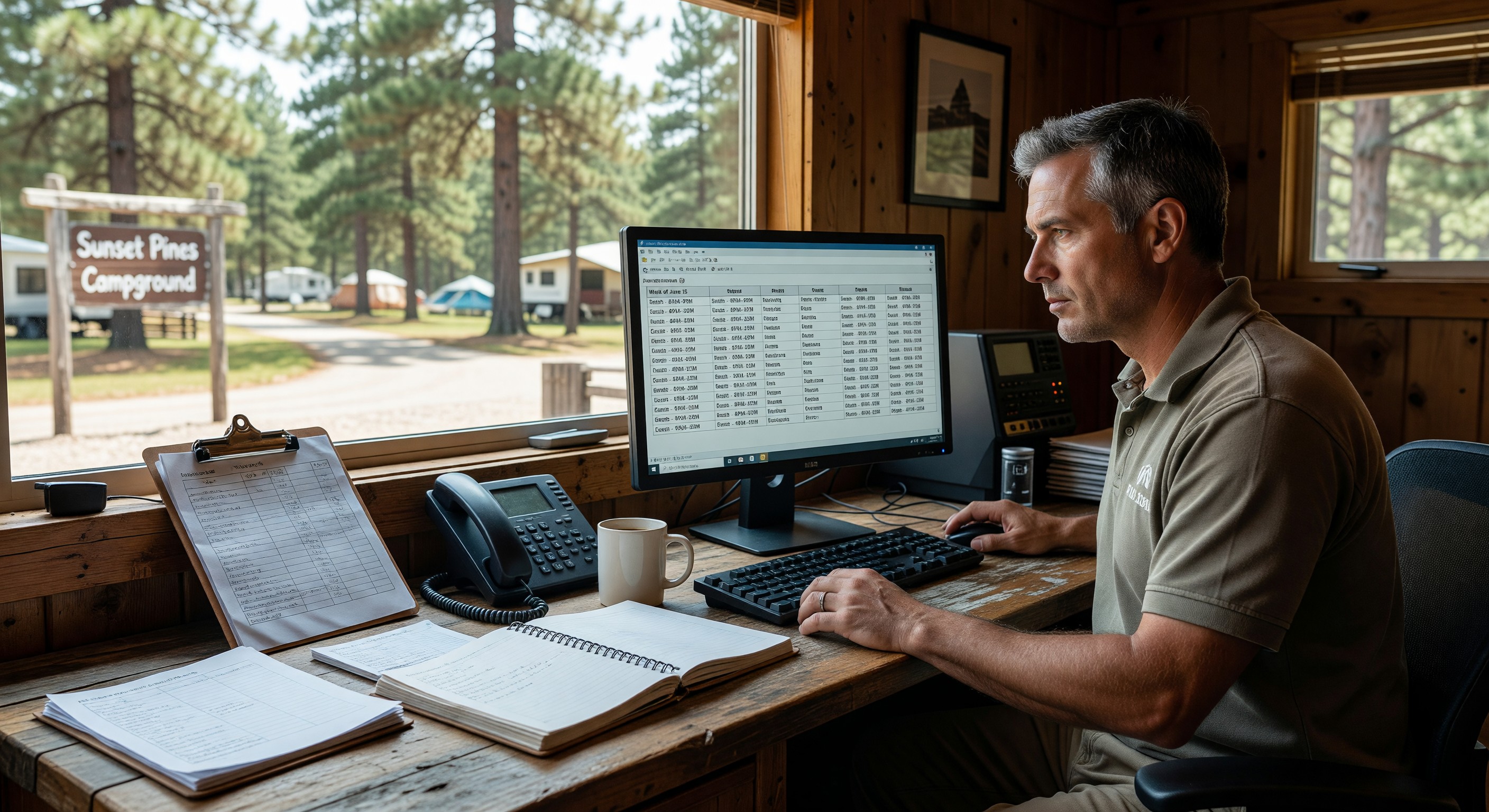
Campground staffing is one of the more complex aspects of running a park. The seasonal nature of the business requires different staffing levels at different times of year. The mix of full-time, part-time, and seasonal employees creates HR and scheduling complexity. And the 7-day operating schedule with variable peak periods makes scheduling a genuine puzzle that consumes significant management time when done manually.
Technology tools — scheduling software, communication platforms, HR management systems — help campground operators handle this complexity more efficiently and consistently.
The Campground Staffing Challenge
A typical mid-sized campground might operate with:
- 2–3 full-time year-round staff (management, maintenance)
- 8–15 seasonal employees hired for peak season (front desk, activities, maintenance support)
- Part-time or on-call staff for additional peak coverage
This structure creates several management challenges:
Seasonal hiring cycles: Recruiting, onboarding, and training a new group of seasonal employees each year (often with significant turnover between seasons) is time-consuming work that competes with operational priorities.
Schedule complexity: Covering 7 days/week, including early morning check-outs and late-night arrivals, with variable occupancy-driven staffing needs, is a puzzle that’s genuinely hard to do well on paper or in a spreadsheet.
Communication with a distributed team: Maintenance staff are rarely in the office. Activities staff are outdoors. Front desk staff are covering different shifts. Keeping everyone informed and coordinated across a workday requires reliable communication channels.
Compliance: Labor laws — minimum wage, overtime, break requirements, documentation for seasonal workers — apply to campground employment just as they do in any other industry. Maintaining compliance with limited HR expertise is a real challenge for small operators.
Scheduling Software
Purpose-built shift scheduling software has become more affordable and accessible for small businesses. Campground-appropriate tools include platforms like Homebase, When I Work, Deputy, and others designed for hourly workforce scheduling.
Core capabilities that matter for campgrounds:
- Visual weekly schedule creation: Drag-and-drop scheduling across multiple positions and shift types
- Availability management: Staff submit availability constraints; the system prevents scheduling conflicts with stated availability
- Shift coverage: Staff can request coverage for shifts they can’t work; eligible coworkers can claim the shift through the app
- Time clock: Mobile clock-in/out tied to scheduled shifts, with manager approval of timesheets
- Notifications: Automatic schedule publication alerts so staff are notified when schedules are posted
For campground operators who currently build schedules in spreadsheets, switching to dedicated scheduling software typically reduces scheduling time by 30–50% while improving schedule quality (fewer conflicts, better coverage alignment with anticipated demand).
Campground-Specific Scheduling Considerations
Occupancy-driven staffing: Staff scheduling should correlate with occupancy. Reservations data — available from your PMS — shows which weekends are fully booked months in advance. Scheduling software that can import or integrate with occupancy data allows managers to set staffing levels that track demand rather than applying flat schedules regardless of expected busyness.
Check-in and check-out rush coverage: The 3pm–6pm check-in window and the 9am–11am check-out window on weekends typically require additional front desk coverage. These specific windows should be explicitly staffed in the scheduling tool to ensure adequate coverage during predictably busy periods.
On-call coverage: Weather events, unexpected sick calls, and special event bookings create need for on-call staffing beyond the standard schedule. A pool of trained staff who are available on-call — compensated for availability if required by local law — provides coverage flexibility.
Team Communication Platforms
Email is inadequate for a team where many members don’t sit at desks. Campground operations benefit from a messaging platform where staff can communicate in real-time regardless of their location on property.
Options in common use:
- Slack: Channel-based messaging with mobile app; free tier adequate for small teams
- Microsoft Teams: Particularly appropriate if Microsoft 365 is already in use
- GroupMe or WhatsApp: Simple group messaging, lower feature set but zero cost
- Platform-integrated chat: Some scheduling tools include built-in team messaging
Whatever platform is used, establishing channel structure matters. A general all-staff channel, department-specific channels (front desk, maintenance, activities), and a management-only channel for operational discussions handles the typical communication needs of a campground operation.
Communication protocols: Define expectations for communication platform use — response time expectations, what types of information go in which channels, and hours of expected availability. Unclear protocols lead to either information overload (too many messages in wrong channels) or missed critical information.
HR and Onboarding Technology
Seasonal campground operations hire significant numbers of new employees each year, many with limited work experience. Streamlining onboarding reduces time-to-productivity and ensures compliance requirements are met consistently.
Digital onboarding platforms: Tools like Gusto, BambooHR, or general HR platforms allow new hire paperwork (I-9, W-4, direct deposit, policy acknowledgments) to be completed digitally before the employee’s first day. This is particularly valuable for seasonal employees who may be hired weeks before their start date.
Training documentation: Standard operating procedures documented in an accessible digital format — not in one manager’s head or scattered across printed handouts — enable consistent training across a large seasonal cohort. Simple documentation tools (a shared Google Drive folder, a basic internal wiki, or a training platform like Trainual) centralize this knowledge.
Performance documentation: Even for seasonal employees, maintaining a brief record of performance observations during the season supports better re-hire decisions and provides documentation if discipline is needed.
Workamper and Full-Timer Management
Some campgrounds fill operational roles — host positions, maintenance assistants, activities staff — with workampers: RV travelers who work in exchange for full-hookup site and potentially some wage. Managing workampers adds unique considerations:
- Housing (site allocation) is compensation that must be documented
- Workamper roles are often defined by informal arrangements that may lack the documentation appropriate for employment relationships
- Workamper tenure is typically seasonal and departure timing is sometimes uncertain
Clear workamper agreements — documenting expected hours, roles, site benefits, and departure notice requirements — prevent the misunderstandings that create difficult departures. Workamper communities (Workamper News, Boondockers Welcome) are recruiting resources worth understanding.
Frequently Asked Questions
What’s the biggest scheduling mistake campground operators make? Scheduling based on last year’s static calendar rather than this year’s actual reservation data. A weekend that was slow last year may be sold out this year, and vice versa. Building a habit of checking reservations before finalizing schedules 2–3 weeks out aligns staffing with actual anticipated demand.
How do I handle staff callouts during peak periods? Having a defined callout process — staff notify through a specific channel (text to supervisor, not social media), supervisor confirms the callout and activates coverage plan — is the first step. Maintaining a small on-call roster of staff willing to cover last-minute shifts, and compensating them for on-call availability, provides the backup capacity that peak weekends require.
Should I provide employee housing for seasonal staff? In markets where affordable short-term housing near campgrounds is scarce, providing housing (in cabins, dedicated staff quarters, or discounted RV site access) is often necessary to attract adequate seasonal staff. The additional complexity — housing policies, maintenance of staff accommodations, the interpersonal dynamics of staff living on-site — is real, but in some markets there’s no practical alternative.
How do campground scheduling needs differ from typical retail scheduling? The 7-day operating schedule, the significant variation in staffing needs by day of week (weekends typically 2–4× weekday staffing needs), and the extended operating hours of a campground (early arrivals through late-night security needs) create more complex scheduling requirements than most retail operations. The seasonal peak structure also creates annual restart challenges that year-round businesses don’t face.
Further Reading from Authoritative Sources
- ARVC campground staffing standards and workforce management resources — ARVC’s operational resources for campground employers cover staffing benchmarks, workamper program guidelines, and HR compliance requirements for the outdoor hospitality sector.
- OSHA employer requirements for campground staff onboarding and recordkeeping — OSHA’s general industry standards establish the recordkeeping, hazard communication, and onboarding documentation requirements that campground operators with employees must meet.