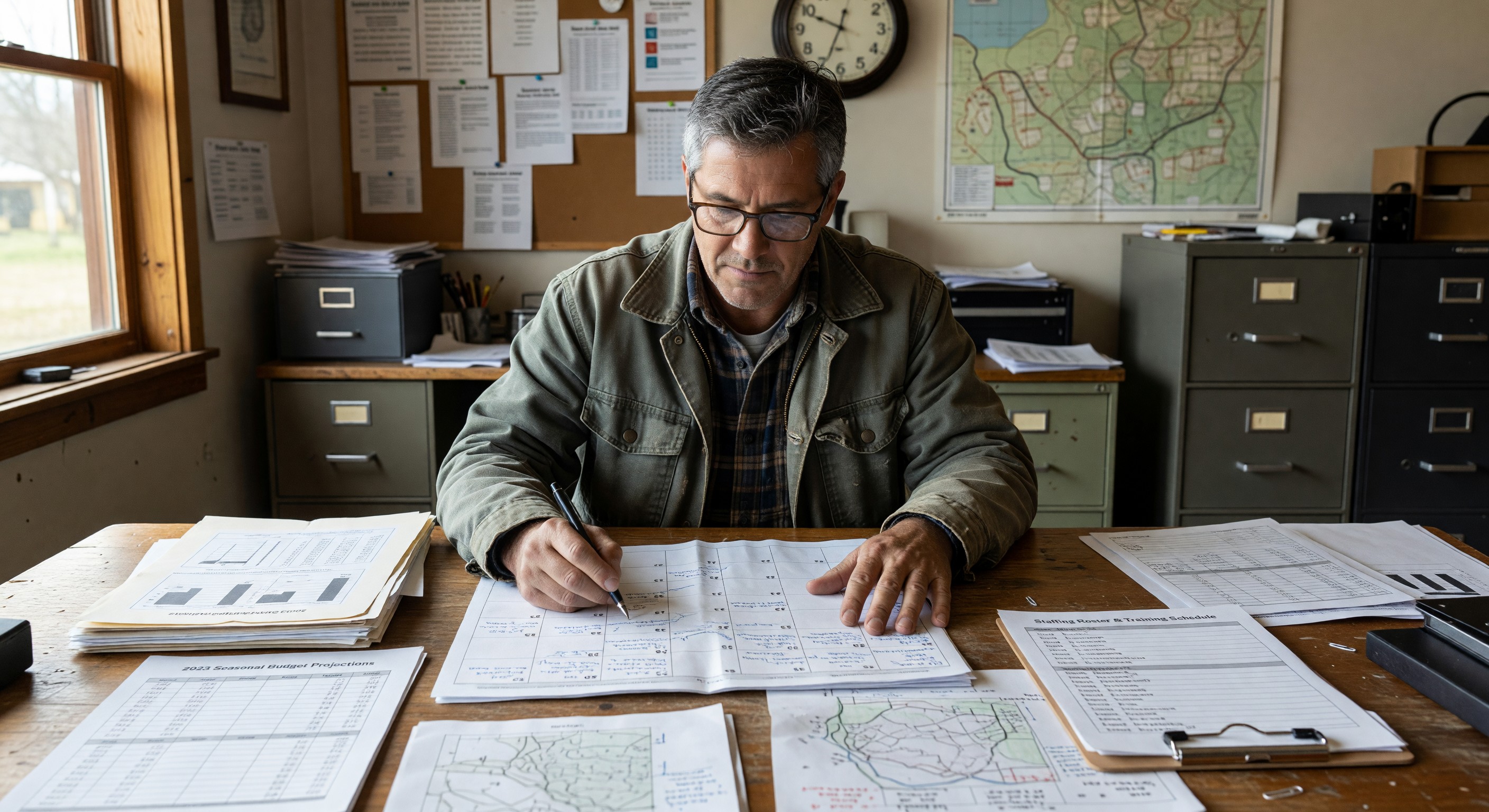
Campground operations run on a seasonal rhythm that requires deliberate planning. The transition from closed to open, the management of peak summer demand, the wind-down of activities in the fall, and the preparation for winter (or the next season) are recurring cycles that benefit from systematized planning rather than relying on institutional memory and ad hoc response.
Operators who approach seasonal transitions as formal projects — with defined tasks, clear ownership, and scheduled completion dates — consistently deliver better outcomes than those who simply react to the calendar as it advances.
The Seasonal Operations Calendar
Understanding your specific seasonal pattern is the foundation. Plot the following on an annual calendar:
- Opening date (or date of first reservation)
- Peak season start and end (typically Memorial Day through Labor Day in most US markets)
- Shoulder season periods
- Closing date (or date of last reservation)
- Major holidays and special events
- Maintenance windows
With this framework, you can work backward to establish when seasonal preparation activities need to begin and when closedown activities need to be completed.
Pre-Season Opening Checklist
Opening a campground for the season is a significant operational undertaking. A documented opening checklist ensures nothing critical is missed and provides accountability for task completion.
Physical infrastructure (4–6 weeks before opening):
- De-winterize water system (remove heat trace, restore flow, check for freeze damage)
- Electrical system inspection and pedestal testing
- Gate and access control system testing and credential database update
- Pool/spa opening and equipment inspection
- Playground and outdoor amenity safety inspection
- Road and site surface inspection (frost heaving, erosion)
- Building inspection for winter storm damage, pest intrusion
Systems and technology (2–4 weeks before opening):
- Update pricing in reservation system for the new season
- Review and update cancellation policies
- Test online booking flow end-to-end
- Verify OTA channel integrations are current
- Update campground website content (hours, pricing, new amenities)
- Test gate access credential issuance with sample reservation
Staffing (4–6 weeks before opening):
- Confirm seasonal hire commitments and start dates
- Complete pre-season onboarding paperwork for new staff
- Schedule pre-season training day
- Update staff communication channels with new seasonal team members
Guest communication (2 weeks before opening):
- Send “we’re opening!” email to previous guest database
- Update Google Business Profile hours and information
- Respond to any pending reservation inquiries
A shared task management tool — even a simple shared checklist in Google Docs or a project management app — allows multiple team members to track opening progress in real-time, making it visible to leadership whether opening preparation is on schedule.
Peak Season Operational Rhythms
Peak season operations require consistent daily and weekly rhythms that become the operational heartbeat of the campground.
Daily operations rhythm:
- Morning walkthrough of common areas and bathhouses
- Check-in queue preparation and site assignment finalization for the day
- Housekeeping/cleaning of rental accommodations
- Maintenance response to guest reports from previous day/evening
- Pool testing and maintenance
Weekly operations rhythm:
- Weekly team briefing (what’s booked, what special events are coming, staffing coverage review)
- Weekly grounds maintenance (mowing, edging, trash collection cycle)
- Weekly pool system maintenance
- Review of current week’s reviews and guest feedback
- Ordering supplies for anticipated next-week needs
Documenting these rhythms explicitly — and making them part of staff role training — ensures consistency when management is not present.
Shoulder Season Revenue and Operations
Shoulder season (early spring and late fall) presents different operational challenges than peak summer. Occupancy is lower but operating costs are nearly the same. The key operational question is: how do you maintain adequate staffing and facility quality while managing costs proportional to lower revenue?
Staffing adjustments: Reduce part-time and seasonal hours proportionally to lower occupancy. Maintain enough coverage to provide good service to the guests who are there; don’t over-staff based on summer patterns.
Facility adjustments: Consider closing non-essential amenities (pool, some bathhouse facilities) earlier in the fall and later in spring to reduce cleaning and heating costs. Clearly communicate which amenities are seasonal vs. year-round in your booking system.
Pricing strategy: Shoulder season pricing should reflect the lower demand but not be so low that it signals low quality. Promotional packages (midweek discount, multi-night rate) can stimulate shoulder season bookings without deeply discounting all inventory.
Post-Season Closedown
Proper closedown protects your investment over winter and sets up a smoother opening next season. Create a closedown checklist parallel to your opening checklist.
Physical infrastructure:
- Water system winterization (drain and blow out all lines)
- Pool shutdown and winterization
- HVAC systems serviced and set to freeze protection mode
- Pest control treatments before closing
- Security camera and gate system verified operational for unmanned winter period
- Fuel/propane supply adequate for winter heating needs
Equipment maintenance:
- Lawn equipment winterized and serviced
- Major equipment deferred maintenance addressed
- Generator load test and service
Administrative:
- Staff offboarding and COBRA/benefits administration for seasonal employees
- Review of season financial performance
- Reservation system closure for dates past closing date
- Update website to reflect off-season status
Next season preparation:
- Review guest feedback from the season and identify improvement priorities
- Solicit re-hire commitments from key seasonal staff
- Open next-season reservations (some campgrounds open 12 months in advance)
Frequently Asked Questions
How far in advance should I start pre-season planning? For a spring opening, pre-season planning should begin no later than January for a May 1 opening — four months advance. Key decisions (staffing approach, major facility improvements, pricing changes) should be made even earlier. By February, you should have major capital projects scoped and contracted, staffing strategy defined, and opening week reservations already coming in if you’re accepting advance bookings.
What’s the biggest risk in seasonal campground operations? The biggest operational risk is running opening preparation too close to the opening date and opening before facilities are ready for guests. An early bad review from a guest who experienced incomplete opening preparation can affect bookings for weeks. Better to delay opening by a week and open right than to rush and open improperly.
How do I manage reservation bookings during the off-season period? Leave your reservation system open to receive advance bookings for next season — this is free revenue with no immediate operational cost. Use your off-season communication with past guests to encourage them to book early. Campgrounds that open advance bookings by December typically see 20–30% of their peak season booked before the new year, which significantly reduces occupancy uncertainty for the coming season.
Should my operational checklists be digital or paper? Digital checklists — accessible on phones, automatically time-stamped when completed, and stored in a searchable history — are clearly superior for accountability and record-keeping. Paper checklists are better than nothing, but they’re easily lost, hard to track remotely, and don’t build a historical record. If your team is willing to use smartphones for operational tasks, move to digital checklists.
Further Reading from Authoritative Sources
- ARVC seasonal campground operations and opening procedures guidance — ARVC provides seasonal operations guidance for campground operators, including pre-opening checklists and closing procedures that inform the planning framework described in this article.
- OSHA seasonal employee safety training requirements — OSHA regulations require that seasonal employees receive appropriate safety training before beginning work in their assigned roles.