RV site design is a discipline that significantly affects both guest satisfaction and operational efficiency. Sites that are too narrow for modern RVs, with inadequate turning radii, poor drainage, or awkward hookup placement, generate complaints, increase maintenance costs, and reduce the premium pricing that well-designed sites can command.
Technology tools — CAD software, site design platforms, and RV dimension modeling — help campground developers and operators plan or redesign sites that meet modern standards.
Modern RV Dimensions Drive Site Requirements
The RV market has shifted significantly toward larger vehicles over the past two decades. Class A motorhomes with 40+ foot body lengths and slide-outs that extend 3–5 feet are common. Fifth-wheel trailers pulled by 3/4-ton and 1-ton pickup trucks create combinations 60–70 feet long. Designing sites for modern rigs requires understanding these dimensions.
Current RV size considerations:
- Maximum Class A length: 45 feet
- Maximum common fifth-wheel combination: 65 feet
- Slide-outs extend 3–5 feet per side when deployed
- Width of typical Class A with slides: 18–22 feet deployed
Minimum site dimensions for large rig accommodation:
- Site length: 65–70 feet for full accommodation
- Site width: 25–30 feet for Class A with slides deployed without encroaching on neighbor
- Back-in access: approximately 40-foot turning radius from the road (2× the RV length)
- Pull-through sites: 100+ feet total length including vehicle/tow combination room
Many campgrounds designed in the 1970s–1990s have sites that don’t meet these dimensions. Sites that can’t accommodate modern RVs — or where backing in is genuinely difficult — receive lower ratings and are booked at lower rates.
Site Design Software
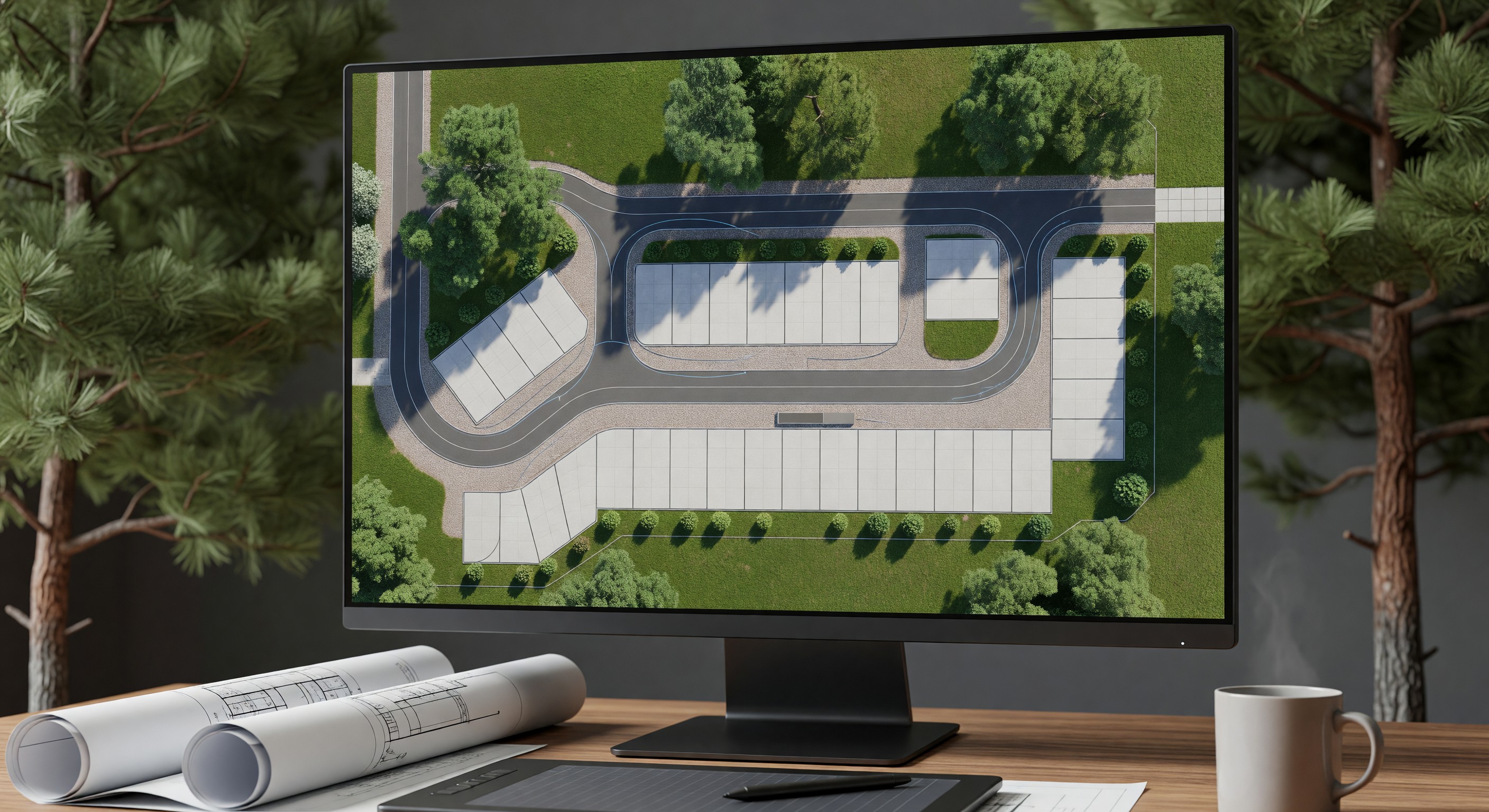
Campground site design has traditionally been done by land use planners or civil engineers using CAD software. Increasingly, purpose-built campground planning tools provide more accessible options.
CAD-based tools (AutoCAD, Civil 3D): Professional engineering software that handles precise survey data, grading, drainage modeling, and utility layout. Required for permit applications and final construction documentation. Typically operated by professional engineers or land planners rather than campground operators directly.
Campground-specific design tools: Web-based or desktop applications designed specifically for campground layout planning. Allow operators to design site configurations, test vehicle turning radii, and plan infrastructure placement without engineering expertise. Good for conceptual planning and evaluating design options.
Google Earth Pro and similar: Free tools that allow overlay of site design concepts on aerial imagery of the actual property. Useful for conceptual planning and communicating design ideas to contractors.
Electrical Infrastructure Planning for New Sites
Site electrical design should reflect current and anticipated future load requirements, not just present minimums.
50-amp standard for all new sites: New site electrical installation should provide 50-amp/240V service at minimum. The incremental cost over 30-amp service is minimal; the long-term flexibility benefit is significant. 30-amp-only sites are increasingly an obstacle to booking by modern RV travelers.
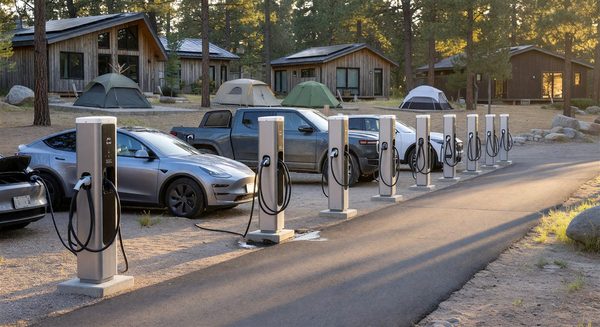
EV charging pre-wiring: For new site electrical work, running conduit (even without the final EV charging equipment) at the time of initial installation costs a fraction of what retrofitting will cost later. At minimum, pre-wire sites in the most accessible locations for future EV charging at 50-amp/240V.
Service capacity planning: Site-level service must be supported by adequate distribution panels and main service. Planning site expansion without corresponding electrical infrastructure upgrades is a common costly mistake discovered mid-construction.
Drainage and Surface Design
Site drainage affects both RV leveling difficulty and maintenance costs. Poor drainage creates:
- Muddy sites that guests can’t use after rain
- Standing water that creates mosquito habitat
- Erosion that damages site surfaces and requires frequent repair
Grading for drainage: Sites should be graded to drain away from the parking surface in a controlled direction. Cross-slope (drainage across the width) and crown (highest in the center, draining to both sides) are common approaches depending on site geometry.
Surface materials: Gravel, crushed limestone, pea gravel, compacted aggregate base, and asphalt are common RV site surface materials. The choice affects drainage performance, maintenance requirements, tire damage risk, and cost. Permeable surfaces (gravel, pervious concrete) allow infiltration that reduces runoff and can help with drainage code compliance.
Pad leveling: Concrete or asphalt pads at the RV parking position provide a stable, level surface that guests can park on without blocks. Full concrete pads significantly improve the guest experience and reduce site maintenance compared to gravel surfaces, at higher initial installation cost.
Privacy and Spacing
Site spacing and screening affect both guest satisfaction and site density (revenue per acre).
Spacing tradeoffs: More sites per acre generates more revenue but creates a less private, more crowded feel that affects guest satisfaction and premium pricing. The right balance depends on your market positioning — a resort-level campground commands higher rates with more generous spacing; a transient RV park optimizes density.
Natural screening: Mature trees and natural vegetation between sites is the most aesthetically appropriate screening solution. In new campground development, aggressive tree preservation during site clearing — even if it reduces initial site count — pays dividends in site appeal and guest satisfaction.
Privacy fencing and landscaping: Where natural screening isn’t adequate, decorative fencing or landscaping screens between sites adds privacy without blocking ventilation and light. These elements require maintenance and can restrict site access if not well planned.
Frequently Asked Questions
How many RV sites can fit on an acre? Site density varies significantly with layout, road width requirements, and spacing standards. A typical range is 5–8 sites per acre for campgrounds with full hookups, standard spacing, and reasonable road network. Denser layouts (8–12 sites/acre) are possible but sacrifice spacing and privacy. Destination resorts often target 4–6 sites/acre to support premium positioning.
What’s the best surface material for RV sites in wet climates? Compacted aggregate base (crushed limestone, decomposed granite) with a binding agent provides good drainage, stability, and a clean surface appearance. Compacted gravel without binding can scatter under RV leveling jack feet. Asphalt provides excellent stability and drainage if properly crowned and sealed but requires higher initial investment. In very wet climates, some operators use concrete pads at the parking position with aggregate or gravel in the surrounding area.
Should I hire a land planner or civil engineer for site redesign? For major redesigns affecting drainage, roads, or utility infrastructure, a civil engineer’s involvement is typically required for permits and ensures the design addresses drainage and infrastructure correctly. For smaller-scale reconfiguration (resizing existing sites, adding individual sites), an experienced campground consultant or a general contractor familiar with campground construction may be adequate. When in doubt, get professional input early — correcting design errors mid-construction is expensive.
How do I approach site expansion when my existing electrical service is at capacity? The electrical infrastructure must be upgraded before or concurrent with site additions. Adding sites without corresponding electrical capacity creates either operational problems (overloaded circuits, voltage drops) or unusable sites that can’t be energized. Get an electrical engineer’s assessment of your current service capacity and what’s required for your expansion plan before finalizing the site addition scope.
Further Reading from Authoritative Sources
- RV Industry Association RV dimensions and electrical standards — RVIA publishes RV dimension standards and electrical connection requirements that directly inform campground site design specifications for pad width, pedestal placement, and electrical service amperage requirements.
- Access Board accessible campsite design standards — The U.S.