The campground industry in 2026 is navigating a set of operational challenges and opportunities that look quite different from the landscape of five or ten years ago. A post-pandemic demand surge has settled into a new normal; operational costs have risen significantly; guest expectations have shifted; and the technology available to operators has advanced substantially.
This article examines the operational trends that are most consequential for campground operators looking forward from 2026.
Operational Automation Has Moved from Advantage to Expectation
In 2019, campgrounds that implemented automated check-in, automated gate access credential delivery, and automated pre-arrival communication were early adopters gaining operational efficiency. In 2026, these capabilities are table stakes — guests expect them, and campgrounds that don’t have them are operating at a competitive disadvantage.
The automation frontier has moved to more sophisticated capabilities:
AI-assisted customer service: Chatbots handling pre-booking inquiries, automated review responses drafted by AI and reviewed by staff, and AI-powered guest communication personalization are the new differentiators.
Predictive maintenance: Campgrounds with enough equipment history data are beginning to use predictive analytics to identify which equipment is most likely to need service — scheduling maintenance proactively rather than reactively.
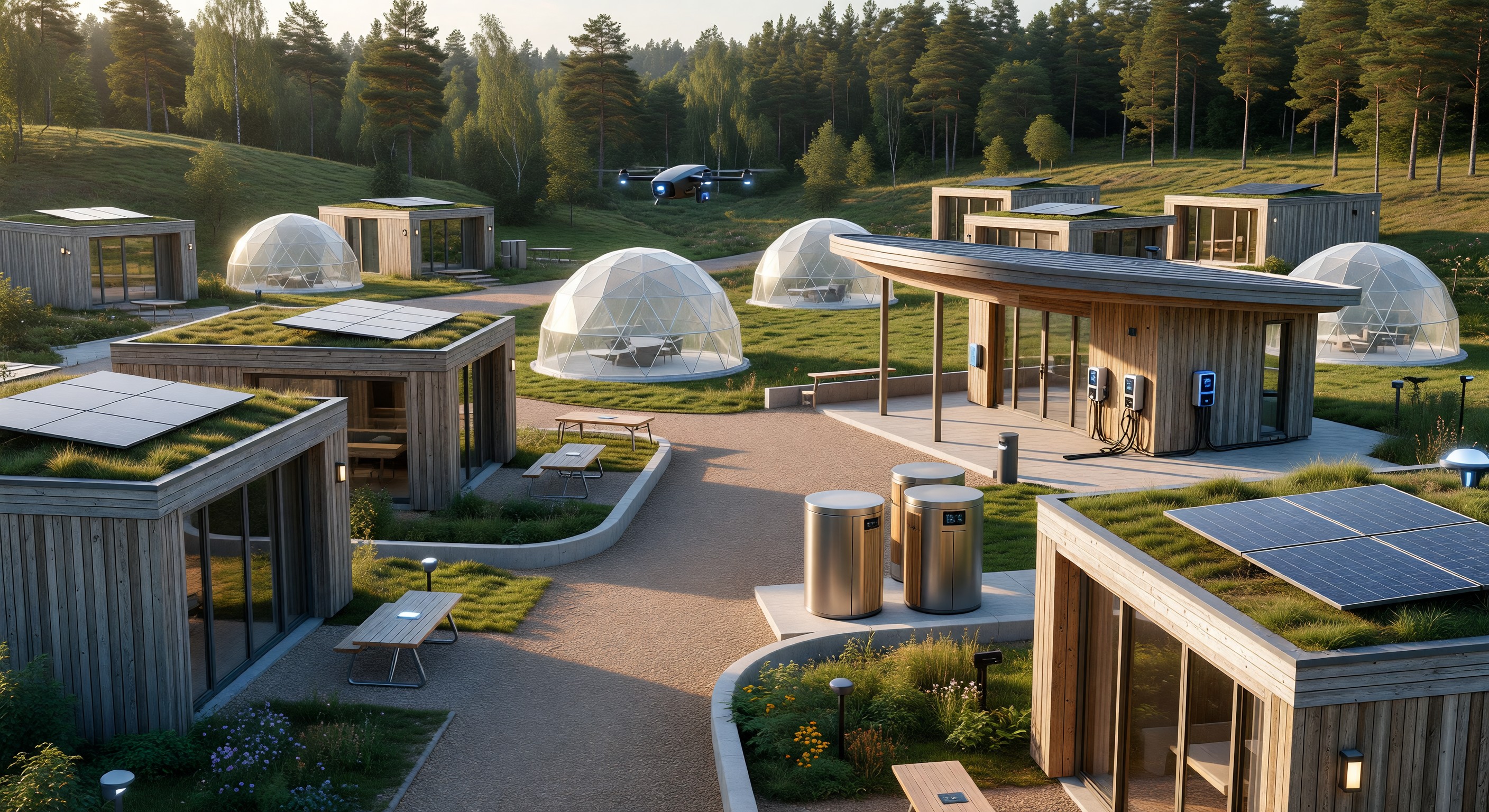
Automated utility management: Dynamic demand management systems that automatically adjust EV charging rates, HVAC setpoints, and non-critical loads to stay within demand thresholds are becoming standard at well-capitalized operations.
Autonomous grounds equipment: Robotic mowers and autonomous maintenance equipment are appearing at a small number of leading campgrounds, handling repetitive mowing tasks without staff operating time.
The Cost Structure Conversation Has Changed
Campground operating costs in 2026 are substantially higher than they were in 2019 across every major category: labor (minimum wages have risen across most states), utilities (electricity and propane costs have increased), insurance (hospitality liability premiums have risen), and maintenance materials.
This cost environment has forced a necessary conversation about pricing that many operators were previously reluctant to have. Campgrounds that maintained 2019 prices into 2024 eroded margins significantly. Those that raised prices appropriately — supported by the demand strength of 2021–2023 — maintained or improved margin.
The industry is maturing toward a professionalized pricing approach. Dynamic pricing based on demand, transparent utility billing rather than included electricity, and tiered amenity access are becoming standard rather than controversial.
Utility billing: The shift from “electricity included” to “electricity billed by meter” has accelerated. As EV adoption increases site electrical demand, campgrounds that haven’t metered and billed for electricity are facing material cost pressures that are difficult to recover through site rate increases alone.
Evolving Guest Demographics and Expectations
The guest demographic mix at campgrounds has shifted since the pandemic. Several trends have implications for operations:
Younger campers: The surge of first-time campers during the pandemic included a substantial cohort of millennials and Gen Z. This demographic has higher expectations for Wi-Fi reliability, app-based reservation management, digital communication, and sustainability credentials.
Diversity: The camping guest pool is more racially and ethnically diverse than a decade ago. Operational implications include reviewing marketing imagery for inclusivity, ensuring staff reflect the communities served, and examining whether facility design and programming inadvertently excludes certain groups.
International visitors: Some campgrounds, particularly in iconic outdoor locations, see growing international visitation. Language accessibility in reservation systems and guest communication, and staff capability to serve non-English-speaking guests, are operational considerations for these properties.
Aging RV travelers: The core RV traveler demographic is aging, with implications for accessibility investments, activity programming appropriate for older adults, and the long-term implications for RV ownership rates.
The Professionalization of Independent Campground Management
The campground industry is undergoing professionalization. Regional and national campground management companies have grown in scale. Private equity investment in outdoor hospitality has brought more sophisticated management practices to a segment that was previously dominated by family-owned independents.
This creates both competitive pressure and knowledge diffusion for independent operators:
Competitive pressure: Better-capitalized competitors invest in technology, physical improvements, and staff development that can be difficult for smaller independents to match.
Knowledge diffusion: Best practices in revenue management, technology deployment, and operations management that were previously limited to sophisticated chains are becoming more widely available through association resources, consulting services, and online communities.
Specialization opportunities: Independent campgrounds that specialize — in a specific outdoor experience, a specific guest demographic, a specific geographic niche — can compete effectively against larger chains by delivering experiences that chain operations can’t or don’t optimize for.
Regulatory Evolution
The regulatory environment for campgrounds continues to evolve, particularly in areas related to:
EV charging requirements: Some municipalities are beginning to require EV charging at new campground developments or major renovations. This trend is likely to expand.
Water and environmental regulations: In drought-affected regions, water use restrictions and permitting requirements are tightening. Campgrounds in these areas are investing in water efficiency and conservation.
Short-term rental regulations: In some jurisdictions, glamping accommodations and cabin rentals are subject to the same regulations as vacation rentals (Airbnb-type regulations), creating compliance requirements that traditional campgrounds haven’t had to navigate.
Privacy regulations: As state privacy laws multiply, the data collection practices of campground reservation systems, marketing platforms, and access control systems are subject to increasing regulatory requirements.
The Physical Property Investment Cycle
Many campground properties were built or last substantially invested in during the 1970s–1990s. This cohort of properties is in or approaching a major renovation cycle — electrical infrastructure at end of life, road surfaces requiring replacement, bathhouses needing renovation to modern standards.
The capital required for this renovation cycle is substantial. Campground valuations have risen significantly in recent years, enabling owners who choose to sell to monetize appreciation. Those who choose to hold must invest in physical plant to remain competitive.
The operators who navigate this most effectively are those who have been systematic about preventive maintenance (extending asset life), have built capital reserves for planned investment (rather than being forced into emergency replacement), and have developed the relationships with lenders and investors to finance larger improvement projects when needed.
Frequently Asked Questions
Is the campground industry at risk from economic downturns? Camping has historically shown some recession resistance — it’s a lower-cost vacation alternative when household budgets tighten. However, luxury camping (glamping at $300+/night) is more economically sensitive than budget-tier camping. Operations with a mix of price points typically weather economic cycles better than those concentrated at one end of the price spectrum.
What operational capability gap is most common among campground operators in 2026? Financial management sophistication — specifically, the ability to forecast cash flow, plan capital investment systematically, and manage costs with data rather than intuition — remains the most common gap. Many experienced campground operators are excellent at hospitality and operations but less comfortable with the financial management practices that sophisticated small business ownership requires.
How should campground operators think about the next 5 years? Invest in technology infrastructure (the platforms covered throughout this guide), invest in physical improvements that extend asset life and improve guest experience, price for the cost environment, and build guest relationships through communication and programming. The campgrounds that thrive in the next five years will be those that run more professionally than the average, not those that find a single magic formula.
Is this a good time to expand a campground business? The industry fundamentals remain strong: camping participation is elevated compared to pre-pandemic, supply of quality campground sites is limited in most markets, and demand for outdoor recreation experiences continues to grow. The challenges are cost (higher acquisition prices for additional properties, higher construction costs for new sites) and capital availability. Expansion makes sense for operators who have the capital base, the management capability, and a clear property strategy — and doesn’t make sense as a way to grow out of operational problems at existing properties.
Further Reading from Authoritative Sources
- ARVC campground industry research and 2026 operations benchmarks — ARVC publishes the annual State of the Industry report for campgrounds and RV parks, providing the market data and trend analysis that this article’s 2026 trends assessment is grounded in.
- Go RVing research on camping participation trends and consumer demographics — Go RVing’s annual consumer research tracks camping participation trends, demographic shifts, and evolving expectations across the full spectrum of outdoor hospitality guests.