Maintenance is the operational foundation that keeps everything else at a campground functioning. Gates that open, showers with hot water, electrical pedestals that work, pool equipment that runs — all of these depend on systematic maintenance executed on schedule. Yet at many campgrounds, maintenance is largely reactive: things get fixed when they break, and preventive work happens when someone remembers to do it.
Digital maintenance management systems help campground operators shift from reactive to proactive, creating systematic schedules, tracking work completion, and building the history records that support better budgeting and equipment decisions.
The Cost of Reactive Maintenance
Reactive maintenance — fixing things after they fail — is consistently more expensive than preventive maintenance. An HVAC system that receives annual service and filter changes lasts significantly longer and fails less often than one that runs until problems force attention. The repair cost of an emergency HVAC failure during a summer weekend — plus service call premium pricing and potential guest impact — dwarfs the cost of annual preventive service.
Beyond direct repair costs, reactive maintenance creates operational disruption: bathhouses out of service, amenities temporarily closed, staff time redirected from guest service to emergency response. Guest experience suffers in ways that are difficult to quantify but easy to observe in reviews.
The financial case for preventive maintenance is well established in facilities management. The campground-specific challenge is building and sustaining the discipline of systematic preventive work across dozens of systems in a seasonally variable operation with limited dedicated maintenance staffing.
Core Components of Maintenance Management Software
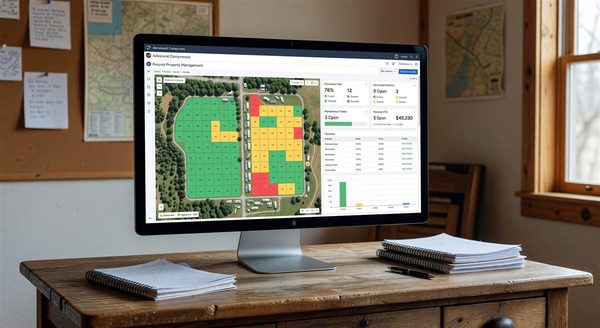
Purpose-built maintenance management software — often called CMMS (Computerized Maintenance Management System) — provides the infrastructure for systematic maintenance operations.
Asset registry: A database of every piece of maintainable equipment and infrastructure — every HVAC unit, water heater, pump, generator, pedestal, gate system, and major structural element. Each asset record includes model, serial number, installation date, warranty information, service history, and links to service documentation.
Preventive maintenance schedules: Recurring maintenance tasks triggered by calendar intervals (monthly, quarterly, annual) or meter readings (oil change every 500 hours, filter replacement every 250 hours). The system generates work orders automatically when maintenance is due.
Work order management: Digital work orders for both scheduled and unplanned maintenance. Work orders capture the work to be done, the asset involved, the assignee, materials used, time spent, and completion status. Completed work orders become part of the asset’s service history.
Inspection checklists: Standardized checklists for routine facility inspections — daily bathhouse checks, weekly pool water testing, monthly electrical pedestal inspection. Digital checklists ensure consistent coverage and create completion records.
Vendor and contractor management: Tracking which vendors are used for which services, contact information, service contract details, and contractor performance history.
Campground-Specific Maintenance Planning
The seasonal nature of campground operations creates a distinct maintenance rhythm. Three major maintenance windows structure the annual calendar:
Pre-season preparation (4–8 weeks before opening): De-winterization of water systems; electrical testing across all pedestals and common areas; pool opening and equipment inspection; HVAC startup and filter replacement; grounds equipment maintenance; cabin deep cleaning and inspection.
In-season maintenance (operating period): Daily facility checks; weekly pool testing and balancing; routine lawncare and grounds maintenance; responsive repair of guest-reported issues; monthly equipment inspections.
Post-season winterization and overhaul (after closing): Major repairs deferred from busy season; equipment overhauls; facility deep cleaning; infrastructure improvements; winterization of water systems.
Digital maintenance scheduling maps these three windows explicitly, with task lists for each phase that serve as operational checklists as well as maintenance records.
Mobile Maintenance Management
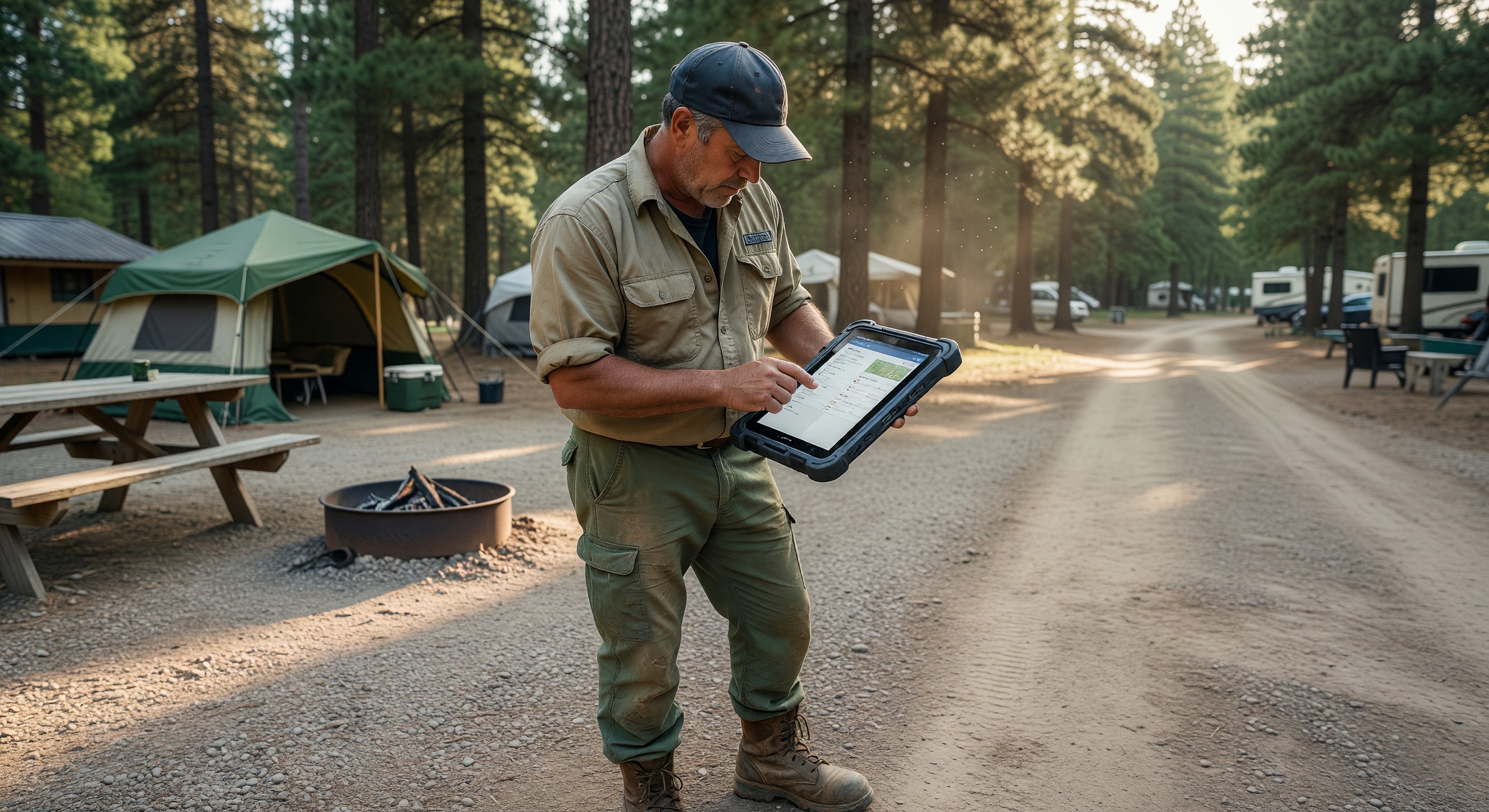
Maintenance staff are rarely at a desk. Mobile-first maintenance management — work orders and checklists accessible and completable on a smartphone or tablet — is increasingly standard in modern CMMS platforms.
Mobile capability enables:
- Receiving work order assignments and accepting them in the field
- Looking up asset information and service history at the equipment
- Recording work completion with photos documenting the before and after
- Logging materials used for inventory tracking
- Generating deficiency reports from inspections directly on the phone
When a guest reports a problem, staff can immediately create a work order on their phone, assign it to the appropriate person, and track its resolution — all without returning to the office.
Guest-Reported Issue Integration
A streamlined path from guest-reported issue to work order to resolution improves both maintenance response time and guest experience.
Some campground PMS platforms include a guest-facing issue reporting feature — a link in the digital campground guide or reservation confirmation where guests can submit maintenance requests. Submitted requests automatically generate work orders in the maintenance system, with the site number and reservation details attached.
Even without direct integration, having a defined internal process for guest issue logging — who receives reports, how they’re entered into the maintenance system, and how resolution is communicated back to the guest — creates consistency that improves both response time and perceived service quality.
Building a Maintenance History
The long-term value of maintenance management software accumulates in the service history it creates. Over time, this history enables better decisions:
- Equipment replacement planning: An asset with a documented history of increasing repair frequency and cost signals approaching end of useful life. This data supports proactive budgeting for replacement rather than emergency response when failure occurs.
- Warranty support: Documented service history demonstrates that equipment was maintained according to manufacturer requirements — often necessary to support warranty claims.
- Vendor accountability: Service records allow operators to evaluate whether vendor-performed maintenance is meeting standards and whether contracted service intervals are actually being honored.
Frequently Asked Questions
Does a small campground (under 50 sites) need CMMS software? Smaller campgrounds can often manage with simple tools — a shared calendar for preventive maintenance schedules, a spreadsheet for work orders, a folder of service records. The investment in a full CMMS makes more sense as complexity increases: more facilities, more staff, more systems to maintain. If your maintenance team is one person and your facility count is low, a structured paper system may be adequate. If you’re managing multiple bathhouses, a pool, a camp store, and significant utility infrastructure, dedicated software is worth the investment.
What should campground maintenance software cost? Basic CMMS platforms appropriate for campground operations range from $50–$200/month. More comprehensive facilities management systems can cost more. Some campground PMS platforms include basic maintenance management as part of their feature set, which may be adequate for smaller operations. Evaluate total cost against the value of the maintenance records and scheduling capability being provided.
How do I get staff to actually use the maintenance system? Adoption requires that the system makes work easier for maintenance staff, not harder. Mobile access is essential — if completion requires going back to a desktop computer, work orders will be completed on paper and entered later (if at all). Starting with the most valuable use cases — daily inspection checklists and guest-reported issues — builds habits before expanding to the full preventive maintenance library.
Should I track maintenance costs by asset? Yes, absolutely. Knowing that your pool pump has accumulated $4,500 in repair costs over the past three years — against a replacement cost of $3,000 — is the kind of data that makes replacement decisions obvious rather than difficult. Asset-level cost tracking is one of the highest-value capabilities of maintenance management software for long-term facilities planning.
Further Reading from Authoritative Sources
- ARVC campground facilities management and operations standards — ARVC provides operational best practice guidance for campground facilities management, including preventive maintenance standards that inform the scheduling practices discussed in this article.
- CMMS software overview and maintenance management capabilities — Wikipedia’s CMMS article provides authoritative background on maintenance management system categories and capabilities, supporting readers who are unfamiliar with the technology category before evaluating campground-specific maintenance software options.