Campground inventory management spans two very different domains: retail merchandise in the camp store, and operational supplies used for maintenance, cleaning, and facility operations. Both benefit from systematic tracking, but they have different dynamics and require different management approaches.
Operators who manage inventory systematically — knowing what they have, when to reorder, and what’s selling versus sitting — reduce waste, prevent stockouts, and free up working capital that’s otherwise tied up in excess inventory.
Camp Store Inventory Challenges
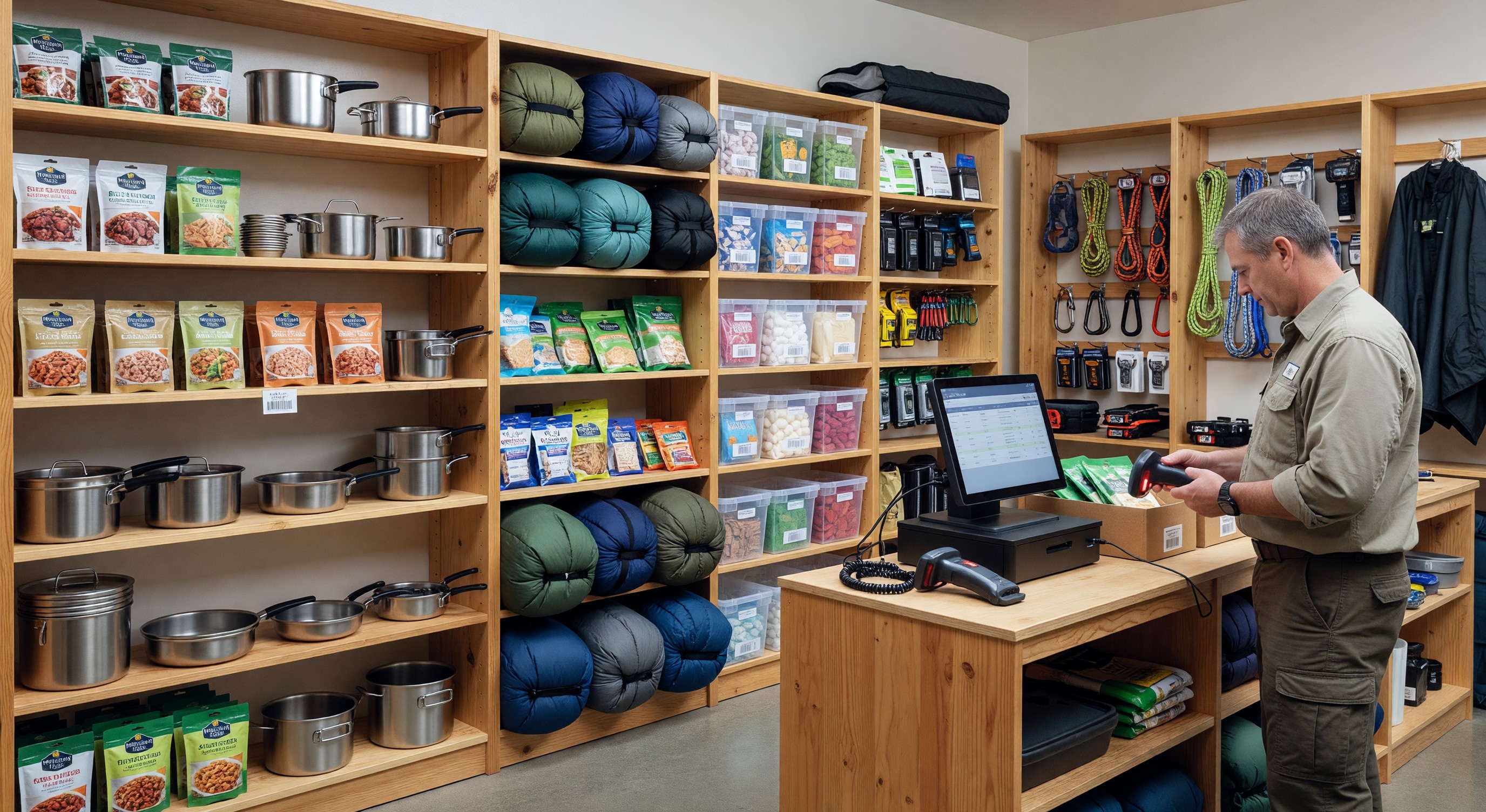
Camp stores at campgrounds sell a mix of merchandise: convenience items guests forgot (ice, firewood, charcoal, bug spray), consumables (snacks, beverages, camp cooking supplies), recreational gear (fishing tackle, hiking accessories), and branded merchandise. Managing this diverse inventory presents specific challenges:
Perishable items: Ice, dairy, fresh produce, and some beverages have short shelf lives. Over-ordering results in spoilage and write-offs; under-ordering results in stockouts and unhappy guests.
Highly seasonal demand: The product mix that sells well in peak summer (sunscreen, ice, cold beverages) is very different from what moves in shoulder season (hot beverages, firestarters, warm weather gear). Inventory that doesn’t turn in season becomes dead stock.
Limited storage space: Most campground camp stores have constrained storage. Inventory optimization — carrying the right quantities rather than just buying in bulk for theoretical savings — is essential when storage is limited.
Supplier lead times and minimum orders: Suppliers to small retail operations often have minimum order requirements and delivery schedules that don’t perfectly align with demand patterns.
Point-of-Sale Integration for Camp Store Inventory
A modern point-of-sale (POS) system tracks inventory automatically as items are sold, providing real-time inventory counts and generating reorder alerts when stock drops below defined thresholds.
The operational benefit is significant: rather than physically counting inventory and guessing what to order, the POS system knows exactly what’s been sold and what remains. Managers can see current inventory levels at any time from the management portal, generate purchase orders from the POS system’s recommended reorder list, and track vendor history for follow-up.
For camp stores that ring significant daily transactions, POS-based inventory management pays for the system cost through reduced spoilage, fewer stockouts, and reduced time spent on manual inventory counts.
Key POS capabilities for campground camp stores:
- Barcode scanning for accurate item tracking
- Inventory level alerts and automatic reorder point calculation
- Purchase order generation and receiving
- Product category reporting (what’s selling, what’s not)
- End-of-day reconciliation against physical cash
Managing Maintenance and Operational Supplies
Beyond the camp store, campgrounds consume significant quantities of operational supplies: cleaning chemicals, pool treatment chemicals, light bulbs and electrical components, plumbing fittings, paper products, first aid supplies, and maintenance materials.
Without systematic tracking, these supplies are typically managed reactively — discovering you’re out of pool chemicals on a Friday afternoon before a busy weekend is a common consequence of untracked maintenance supply inventory.
Supply categories to track:
- Pool and water treatment chemicals (shock, chlorine, pH adjustment, clarifier)
- Cleaning supplies (for bathhouses, cabins, common areas)
- Electrical and plumbing maintenance parts
- Safety supplies (first aid, fire extinguishers)
- Paper and personal care products for bathhouse dispensers
- Fuel (generator diesel or propane)
Simple tracking approaches: For small operations, a basic spreadsheet or shared notes document that records current quantities and establishes reorder points for key items is often adequate. The discipline of updating the record when supplies are used and checking it before ordering is the behavior change that delivers benefit, not the sophistication of the tool.
CMMS integration: Maintenance management software (discussed in a separate article) often includes inventory modules that track parts and supplies as they’re used in maintenance work orders. This closes the loop between maintenance activity and supply consumption, creating more accurate usage data for reorder planning.
Rental Equipment Inventory
Campgrounds that rent equipment — kayaks, canoes, paddleboards, bicycles, fishing gear, recreational equipment — have a physical asset inventory that requires its own management approach.
Equipment condition tracking: A simple condition log for each piece of rental equipment — date last inspected, current condition rating, upcoming maintenance needed — helps prioritize equipment rotation and maintenance before rentals rather than discovering problems when a guest uses equipment.
Reservation and availability tracking: If rental equipment reservations are taken in advance (common for high-demand items like kayaks), availability tracking prevents double-booking the same kayak.
Loss and damage tracking: Documentation of pre-rental and post-rental equipment condition — even simple photos on a smartphone — provides the baseline for evaluating damage claims and maintaining accurate inventory of operational equipment.
Firewood and Bulk Commodity Management
Firewood is a significant inventory item at most campgrounds and presents unique management challenges: it’s bulky, it has seasonal demand spikes, and quality matters to guests.
Sourcing and storage: Local firewood suppliers, delivered by cord or face-cord. Storage location and quantity need to be tracked, particularly in peak season when reorder lead time may be longer than expected.
Pricing and volume control: Campgrounds typically sell firewood in bundles at retail prices significantly above wholesale cost. Inventory tracking ensures the right quantity is available — not so much that unseasoned wood sits in excess, not so little that stockouts occur on busy weekends.
Guest self-service vs. staff delivery: Some campgrounds sell firewood from a central location (self-service with payment at camp store); others deliver to sites (premium service option). The operational model affects how inventory is tracked and stocked.
Frequently Asked Questions
What’s the right quantity of camp store inventory to carry? A general guide: carry 2–3 times your average weekly sales volume of each non-perishable item, adjusted for supplier lead time. For perishables, carry only what you can sell in the shelf life period. Tracking actual sales data for even one season provides far better reorder guidance than estimates.
Should I use a dedicated inventory system or manage with spreadsheets? For operations with camp store transactions under $5,000/week, a simple POS system with basic inventory tracking (Square, Shopify POS, or similar) is adequate. Operations with higher revenue or more complex inventory (multiple categories, perishables, significant rental equipment) benefit from dedicated retail inventory management. The POS system cost is typically recouped in reduced spoilage and stockout losses within the first season.
How do I manage inventory when I’m the only one running the store? Start with the highest-impact items: establish reorder points for your top 20 products by revenue, set calendar reminders to review those levels weekly, and build supplier relationships where you can place small frequent orders rather than large infrequent ones. Perfect inventory management isn’t necessary — consistent management of the most important items provides most of the benefit.
What happens to unsold seasonal inventory at season end? Non-perishable items carry over to next season. Perishables and items with uncertain shelf life should be written down and disposed of or donated if appropriate. Use end-of-season inventory data to refine next season’s ordering — items that didn’t sell indicate either wrong product selection or excess quantity. Tightening those orders reduces the next season’s write-off risk.
Further Reading from Authoritative Sources
- ARVC campground retail operations and supply chain management — ARVC provides operational guidance for campground retail management and supply chain practices, making it the most relevant trade authority for the inventory management recommendations in this article.
- Inventory management software and par level tracking overview — Wikipedia’s inventory management software article provides authoritative background on par level concepts, reorder point calculation, and variance tracking that underpin the inventory management practices described for campground operations.