Campground insurance is a significant operating expense and a foundational business protection. Managing the relationship with your insurer — maintaining accurate documentation, filing claims appropriately, and demonstrating risk management practices that reduce premium costs — benefits from systematic tools and processes.
Technology doesn’t replace good insurance judgment, but it supports the documentation and management practices that keep coverage current and protect operators when claims arise.
The Campground Insurance Landscape
Campground operators typically carry several types of insurance:
General liability: Protects against third-party claims for bodily injury or property damage occurring on your property. This is the coverage most campground operators think of first when a guest is injured.
Commercial property: Covers your buildings, equipment, and business personal property against damage from fire, storm, theft, and other covered perils.
Commercial auto: Covers vehicles owned and operated in the business — utility vehicles, golf carts, maintenance trucks.
Workers’ compensation: Covers employee injuries occurring during work. Required by law in most states.
Umbrella: Provides additional liability coverage above the limits of underlying policies — important given the potential for large jury verdicts in serious injury cases.
Specialty coverages: Depending on your operation, you may also need: liquor liability (if serving alcohol), equipment breakdown, professional liability (for activities instruction), drone coverage, or cyber liability (for data breach risk from reservation systems holding guest data).
Understanding your coverage gaps — what’s not covered by your current program — requires a careful annual review with an insurance broker experienced in outdoor recreation and hospitality.
Documentation for Insurance Purposes
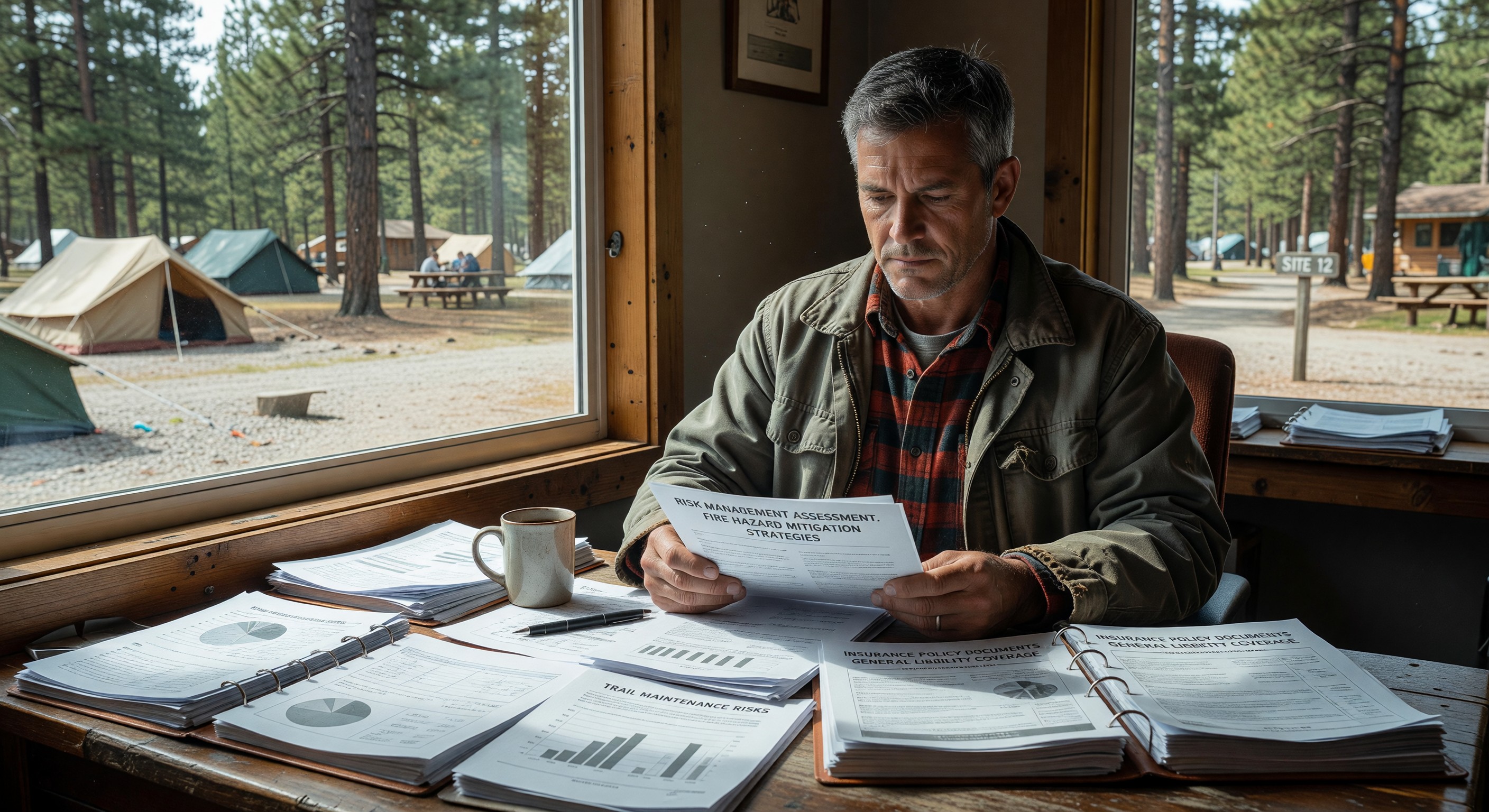
Insurers evaluate risk based on the information they receive. Good documentation reduces perceived risk, supports accurate coverage, and accelerates claim resolution.
Property inventory: A current inventory of all buildings, major equipment, and significant business personal property, with purchase dates and current replacement values. Updated annually. Stored off-site (in cloud storage) so it’s accessible if the physical property is destroyed.
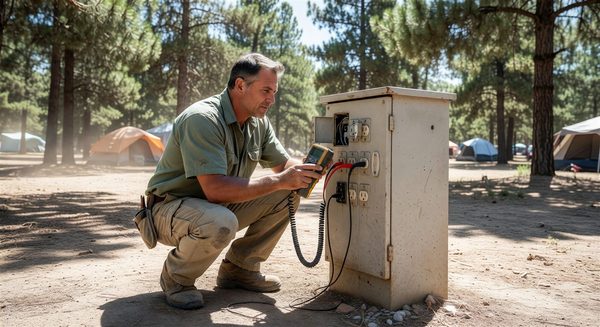
Maintenance records: Documentation that buildings and equipment are maintained to manufacturer and code standards. For specific high-risk items (electrical systems, pool equipment, playground structures), regular inspection records support lower liability risk assessment.
Safety program documentation: Written safety policies, employee training records, emergency action plans, and incident response procedures demonstrate that you’re operating a risk-managed facility — reducing the likelihood of claims and supporting favorable premium treatment.
Waiver and assumption of risk documentation: For higher-risk activities (horseback riding, kayaking, rock climbing walls), waiver forms signed by participants document assumption of risk and informed consent. Digital waiver platforms (WaiverElectronic, Smartwaiver, DocuSign) store signed waivers with timestamps and make them searchable — far more reliable than paper waivers that can be lost.
Digital Incident Tracking
Every incident that could potentially generate a claim — a guest injury, property damage, near-miss events — should be documented promptly and thoroughly. Digital incident reporting systems (discussed in the safety compliance article) maintain this record in searchable, accessible form.
Why incident documentation matters for insurance:
- Accurate records support the insurer’s claims investigation
- Early documentation captures facts while they’re fresh, before memory fades
- Documentation of your response (first aid provided, area secured, conditions documented) demonstrates due diligence
- Trend analysis across incidents reveals patterns that can be addressed to prevent future occurrences
Claim notification timing: Most commercial insurance policies require prompt notification of incidents that might result in claims — typically within 24–72 hours for serious incidents. Waiting to see whether a guest files a claim before notifying your insurer can result in coverage denial. When in doubt, notify your broker and let them advise on whether formal claim reporting is needed.
Risk Assessment Technology
Understanding where your operation has elevated risk allows targeted risk reduction investment. Several technology tools support this analysis:
Safety audit software: Digital safety audit platforms provide structured assessment frameworks for campground safety — electrical systems, pool safety, playground equipment, traffic management, food safety. Completing periodic audits against these frameworks identifies gaps before incidents reveal them.
Claims data analysis: Review your claims history annually with your broker. Which coverage lines have generated claims? What types of incidents? Are there patterns in location, time of day, or guest activity type? Claims patterns reveal where risk reduction investment has the highest impact.
Near-miss reporting: Encouraging staff to report near-miss events — incidents that could have resulted in injury but didn’t — creates a risk intelligence system that catches hazards before they generate actual claims. Digital near-miss reporting integrated with your incident management system normalizes safety reporting culture.
Premium Management
Insurance premiums for campgrounds are influenced by several factors you can influence:
Claims history: A history of frequent or large claims increases premiums. Conversely, claim-free years earn experience credits that reduce premiums. Risk management investment that reduces claim frequency has a direct financial return through premium reduction.
Safety program documentation: Demonstrating a systematic safety management program — written procedures, regular inspections, trained staff — can qualify for safety credits with some insurers.
Risk improvements: Completing significant risk improvements — replacing aging electrical pedestals with smart metered units, installing safety fencing around water hazards, adding security cameras — may qualify for premium credits. Notify your broker when significant improvements are completed.
Market competition: Insurance is a competitive market. Annual competitive review — comparing your current program and pricing against alternatives — ensures you’re not overpaying. Work with a broker who markets to multiple carriers rather than one who represents a single company.
Frequently Asked Questions
How much general liability coverage does a campground need? Many campground insurers offer general liability in the $1M–$3M per occurrence range as standard coverage. Given the potential for serious injury claims — a spinal cord injury from a camping accident could generate a $2M+ judgment — purchasing an umbrella policy that brings total liability coverage to $5M+ is commonly recommended. Your insurance broker can assess what’s appropriate for your specific operation size and activity profile.
Are guests covered if injured on my campground? Your general liability insurance covers bodily injury claims made by third parties (including guests) for which you are legally responsible. Not every guest injury results in a covered claim — the injury must involve negligence by the campground. Documenting your maintenance practices and safety procedures supports the defense that you were not negligent when claims arise.
What digital platforms store waiver signatures most securely? Purpose-built waiver platforms (Smartwaiver, WaiverElectronic, Waiverfile) store signed waivers in encrypted cloud storage with timestamp and IP address records — much more defensible in litigation than paper signatures that could be disputed. Ensure whatever platform you use provides documented storage and retrieval capability for at least 7 years.
Should I require guests to have their own insurance for higher-risk activities? For activities with significant injury risk (motorized equipment rental, equestrian activities, extreme sports), requiring guests to demonstrate personal insurance coverage or renter’s insurance may be appropriate. Your liability insurer can advise on which activities in your program justify this requirement. At minimum, documenting that guests were informed of risks and accepted them through a proper waiver process is essential.
Further Reading from Authoritative Sources
- ARVC campground risk management and insurance guidance — ARVC provides risk management guidance and insurance program information specifically for the campground industry, including the ARVC-endorsed insurance program that many member campgrounds use, making it the most directly relevant authority for this topic.
- OSHA workplace safety requirements for campground operations — OSHA establishes workplace safety regulations that apply to campground operations including maintenance of safe working conditions, equipment inspection requirements, and recordkeeping standards relevant to the documentation practices discussed in this article.