As campgrounds add cabins, glamping tents, and other rental accommodations to their site mix, the housekeeping operation becomes more complex and more consequential. Guests who pay premium rates for a cabin or glamping tent have hotel-level cleanliness expectations — and they’ll express those expectations in reviews if those expectations aren’t met.
Managing housekeeping for rental accommodations with the informal, memory-based approaches that work for RV site maintenance isn’t adequate. Digital tools for housekeeping task assignment, inspection checklists, and quality tracking improve consistency and accountability.
The Housekeeping Challenge for Campground Rental Units
Campground rental accommodations have specific housekeeping characteristics that differ from both traditional hotels and standard RV site maintenance:
Same-day turnover pressure: When a cabin checks out at 11am and checks in at 3pm, the entire cleaning and inspection cycle must complete in 4 hours — often with limited staff and while other operational demands compete for attention. Efficient workflow planning is essential.
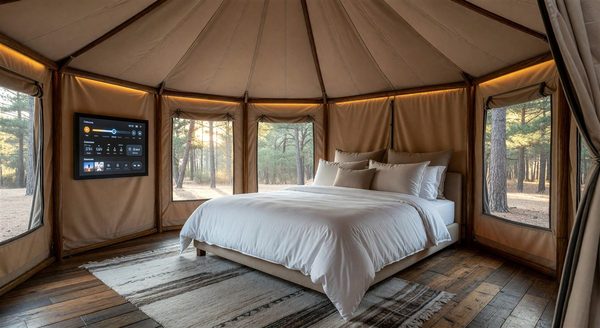
Variable unit types: A campground might have standard cabins, deluxe cabins, glamping tents, tree houses, and tiny homes — each with different cleaning requirements, different amenity inventories, and different expected condition standards. Checklists must be unit-type specific.
Seasonal and part-time housekeeping staff: Many campgrounds staff housekeeping seasonally, with different people cleaning the same unit across the season. Without standardized checklists, quality varies with who happens to be cleaning that day.
Remote units: Glamping sites and cabins at the far end of a campground property may not be easily supervised by management. Staff working in remote locations need to be self-directing with good checklists.
Digital Housekeeping Workflow Management
Purpose-built housekeeping software platforms — and housekeeping modules within broader property management systems — bring structure to campground housekeeping operations.
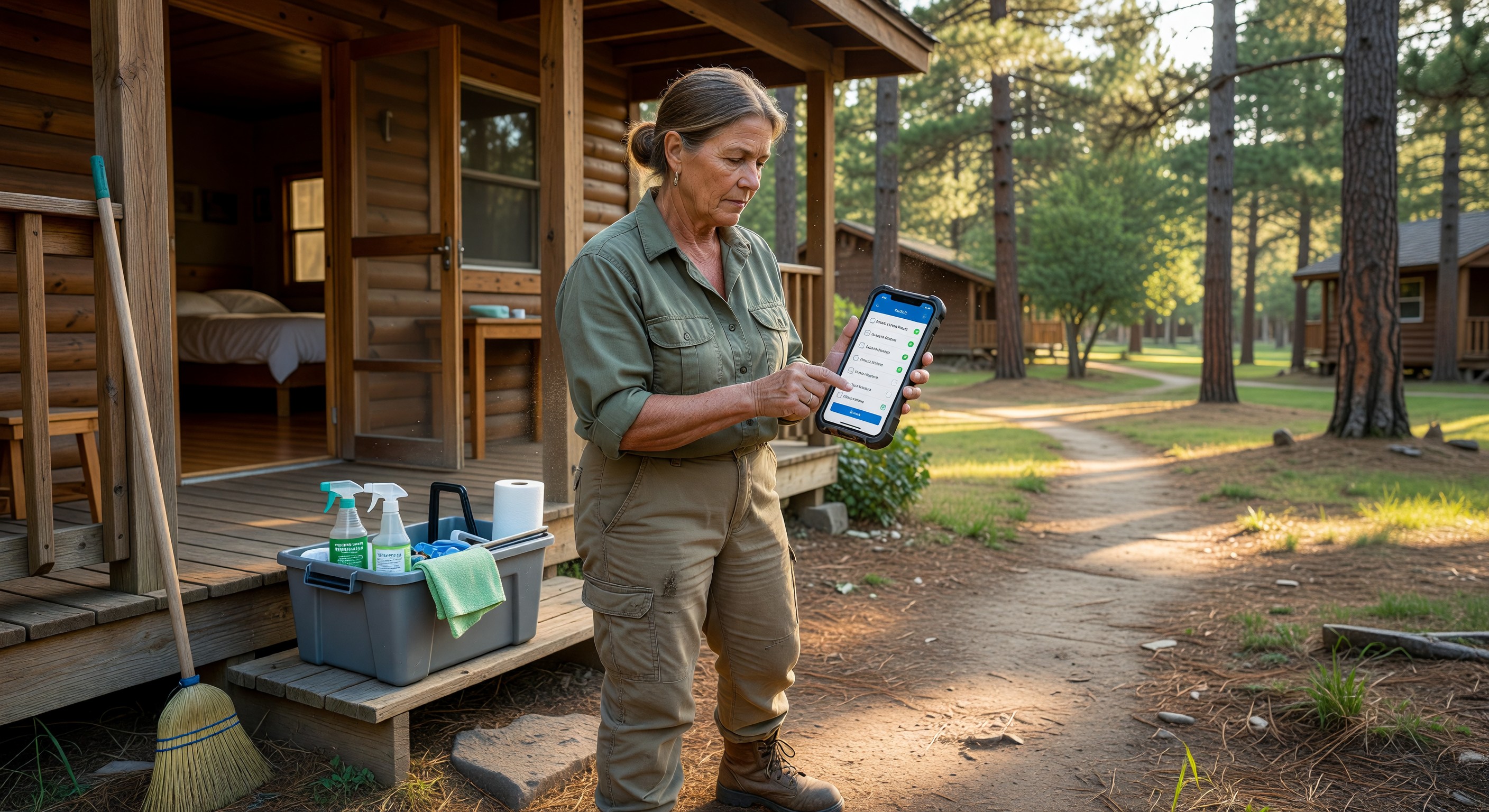
Turnover task assignment: When a reservation checks out, the system automatically generates a housekeeping task for the unit. Housekeeping staff see their task queue on a mobile device, prioritized by check-in time. Completed tasks are marked off in the system, visible to management in real-time.
Unit status tracking: A live status board showing each unit as clean/dirty/inspected/ready gives management visibility into housekeeping progress throughout the day. When a guest calls asking if early check-in is possible, management can see whether the unit is ready without calling the housekeeper.
Linen and supply tracking: Which units need linen changes vs. refresh only? What supplies does each unit need? Digital housekeeping tools can flag specific requirements for each turnover based on the length of the previous stay and the accommodation type.
Inspection Checklists
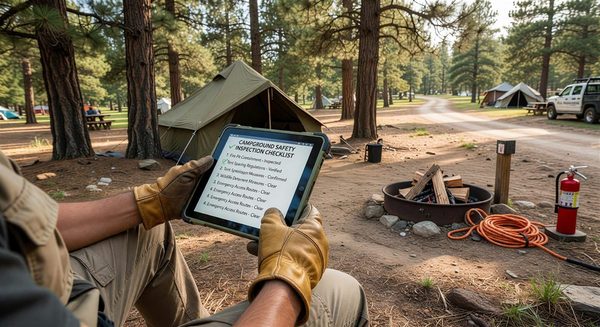
The cleaning checklist is the core tool for ensuring quality and consistency. A well-designed checklist:
- Covers every element: Every surface, appliance, amenity item, and exterior area that should be cleaned or checked is listed. Nothing is left to memory.
- Is unit-specific: A standard cabin checklist and a glamping tent checklist are different documents — they don’t share items that don’t apply.
- Includes condition assessment: Beyond “did you clean it?”, the checklist should note any damage or deficiencies found during the cleaning — a damaged window screen, a missing lamp, a dysfunctional appliance.
- Includes photo requirements for specific items: “Photograph the bathroom after cleaning” creates accountability for cleanliness standards and provides documentation for before/after comparison if guests report damage.
Digital vs. paper checklists: Paper checklists work but have limitations: they can be lost, they don’t create a searchable history, photos must be attached separately, and completion can be faked. Digital checklists on a smartphone address all of these limitations — time-stamped completion, integrated photo capture, and automatic upload to the central system.
Quality Inspection Workflows
In an ideal operation, someone other than the cleaner inspects each unit before it’s marked ready for check-in. The inspector verifies that cleaning standards were met and that deficiencies were addressed.
Manager walkthrough: The manager or supervisor inspects completed units. Provides the highest quality assurance but requires significant management time.
Self-inspection with photo requirement: Housekeepers complete the checklist and photograph specific elements (made bed, clean bathroom, set table). Photos are uploaded to the management portal for review. Provides accountability without requiring physical presence.
Guest inspection: Some campground operators use the guest check-in moment as a quality checkpoint — asking guests to review the unit briefly and report any concerns before settling in. This catches the occasional cleaning miss before it becomes a review complaint.
Linen Management
Linen management at campgrounds with multiple rental units — tracking clean vs. dirty, ensuring adequate supply, coordinating laundry — is often the operational bottleneck in the housekeeping cycle.
Par levels: Establishing a “par” — the minimum quantity of clean linens required for a full turnover day — determines how much linen inventory is needed. A campground with 10 cabins turning over daily needs at least 10 complete linen sets in service plus additional in rotation through laundry.
Linen tracking software: For campgrounds using third-party linen service (a commercial laundry delivers clean linens and collects dirty), tracking deliveries and ensuring you have what you need for each day’s turnovers requires coordination. Some commercial laundry services provide tracking systems; others require your own tracking.
On-site laundry vs. linen service: The economics of commercial laundry service vs. on-site laundry equipment depend on unit count, turnover frequency, and commercial laundry rates in your area. For more than 8–10 rental units with regular turnover, commercial linen service typically saves more in labor cost than the service fee.
Maintenance Integration
Housekeeping staff spend more time inside rental units than anyone else — which makes them well-positioned to identify maintenance issues. Integrating housekeeping and maintenance reporting creates a feedback loop that catches small problems before they become guest complaints.
The integration is simple: the housekeeping checklist includes a deficiency section where cleaners note maintenance issues observed during cleaning. Completed with photo, these reports flow into the maintenance work order system. Management reviews during the inspection process and schedules repairs during periods when units aren’t occupied.
Frequently Asked Questions
What software do small campgrounds use for housekeeping management? Many campground PMS platforms now include basic housekeeping modules (site status, turnover task assignments). For campgrounds with significant rental accommodation inventory, dedicated housekeeping platforms (Properly, Breezeway, Guesty’s housekeeping module) offer more robust functionality including photo checklists, task management, and linen tracking. The right tool depends on how many units you manage and how much you’re willing to invest in operational software.
How do I handle mid-stay cleaning requests for cabins? Establish clear policy: is mid-stay cleaning included for stays over a certain number of nights, available as a paid add-on, or not available? Publish this policy on your website, in the booking confirmation, and in the welcome information. If offered as an add-on, include it in your reservation system’s add-on products. If included for longer stays, document the schedule and delivery method (housekeepers access the unit, or guests present clean linens at a set time).
What’s the right staffing ratio for cabin housekeeping? A well-organized housekeeper can typically turn over a standard 1-bedroom cabin (clean, remake bed, replenish supplies) in 45–75 minutes. A glamping tent with minimal amenities might take 20–30 minutes. Full-service cabins with multiple bedrooms, kitchen facilities, and outdoor amenities take longer. Size your team for peak turnover days — when the most units check in and out simultaneously — with capacity to complete all turnovers before the check-in window.
How do I handle damage claims from guests? Document the unit condition thoroughly at every check-out (photos of all significant areas and any damage found). Compare to the condition record from the prior cleaning. If damage attributable to the just-departed guest is identified, contact them with photo documentation before initiating any charge. Pre-authorized security deposits processed through your reservation system provide the mechanism for collecting damage charges. Having a clear, documented damage policy — communicated to guests at booking — reduces disputes about charges.
Further Reading from Authoritative Sources
- ARVC campground housekeeping standards and operations guidance — ARVC provides operational guidance for campground housekeeping management, particularly for parks with rental accommodations and glamping inventory where consistent quality standards are essential to the guest experience and review performance.
- Task management systems and housekeeping workflow automation — Wikipedia’s CMMS article covers computerized task management and workflow automation concepts that apply to campground housekeeping management systems, providing the technical context for how these platforms automate the task generation and tracking described in this article.