Structured activities programming has become a significant differentiator for campgrounds competing at the resort end of the market. Bingo nights, kids’ craft sessions, live music weekends, nature walks, and themed holiday events transform a campground from a place to park your RV into a destination with its own programming calendar.
Managing this programming — planning activities, communicating them to guests, handling registrations for capacity-limited events, and tracking participation — benefits from systematic tools that reduce administrative burden and improve guest experience.
Why Activities Programming Matters Operationally
Activities programming isn’t just about entertainment — it creates operational benefits:
Longer stays and higher occupancy: Guests who attend activities they enjoy stay longer. A family that comes for a weekend and attends three organized activities during their visit is more likely to book for a week next time.
Midweek and shoulder season occupancy: Themed weekends and special events can drive midweek and shoulder season bookings that would otherwise be difficult to fill. A bluegrass festival weekend or a Halloween themed event creates its own demand.
Premium pricing justification: Active resort-style programming supports higher site rates. Guests comparing two campgrounds — one with organized activities and one without — often choose the programming-rich option even at a higher price point.
Guest retention: Memorable activities experiences drive return visits and positive word-of-mouth more effectively than physical amenities alone.
Digital Event Calendars and Communication
Guests need to know about activities in advance — and need access to the schedule during their stay — to actually participate.
Website events calendar: A public events calendar on your website serves two purposes: it gives prospective guests a reason to book during specific dates (I want to be there for the wine tasting weekend), and it helps current guests plan their stay. Many website platforms include calendar plugins that can display events in a browsable format.
Guest-facing digital guide: The campground’s digital welcome guide (linked from QR codes throughout the property) should include the current activity schedule prominently. This is the first place guests look for “what’s happening this weekend.”
Pre-arrival communication: Include a brief activities preview in the pre-arrival email — “This weekend: Saturday night bingo at 7pm, Sunday morning nature walk at 9am” — so guests can plan to participate before they arrive.
Social media promotion: Posting activities highlights — before, during (where appropriate), and after events — on social media builds community and attracts prospective guests who discover your activity culture through social channels.
Registration and Capacity Management
Many activities require registration — for capacity management, materials planning, or to ensure the right ratio of staff to participants.
Online registration options:
- Your campground’s reservation system (some platforms include activities registration)
- Eventbrite (widely used, free for free events, fee-based for paid events)
- SignUpGenius (free, simple, good for volunteer-type activities)
- Custom form via Jotform, Typeform, or Google Forms
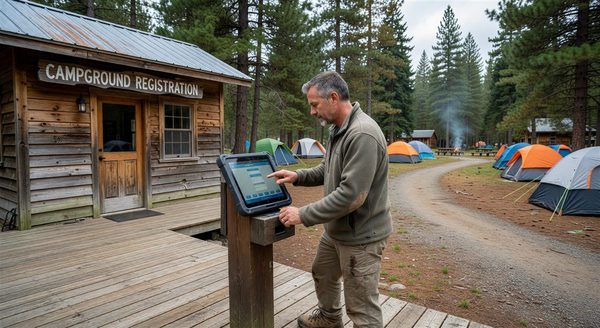
For activities included in the site rate, simple QR code check-in sheets at the activity location provide headcount without requiring pre-registration. For paid activities or those with limited capacity, proper registration with confirmation and reminder communications is worth the setup.
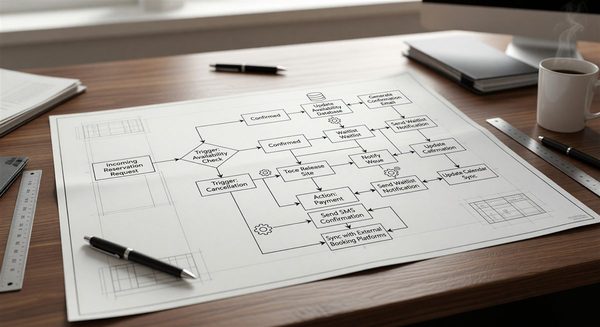
Waitlist management: For popular activities that fill quickly, a waitlist function — either through your registration platform or manually managed — handles overflow interest and fills cancellations.
Planning and Scheduling Tools
The logistics of activities programming — planning the schedule, coordinating staff, ordering materials, communicating timing — benefit from organized tools.
Activity database: A master list of all activities your campground runs, with notes on materials required, setup time, staffing needs, and capacity. This database allows activities coordinators to assemble a weekend program efficiently by drawing from proven activities rather than starting from scratch.
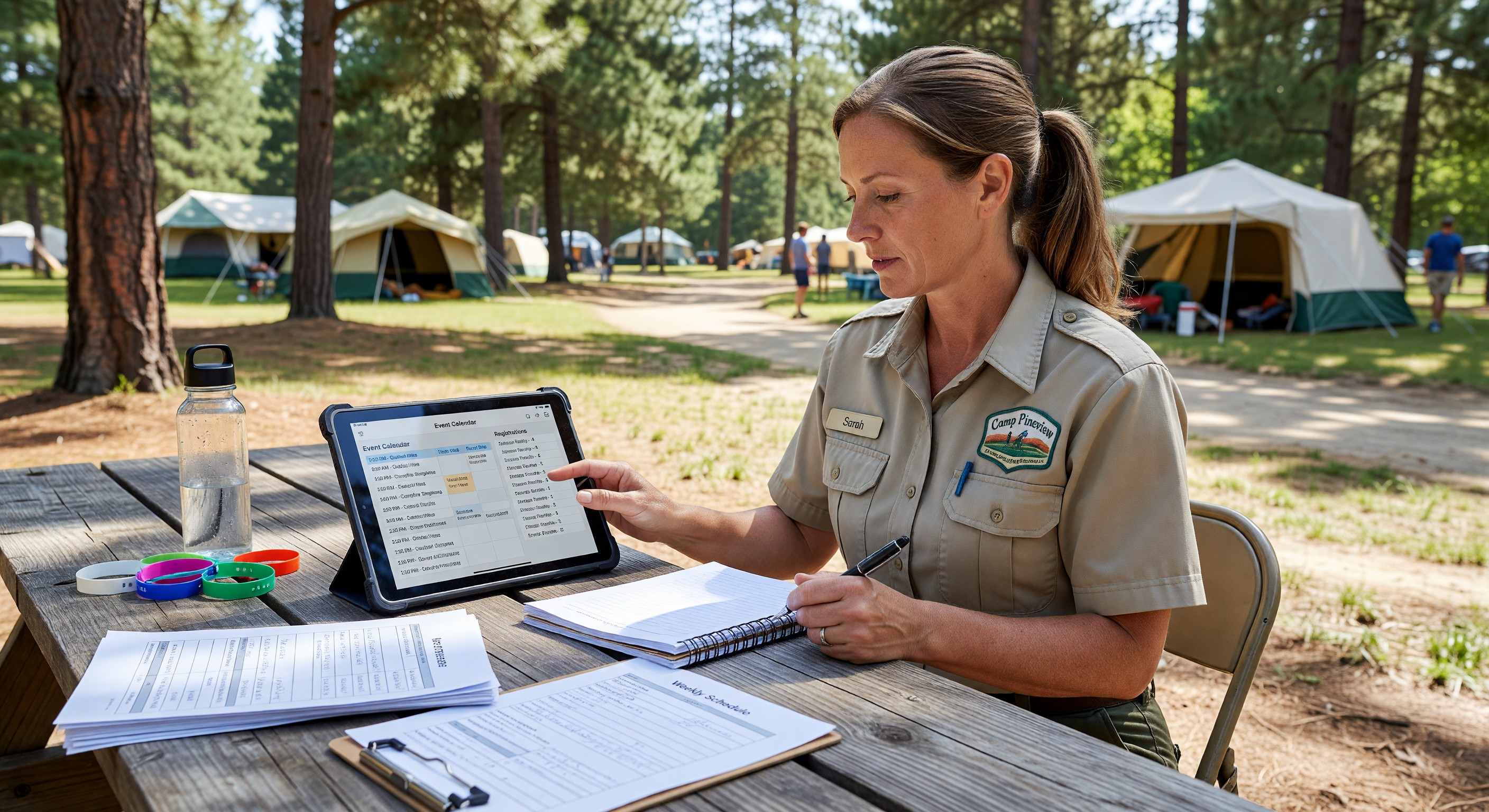
Planning calendar: A 12-week look-ahead calendar for activities, visible to all relevant staff. Activities are scheduled with lead time for materials ordering, facility booking, and staff scheduling. Google Calendar, Notion, or Trello boards work for this purpose.
Budget tracking: Activities have costs — prizes, supplies, materials, performer fees. A simple per-activity budget tracking approach (actual cost vs. allocated budget) builds the history needed for annual programming budget planning.
Technology for Specific Activity Types
Trivia and game nights: Digital trivia platforms (Kahoot, Jackbox) allow guests to participate via their smartphones rather than requiring paper answer sheets. These tools handle scoring automatically and support larger groups. A campground-branded Kahoot quiz with campground history and nature trivia is both engaging and memorable.
Movie nights: Outdoor projector systems with wireless audio are increasingly affordable. Licensing for outdoor public screenings requires either a campground public performance license (Swank, Criterion Pictures) or selection of license-free content. The movie night format is operationally simple and consistently popular.
Nature programming: Apps like iNaturalist (species identification) or Seek (plant identification) make nature programming more interactive when guests can participate in real-time species logging from their phones. Organizing a campground BioBlitz — a timed event to log as many species as possible — with app support creates a memorable educational experience.
Craft and cooking classes: Registration tools that capture participant count inform materials purchasing. Instructions provided digitally (linked from QR code) rather than on paper reduce prep work and allow materials reuse.
Measuring Programming Success
Activities programming investment should be measured against outcomes:
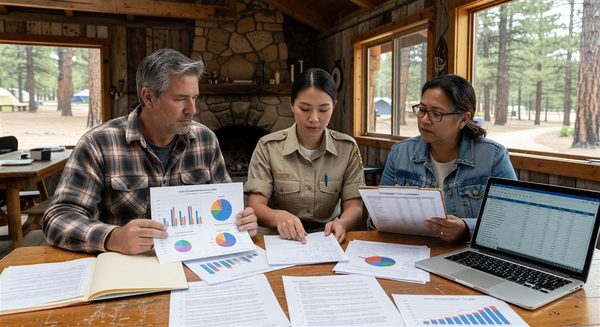
Participation rates: How many guests participate in each activity? Low participation activities may need better communication, better timing, or reconsideration.
Guest satisfaction correlation: Do guests who attend activities rate their overall experience higher? Survey data (even simple post-checkout emails) can explore this correlation.
Revenue correlation: Do weekends with programming have higher occupancy and ADR than comparable weekends without? This comparison quantifies the revenue value of programming investment.
Return visit correlation: Do guests who participate in activities show higher return booking rates? This is the most important long-term metric.
Frequently Asked Questions
How much should activities programming budget be as a percentage of revenue? Resort-level campgrounds with extensive programming typically invest 3–8% of revenue in activities — including staff, materials, and performer fees. Campgrounds with modest programming run lower. Start with what’s achievable and track ROI before expanding.
Do I need special insurance coverage for activities? Yes. Activities involving water (kayaking, tubing), physical exertion, or any perceived risk may need specific coverage beyond your general liability policy. Review planned activities with your insurance broker and confirm coverage before implementing.
What activities work best for family campgrounds? Consistently popular family activities: scavenger hunts (can be low-tech with printed clue cards), s’mores kits and campfire stories, movie nights, arts and crafts with nature themes, and seasonal holiday activities (egg hunts, costume parades). Activities that involve both children and parents in the same activity tend to generate more participation than activities targeting only one group.
How do I attract performers (musicians, storytellers) to campground events? Local musicians and performers often have lower rates than regional touring acts and can be found through local music venues, Facebook performer groups, and music school listings. Providing a comfortable setup (power, shelter, water) and promoting the performance to your guest audience makes the gig appealing even at modest rates. Starting with performers from your local community builds relationships that improve programming quality over time.
Further Reading from Authoritative Sources
- ARVC campground programming and guest activity standards — ARVC provides operational guidance on campground activity programming, including research on how activity quality affects guest satisfaction scores and return visitation rates in the RV park and campground industry.
- Go RVing campground amenity and activity preference research — Go RVing’s consumer research tracks what amenities and programming features campers value when choosing a campground, providing the consumer-facing data perspective that complements ARVC’s operator-side guidance.