Campground accessibility — providing outdoor recreation opportunities to guests with disabilities — is both a legal obligation and a business opportunity. The ADA (Americans with Disabilities Act) establishes accessibility standards for public accommodations including campgrounds, and nearly one in four American adults has some type of disability. Accessible campgrounds serve a large and underserved market that often has both the desire and the financial means for camping experiences.
Technology supports accessibility in campground design, reservation systems, and operational communications.
ADA Standards for Outdoor Developed Areas
The ADA Accessibility Guidelines for Outdoor Developed Areas establish specific requirements for campgrounds that are subject to federal accessibility standards. Key requirements:
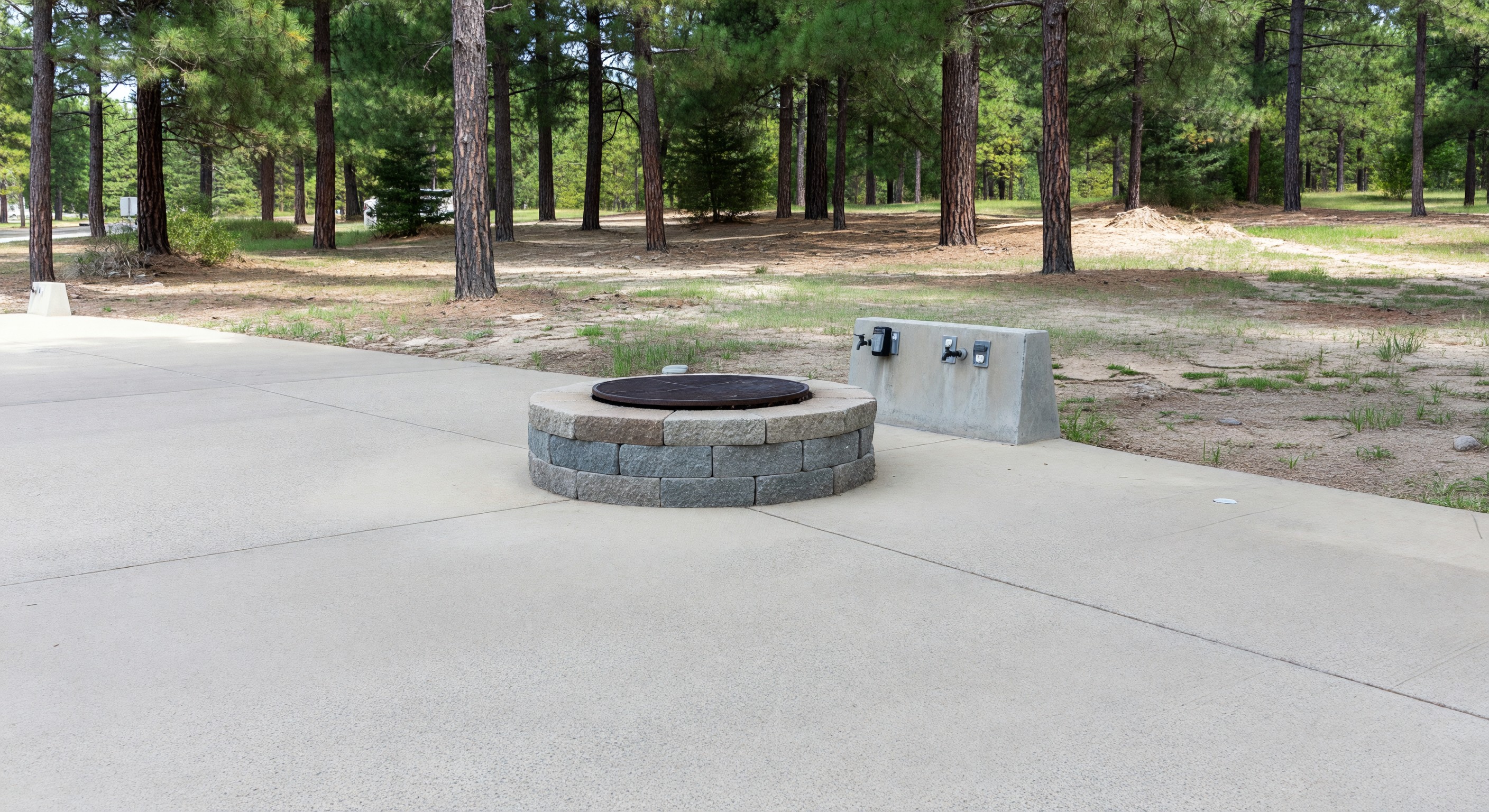
Accessible sites: Campgrounds must provide a certain number of accessible sites proportional to total site inventory. Accessible sites must have:
- A firm, stable, slip-resistant surface for the entire site
- Adequate surface for an accessible RV with full slide deployment
- Accessible pedestrian connection to common areas
- Accessible utility hookups (water, electrical, sewer at accessible heights)
- Accessible fire ring (raised to appropriate height) if fire rings are provided
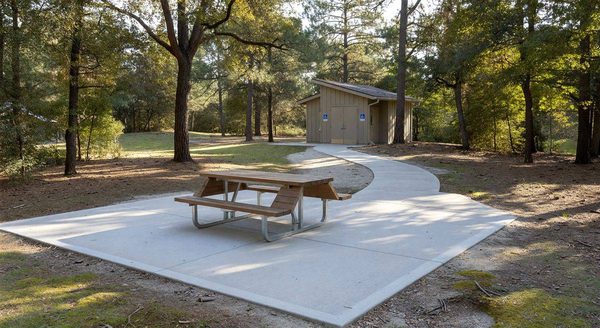
Accessible routes: An accessible route connecting accessible sites to accessible facilities (bathrooms, water, shower, etc.) is required. Grades, cross slopes, and surface materials must meet accessibility standards.
Accessible restroom facilities: At least one accessible restroom facility must be provided that meets ADA standards for stall size, grab bars, door clearances, and fixture heights.
Accessible common areas: Pavilions, swimming areas, fishing piers, and other common areas must be accessible to the extent technically feasible in an outdoor recreation environment.
The specific standards vary between federally-managed public campgrounds (which must strictly comply) and privately-owned campgrounds (which are subject to the ADA as places of public accommodation). Private campgrounds should review the ADA Standards for Accessible Design applicable to their specific facility type.
Technology for Accessible Site Reservation
Many campground operators have accessible sites in their inventory but don’t clearly identify them in their reservation system — making them hard to find and book. Improving this is relatively simple and has direct business impact.
Site attribute tagging: In your reservation management system, ensure accessible sites are tagged with specific accessibility attributes: surface type (paved/compacted aggregate), hookup accessibility, proximity to accessible facilities, and any other relevant features. These attributes should be filterable in the booking interface.
Search and filter capability: Guests with accessibility needs should be able to filter available sites by accessibility features during booking. This requires reservation system support for attribute-based filtering — a capability some systems offer and others don’t. If your current system doesn’t support this, it’s worth raising as a requirement in any future platform evaluation.
Detailed site descriptions: Accessible site listings should describe the actual accessibility features specifically: “Paved pad, accessible 50-amp hookup at 18-inch height, 28% proximity to accessible shower facility.” Vague descriptions (“some accessible sites available”) don’t help guests determine whether the site meets their specific needs.
Reservation system ADA flag: Some reservation systems allow sites to be flagged as ADA-accessible for priority reservation or identification in reporting. This administrative flag helps staff identify accessible inventory and ensure it’s appropriately protected for guests who need it.
Digital Accessibility of Reservation Platforms
Website and reservation platform accessibility — the digital accessibility requirements under ADA and WCAG (Web Content Accessibility Guidelines) — is separate from physical facility accessibility but equally important.
Guests with visual impairments who use screen readers, guests with motor disabilities who use keyboard navigation, and guests with cognitive disabilities who benefit from clear, simple interface design all need accessible digital tools to complete reservations independently.
WCAG 2.1 compliance: The Web Content Accessibility Guidelines 2.1 Level AA is the widely accepted standard for digital accessibility. Key requirements: text alternatives for non-text content (image alt text), adequate color contrast, keyboard navigability, and clear labeling of form fields.
Testing tools: Automated tools like WAVE (web accessibility evaluation tool) and browser extensions like axe scan pages for common accessibility issues. These tools don’t catch everything but identify obvious problems that can be fixed without specialized expertise.
User testing: The most reliable accessibility testing involves actual users with disabilities using your reservation system with their assistive technology. Advocacy organizations in your area may be able to connect you with testers.
Accessible Programming and Services
Physical accessibility of facilities and reservation system accessibility address the arrival and booking experience. But the full accessible guest experience extends to programming and services.
Accessible activities: When planning campground activities programming, consider which activities can be made accessible to guests with different disabilities and document this in your activities calendar. An accessible nature walk with a firm, wide path is different from a technical trail hike; both can be offered, with clear communication about which is accessible.
Staff training: Front desk and activities staff who understand how to assist guests with different disabilities — and who know the accessibility features of each site and facility — provide better service. Basic disability etiquette and awareness is a worthwhile staff training topic.
Equipment availability: Adaptive camping equipment — kayaks with outriggers, tandem bikes, handcycles — significantly expands the accessible recreation opportunities at campgrounds. Even a small inventory of adaptive equipment, available for loan or rental, demonstrates commitment to inclusive access.
Communication About Accessibility
Guests with disabilities often contact campgrounds before booking to ask about specific accessibility features. How this communication is handled affects both booking conversion and guest satisfaction.
Detailed website content: A dedicated accessibility page on your website that describes your accessible sites, routes, facilities, and services — with photos — reduces the need for individual inquiries and helps guests make informed booking decisions.
Staff preparation for accessibility inquiries: Front desk staff should know your accessible site inventory, their specific features, and the honest limitations of your accessibility. A guest who calls asking “can my wheelchair navigate the bathhouse?” needs an accurate answer, not a generic “we have accessible facilities.”
Accessibility-focused booking confirmation: Guests who book accessible sites should receive a booking confirmation that specifically confirms the accessible site assignment and lists the accessibility features they can expect. This proactive communication reduces anxiety and demonstrates that the campground takes their needs seriously.
Frequently Asked Questions
Are private campgrounds legally required to comply with ADA? Yes. Private campgrounds open to the public are places of public accommodation subject to ADA Title III. The ADA Accessibility Guidelines for Outdoor Developed Areas establish specific technical standards. Complying with these standards is not optional — non-compliance creates legal exposure to ADA complaints and litigation.
What’s the most practical first step for a campground that hasn’t assessed its accessibility? Conduct a self-assessment against the ADA Standards for Accessible Design and ADA Accessibility Guidelines for Outdoor Developed Areas. The Access Board (access-board.gov) provides free guidance documents. Document what you have, what’s missing, and what would be required to come into compliance. Prioritize the most impactful gaps — accessible restroom facilities and accessible routes are typically higher priority than individual site improvements.
What’s the cost of making a campground accessible? Highly variable. Paving an existing gravel site: $3,000–$8,000. Installing an accessible raised fire ring: $500–$1,500. Creating accessible routes connecting sites to facilities: depends on length and grade but commonly $15,000–$50,000 for a typical campground network. Building a new accessible bathhouse from scratch: $100,000–$300,000+. Creating a transition plan and addressing the highest-priority items over 3–5 years is a more practical approach than attempting to achieve full compliance in a single season.
What should I do if a guest with a disability requests a specific accommodation we don’t currently offer? Engage the request in good faith — don’t immediately default to “we can’t do that.” Often, reasonable accommodations can be made with available resources. Document the request and your response. The ADA generally requires reasonable modifications to policies, practices, and procedures unless doing so would fundamentally alter the nature of the goods or services or create an undue burden. What’s “reasonable” depends on the specific request and your operational circumstances.
Further Reading from Authoritative Sources
- ADA Title III requirements for private campgrounds as public accommodations — ADA.gov is the official U.S.
- Access Board outdoor developed area accessibility standards and campsite guidelines — The U.S.