For about five years, the campground answer to the remote-work guest has been bandwidth. Upgrade the backhaul, add access points, advertise the speed. That was the right answer when it was the binding constraint, and a great many parks have now done it — reliable, campground-wide internet has moved from a differentiator to something guests assume, in roughly the way they assume hot water.
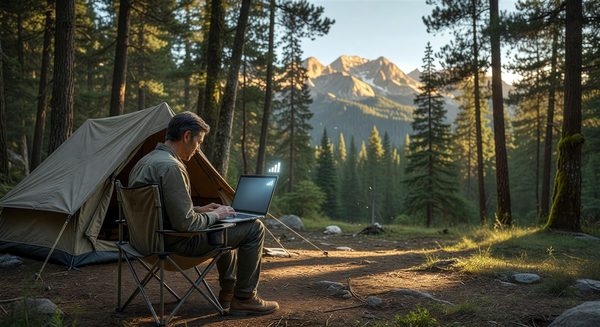
Once everyone has it, it stops selling anything. The parks pulling ahead in 2026 have worked out that the remaining problem for a guest working from a site is not bandwidth at all. It is that an RV is a small, thin-walled, acoustically terrible place to take a two-hour video call, and that the alternative — the picnic table outside — has a generator, a dog, and someone else’s children within thirty feet of it.
The amenity that answers that is physical, not technical, and it is considerably cheaper to build than most operators assume.
Why the Demand Is Structural, Not a Fad
The population driving this is large and still growing. An estimated 18 million people in the U.S. identified as digital nomads in 2025 — a 147% increase since 2019. That is not a pandemic bulge that reverted; it is a durable change in where a meaningful share of knowledge work is performed.
For a campground, the significance is less about the headline number than about what that guest does to the booking pattern. A guest who is working is not a weekend guest. They stay longer, they arrive and depart mid-week, and they fill the shoulder-season and midweek inventory that is otherwise the hardest to move. They are also comparatively insensitive to peak-weekend pricing dynamics because they are not competing for the same nights.
That is a valuable guest segment to be able to serve, and the thing standing between most parks and serving it well is not a network upgrade.
What a Quiet Work Zone Actually Is
The term covers a range, and the range matters because the cost varies by an order of magnitude across it.
At the simplest end, a quiet work zone is a designated area with a table, power, shade, and a posted expectation — no generators, no amplified music, voices down during business hours. This costs almost nothing. It is a sign, a rule, and a decision about which corner of the property it applies to. A surprising number of parks have not made that decision and consequently have no answer for a guest who asks where they can take a call.
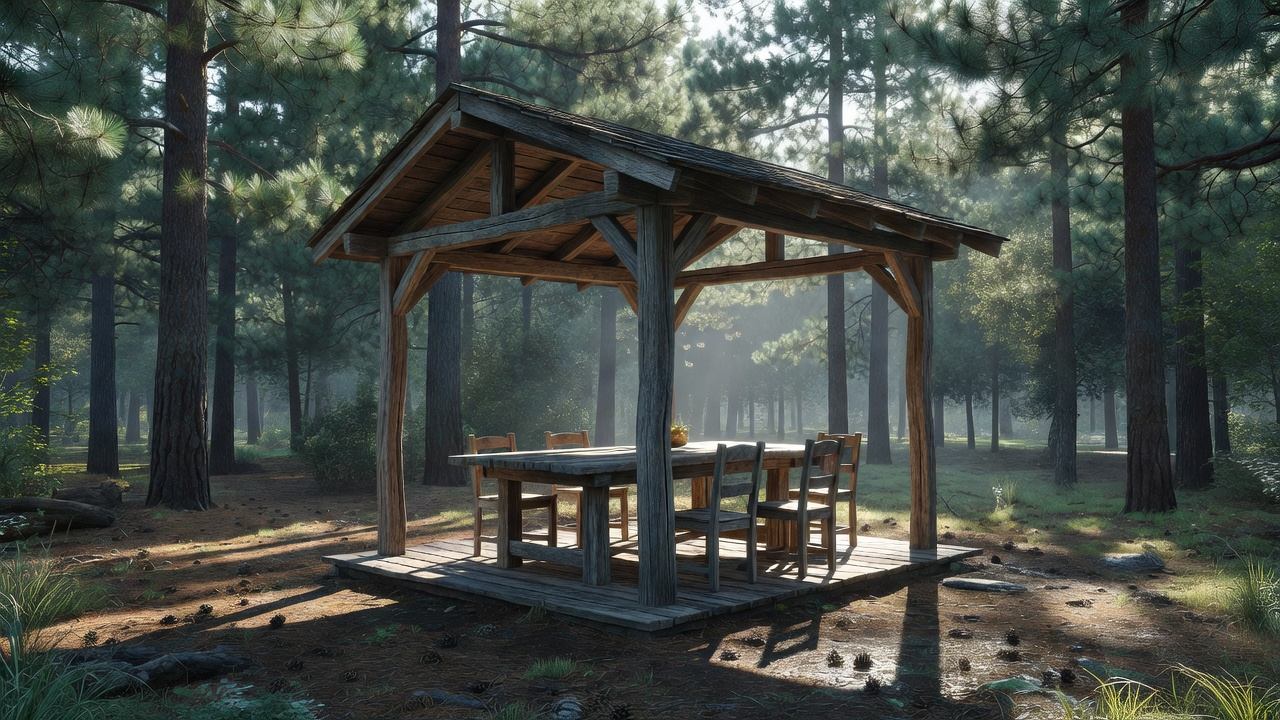
In the middle, it is a covered outdoor workspace: a pavilion or screened structure with hard-wired power, decent lighting, weather protection, and enough table area for several people to work without being in each other’s calls. This is a genuine capital item but a modest one, and it converts an underused piece of the property into a booking argument.
At the fuller end, it is indoor: a converted office, a section of the clubhouse, or a purpose-built room with ergonomic seating, private workstations, and — the feature guests name most often — one or two enclosed call booths. Parks going this far are describing it as coworking, and the amenity list has converged on a recognizable set: communal tables, private workstations, ergonomic chairs, charging stations, and quiet zones specifically for video calls.
The Zoning Insight Underneath It
The more useful way to think about this is not as a building project but as a segmentation one. The parks doing it well have generalized the idea: quiet zones against family zones, premium sites against basic, short-stay sections against long-stay ones.
Once a park thinks in those terms, the quiet work zone stops being an isolated amenity and becomes part of a site-assignment policy. A working guest booking a two-week midweek stay gets placed in the quiet section, away from the playground and the seasonal families, near the pavilion and within good signal of an access point. A weekend family gets placed where the noise is expected and tolerated. Neither guest is annoyed by the other, and the park has solved a complaint category rather than added a facility.
This is where the amenity earns money twice: it attracts the working guest, and it reduces the friction that working guest otherwise creates for everyone camped around them.
What Trips Parks Up
Three failures come up repeatedly.
Building the space without fixing coverage to it. A pavilion in the one dead zone on the property is a shelter, not a work zone. Coverage at the workspace has to be verified under load, not assumed from a site-wide plan, and “under load” means at four o’clock on a Wednesday in July rather than at eight in the morning in May.
Underestimating power. A workspace table with two outlets serves two people. Working guests arrive with a laptop, a monitor, a phone, a headset, and frequently a second device, and they stay for hours. Power provisioning is the single most common retrofit on these spaces and it is much cheaper to over-provision at build.
Enforcing nothing. A quiet zone that is quiet only when it happens to be is not an amenity, because the guest cannot rely on it — and reliability is the entire product. This is a staff-behaviour problem more than a signage problem. Parks that succeed have made it explicit at check-in, put it in the site-assignment logic, and given front-desk staff a script for the one conversation it occasionally requires.
Sizing the Investment
The right first step for most parks is not the coworking room. It is the free version: pick the quietest section of the property, designate it, assign working guests to it deliberately, and see whether the bookings and the reviews respond. That test costs a sign and a change to how the reservation system assigns sites, and it produces real data on whether this segment exists in a given park’s market.
If it does, the covered outdoor workspace is the next increment and the one with the best return per dollar. The indoor coworking build is the third step and should follow evidence, not precede it — it is the version that most often gets built at parks whose actual constraint was still coverage or power.
The broader shift is worth naming plainly. Outdoor hospitality has spent two decades competing on recreation amenities, and recreation amenities are what a guest uses for a few hours a day. A working guest is on the property, using its infrastructure, for eight. Parks that plan for that guest’s day rather than their evening are the ones filling midweek.