The moment a guest pulls off the road and enters your campground, they’re forming the first impression that will color their perception of everything that follows. A confused, frustrating arrival experience — gates that don’t work, unclear directions, a queue at the check-in desk — creates negative momentum that it takes the rest of the stay to overcome. A smooth, warm, well-organized arrival sets a positive tone that guests carry forward.
Technology plays a supporting role in creating great arrivals — not replacing the human warmth of a genuine welcome, but removing the friction that makes arrivals stressful.
Pre-Arrival Information as the Foundation
The best arrival experiences begin 24 hours before the guest arrives. The pre-arrival communication that goes out the day before arrival should:
Give specific directions to the campground — not just an address, but turn-by-turn guidance for the last mile that Google Maps often mishandles. For campgrounds with complex approaches (narrow roads, bridges with weight limits, low clearance overpasses on GPS-suggested routes), detailed custom directions are worth writing once and sending to every arriving guest.
Give specific directions to the site — which entrance to use, which loop the site is in, the site number in large text. For guests arriving with trailers, mention whether the approach involves backing or if it’s a pull-through.
Provide the gate code or RFID credential if your park has gated entry.
Set expectations for check-in — “No stop at the office is required; drive directly to your site” or “Please stop at the registration office to pick up your welcome package.”
Include a named contact for arrival-day issues. “If you have any trouble on arrival, text [name] at [number]” is more reassuring than an anonymous phone number.
Entrance Signage and Navigation Technology
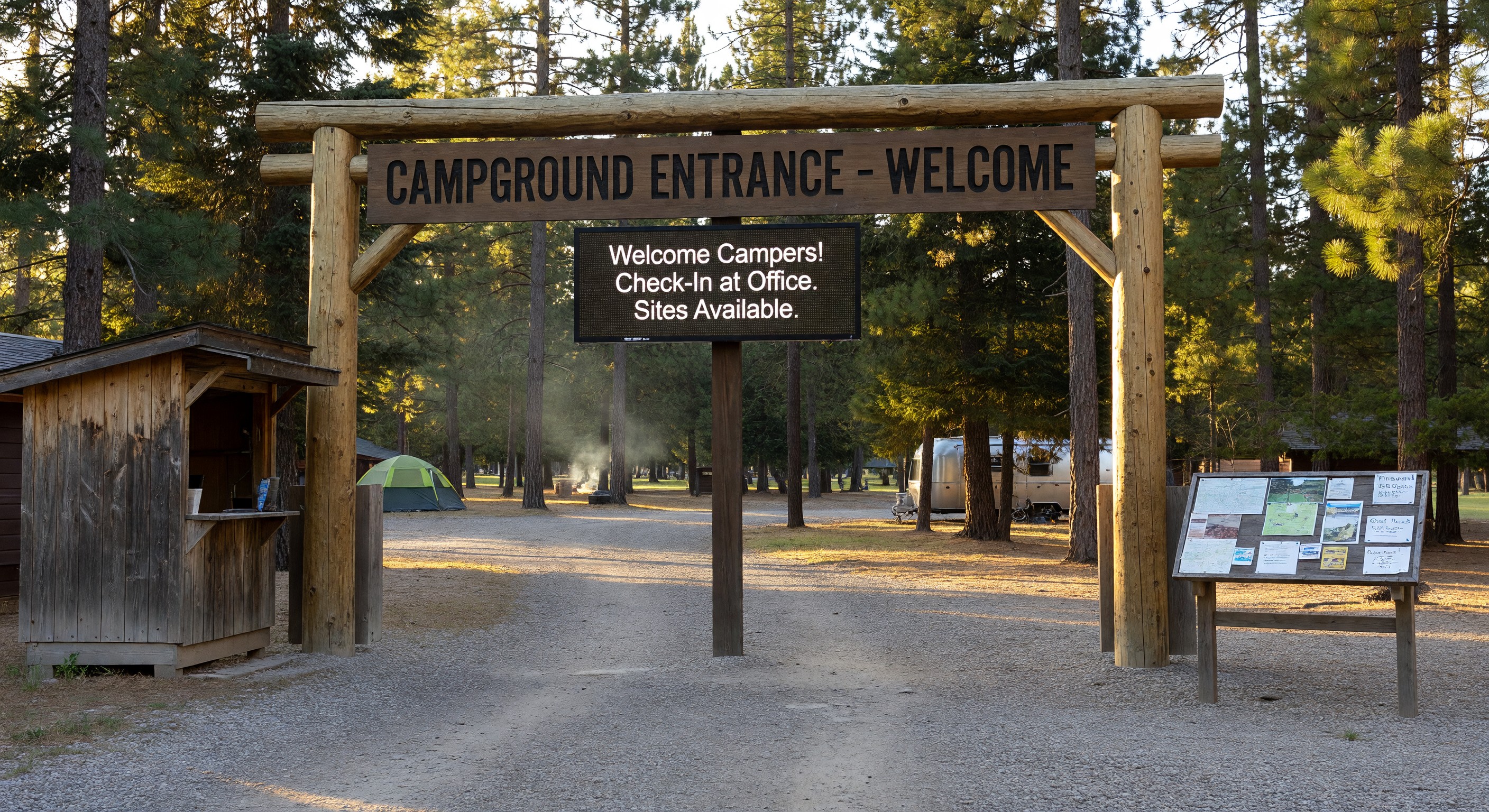
Clear entrance signage is the foundation before any technology. A park entrance sign visible from the road in both directions, with your park name and the turn direction. This sounds obvious — but many campground entrances are marked with a small sign that guests drive past at highway speed.
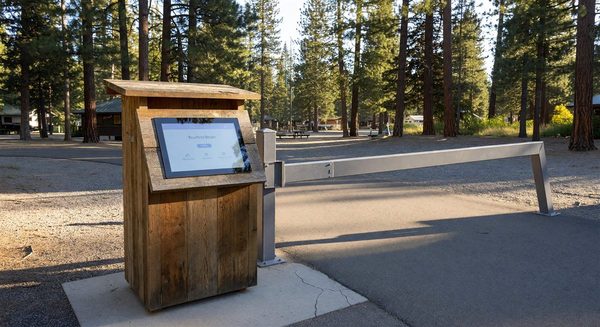
Digital arrival kiosk: A display at the entrance area (or the registration desk) that shows a property map with the arriving guest’s site highlighted. Some systems can display the guest’s specific information when they scan their reservation QR code at the kiosk.
QR code site maps: A QR code at the entrance — linked to a mobile-optimized property map — gives arriving guests immediate visual orientation. No paper map to hand out; guests can zoom into their area and see facilities.
Loop markers and site numbering: Large, visible site numbers and loop entrance signs that are unambiguously readable from a towing vehicle. The standard — small metal numbers on posts at the standard viewing angle — is often inadequate for RV drivers whose sight lines are different from car drivers.
The Welcome Moment
Technology enhances but doesn’t replace the welcome moment. The options:
Personal staff greeting at the site: For premium glamping or resort properties, a staff member who greets guests at their site with their welcome kit and a personal orientation is a high-impact experience. This isn’t scalable for all arrival times, but it’s worth staffing for peak arrival windows.
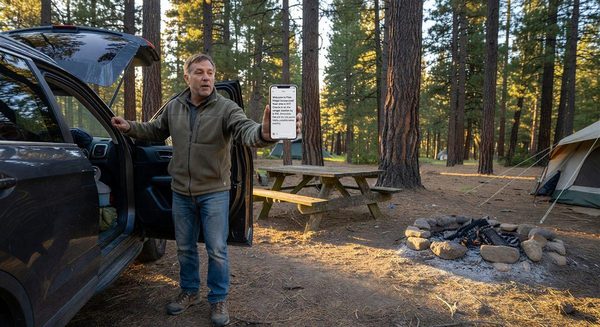
Welcome text from a named staff member: Automated but personalized — “Hi [Name], welcome to [Park]! Your site is ready. I’m [Staff Name] — text me if you need anything.” The automation is invisible; the warmth is real.
Welcome package at the site: For contactless arrivals, a physical welcome package placed at the site before arrival — a hand-written welcome card, a trail map, a park guide, a small welcome gift — makes the impersonal self-arrival experience warm.
Interactive welcome display at the registration office: For guests who do come to the office, a display showing the day’s activities, tonight’s weather forecast, and a map of the property starts their stay with useful orientation rather than just paperwork.
Frequently Asked Questions
What’s the single most impactful technology investment for improving arrivals? Pre-arrival communication quality. The investment is almost entirely time rather than technology — writing excellent pre-arrival content that specifically addresses the guest’s situation and sends automatically. This reduces arrival-day friction more than any hardware investment.
How do I handle guests who arrive before their site is ready? Define a staging area — a parking spot or temporary check-in area — where early arrivals can wait. Communicate proactively via text when the site is ready. If the wait is more than 30 minutes, offer a camp store beverage while they wait. Managing this gracefully prevents the early arrival from becoming a first impression problem.
Should I give guests a laminated site map and welcome card, or go entirely digital? Both. A physical welcome card in the site is a warm touch that digital channels can’t replicate. A QR code on the card links to the digital map for guests who want it. The combination serves both technology-comfortable and technology-averse guests well.
How many staff should I have available during peak arrival windows? Peak arrival (typically 2pm–6pm on Fridays and Saturdays during summer) is when your front desk and arrival support needs are highest. Staff arrivals to have at least one person specifically dedicated to arrival assistance — not processing other tasks — during this window. Review your arrival manifest by hour to understand your peak load.
Further Reading from Authoritative Sources
- ARVC campground guest experience standards and arrival best practices — ARVC’s guest experience benchmarking data and operational standards for the campground industry include metrics on arrival satisfaction as a key driver of overall guest rating.
- Go RVing consumer research on arrival experience and campground satisfaction — Go RVing publishes consumer research tracking what most influences RV traveler satisfaction and review scores, including the outsized impact of first impressions on overall trip ratings.