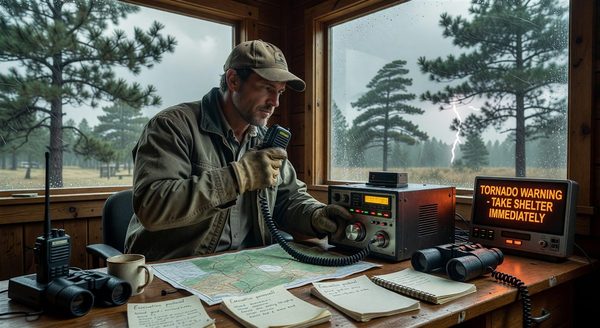
Weather affects campground operations every day — from the mundane (will it rain this afternoon, should we delay the campfire program?) to the life-critical (is a severe thunderstorm approaching with lightning risk?). Professional weather monitoring systems give operators better data for both categories of decision.
Why Campground Weather Monitoring Matters
Safety: The primary use case. Severe thunderstorms, lightning, high winds, and flash flooding are genuine safety risks for campers who may be in tents, on water, or on elevated terrain. Early warning — even 15–20 minutes of advance notice — allows guests to reach shelter before conditions become dangerous.
Operations: Weather monitoring informs daily decisions: pool opening hours, outdoor event scheduling, campfire program timing, and maintenance planning all benefit from accurate local weather data rather than regional forecasts that may not reflect conditions at your specific location.
Liability protection: Parks that monitor weather and take appropriate action have documentation of their safety practices. This matters in liability situations involving weather-related incidents.
Weather Station Types for Campgrounds
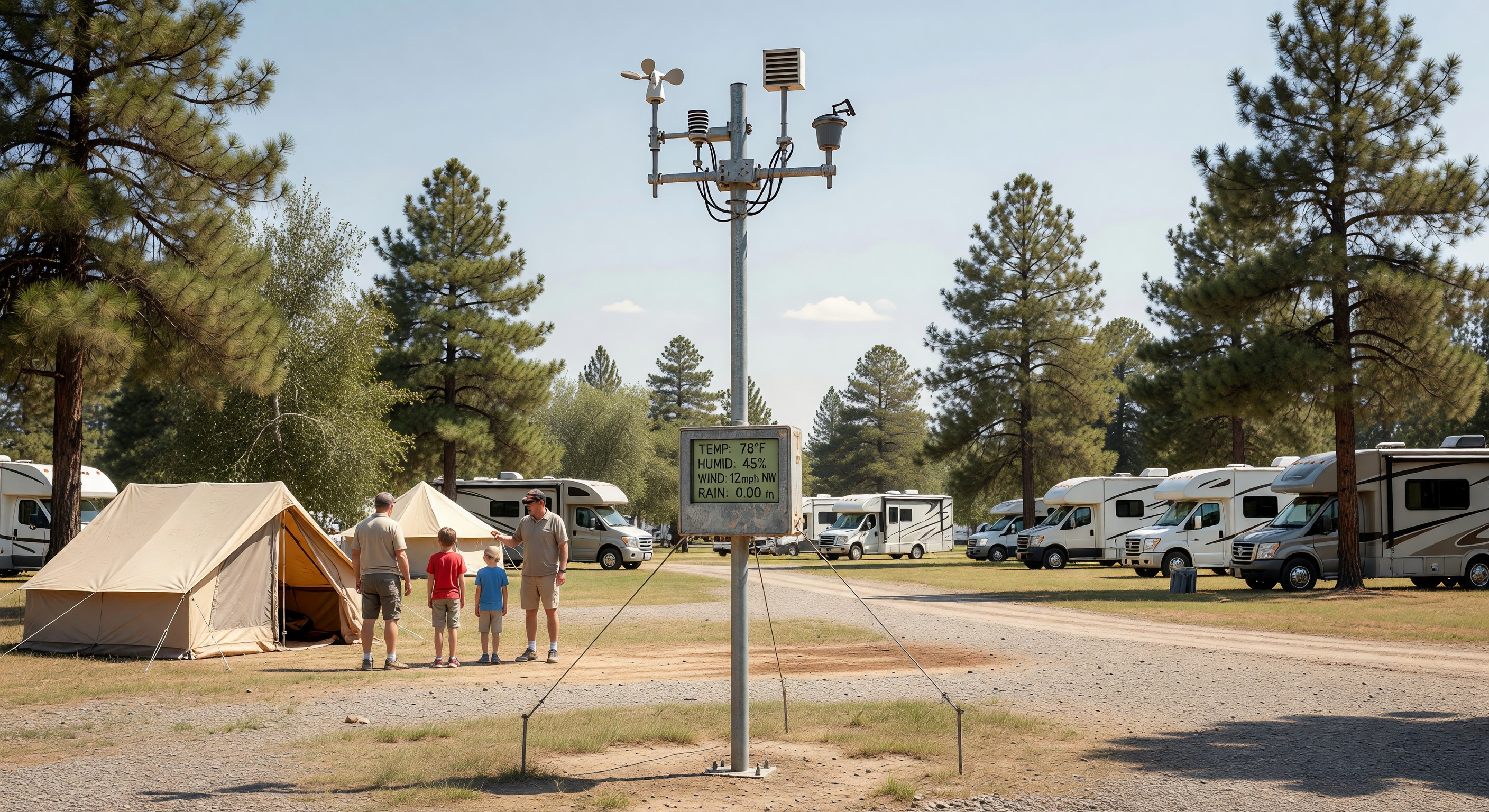
Basic weather stations: Consumer-grade personal weather stations (Davis Instruments, AcuRite, and similar) measure temperature, humidity, wind speed and direction, barometric pressure, and rainfall. These typically connect to a display unit at the registration office and may share data to Weather Underground or similar public weather networks. Cost: $200–$600.
Professional weather stations: Commercial-grade stations with calibrated sensors, redundant power, and data logging capabilities. These provide more accurate readings and professional-grade data for compliance and liability documentation purposes. Cost: $1,000–$5,000.
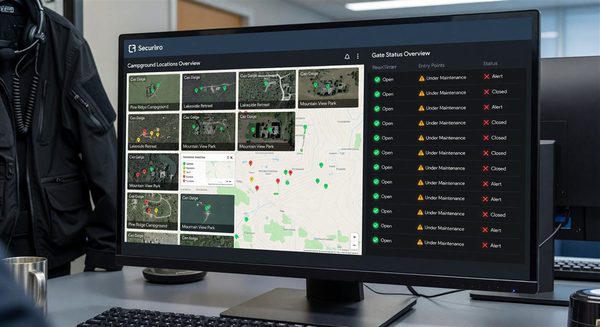
Integrated weather services with alerts: Some weather monitoring providers offer campground-specific weather monitoring packages that include automated alerts when conditions exceed defined thresholds. A service that texts or calls your manager when lightning is detected within 5 miles is more operationally useful than a display you might not be watching.
Lightning Detection Systems
Lightning is the most acute weather safety risk at campgrounds, and standard weather stations don’t detect it well. Dedicated lightning detection systems:
Stand-alone lightning detectors: Devices like the Boltek LD-350 detect electromagnetic pulses from lightning strikes and estimate distance. Basic models provide a simple distance display; more sophisticated systems provide directional data.
Commercial lightning warning networks: Services like Earth Networks and Vaisala provide access to professional lightning detection networks with location-specific alerts delivered via app, display, or integration. These are used at golf courses, theme parks, and outdoor venues that need reliable lightning warning.
Strike count at distance: Most systems provide alerts at defined distance thresholds — 10 miles, 5 miles, 3 miles. A “5-mile alert” protocol for pool closure, a “3-mile alert” for general outdoor evacuation, and a “lightning in the area” all-clear procedure provide a clear action framework.
Weather Communication to Guests
Having weather monitoring data is only valuable if you use it to protect guests. Communication systems:
PA system: A loudspeaker system that reaches outdoor areas is the fastest way to communicate an urgent weather warning to guests across a property. This is particularly important for parks where guests may be on water, trails, or in open areas.
App push notifications: For parks with a campground app, a push notification alerting guests to seek shelter reaches all app users simultaneously.
Digital signage updates: Digital signs at the pool, pavilion, and entrance can be updated remotely to display weather alerts.
Defined evacuation areas: Every campground should designate and communicate refuge areas — typically permanent buildings — where guests should shelter during severe weather. This is part of your emergency action plan, not just a weather monitoring question.
Frequently Asked Questions
What’s the minimum weather monitoring setup for a campground? A basic weather station plus a lightning detection app (there are free apps that aggregate lightning detection network data) is a minimum starting point. For parks near water or in exposed terrain, a dedicated lightning detector with alert capability is a stronger safety baseline.
Are campgrounds legally required to have weather monitoring systems? Generally no — there’s no universal legal requirement for campground weather monitoring. However, operators have a duty of care for guest safety, and the absence of any weather monitoring system becomes a factor in liability assessment if a guest is injured in a foreseeable weather event. Check with your insurance carrier about their recommendations.
How do I train seasonal staff to respond to weather alerts? Include weather alert protocols in seasonal staff training. Define: what trigger causes pool closure, what trigger causes guests to be directed to shelter, who has authority to make these calls, and what the communication steps are. Role-play the response to ensure staff can execute without supervisor intervention.
Can I access weather data for my campground location without installing my own station? Yes. Government weather networks, Weather Underground’s personal weather station database, and commercial weather APIs all provide historical and current data for most locations. The advantage of your own station is hyperlocal accuracy — weather varies significantly within a mile in terrain with hills, water bodies, or significant vegetation.
Further Reading from Authoritative Sources
- National Weather Service lightning safety and severe weather protocols — The National Weather Service publishes the authoritative lightning safety guidelines — including the 30-30 rule and the specific radii used for outdoor recreation lightning protocols — that campground weather monitoring systems and safety procedures should reference.
- ARVC campground weather safety and emergency communication standards — ARVC provides emergency communication and weather safety guidance for campground operators, making it the most relevant trade authority for the guest communication protocols that weather monitoring systems enable.