A campground pool is one of the highest-demand amenities for family campers and one of the most labor-intensive facilities to operate. Chemistry testing, maintenance rounds, occupancy management during peak hours, and after-hours monitoring all require staff time. Smart pool and amenity management technology is reducing this burden while improving water quality consistency and guest safety.
Automated Pool Chemistry Management
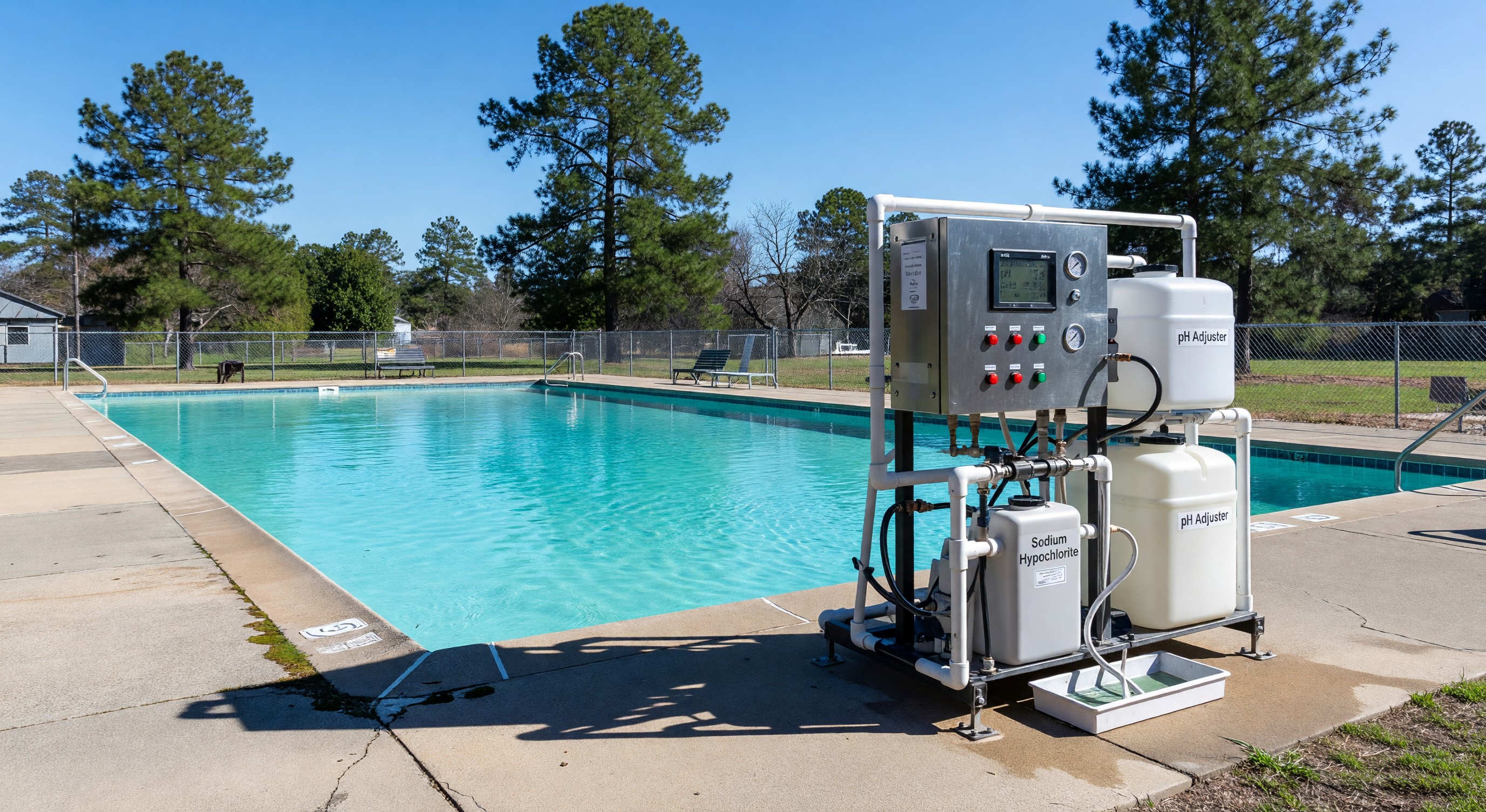
Manual pool chemistry testing — testing water multiple times daily and adjusting chemical levels in response — is time-consuming and inconsistent. Automated chemical control systems continuously monitor water chemistry and dose automatically.
How automated systems work: Sensors in the pool measure pH, ORP (oxidation reduction potential, which indicates sanitizer effectiveness), temperature, and sometimes turbidity continuously. A controller receives this data and activates dosing pumps that inject chlorine, pH modifier (muriatic acid or CO2), and other chemicals in precise amounts to maintain target levels.
Benefits:
- More consistent water chemistry than manual testing (sensors check every few seconds vs. staff testing 3x/day)
- Reduced chemical waste from over-dosing
- Alert notifications when chemistry is out of range — staff are notified to investigate rather than discovering a problem on a test round
- Compliance documentation — automated systems log readings continuously, providing a documented record for health department inspections
Cost: Basic automated chemical dosing systems run $2,000–$8,000 installed. Advanced systems with remote monitoring dashboards and multiple sensors are higher.
Pool Occupancy Monitoring
Managing occupancy at a campground pool — ensuring it doesn’t exceed capacity in a way that creates safety or regulatory issues — is typically done manually (a staff member counting entrants and leavers) or through an honor system (posted capacity signs that guests are expected to comply with).
Automated occupancy counting: Infrared sensors or cameras at pool access points count persons entering and exiting, maintaining a real-time occupancy count. When the pool reaches capacity, a digital display at the entrance shows “AT CAPACITY — please wait” and alerts staff via app.
This automation is particularly useful during peak midday hours when pools are busiest and staff attention is split. It also provides data on hourly occupancy patterns — understanding when the pool peaks at capacity informs staffing schedules and potentially informs decisions about pool expansion.
Access control integration: When the pool is accessed through a gated entry (RFID or code-controlled), the access control system can enforce occupancy limits automatically — denying entry when the pool reaches capacity.
Pool Covers and Automated Systems
Retractable pool covers reduce evaporation, retain heat, and prevent debris accumulation. Smart pool cover systems automate this:
Motorized retractable covers that open and close on a schedule (retract at 8am when the pool opens, extend at sunset when it closes) eliminate the daily manual task of pool cover management.
Solar heating optimization: When combined with temperature sensors, automated systems can maximize solar heating hours — keeping the cover extended during peak sun hours when no one is using the pool to maximize passive heating, then retracting for guest access.
Broader Amenity Monitoring
The technology applied to pools extends to other amenity buildings:
Bathhouse occupancy sensing: Motion sensors in bathhouses track whether facilities are in use — this data helps staff anticipate cleaning needs and allows guests to check bathhouse occupancy before walking across the park.
Laundry room status displays: A display at the campground entrance (or in the app) showing which washers and dryers are currently available saves guests wasted trips to a full laundry room.
Hot tub temperature monitoring: Remote monitoring of hot tub temperature and chemistry, with alerts when maintenance is needed, reduces the manual round requirements for hot tub management.
Frequently Asked Questions
Does automated pool chemistry eliminate the need for manual testing? Most health departments still require documented manual testing at minimum frequency even with automated systems. Check your jurisdiction’s requirements. Automated systems reduce manual testing frequency (from 3x/day to once daily in some jurisdictions) rather than eliminating it entirely.
Can I add automated chemistry monitoring to an existing pool? Yes, automated systems can be retrofitted to existing pools in most cases. The dosing pumps install alongside existing chemical storage; the sensor probes install in a flow cell plumbed to pool return water. Consult with a pool automation specialist who can assess your specific plumbing configuration.
What’s the most common failure mode for automated pool chemistry systems? Sensor probe fouling — scale, algae, or debris build-up on sensor surfaces — causes reading drift that leads to incorrect dosing. Probes require regular cleaning (weekly in heavy-use environments) and periodic replacement. Building probe maintenance into your pool maintenance schedule is essential.
Should I display pool chemistry readings publicly (on a display near the pool)? Some parks do this — it’s a transparency gesture that demonstrates attention to water quality. Others prefer to keep chemistry monitoring internal. The main risk of public display is that guests who don’t understand chemistry parameters may be alarmed by readings that are technically within acceptable ranges. If you display readings, pair them with context (target ranges and brief explanations).
Further Reading from Authoritative Sources
- CDC healthy swimming and pool water quality standards — The CDC publishes the Model Aquatic Health Code and Healthy Swimming guidelines that establish the water quality standards campground pools must maintain, making it the authoritative source for the specific parameter ranges and disinfection requirements referenced in this article.
- ARVC campground pool operations and safety standards — ARVC provides operational guidance for campground pool facilities including safety protocols, regulatory compliance requirements, and the technology adoption practices that well-run campground pools use to maintain guest safety.