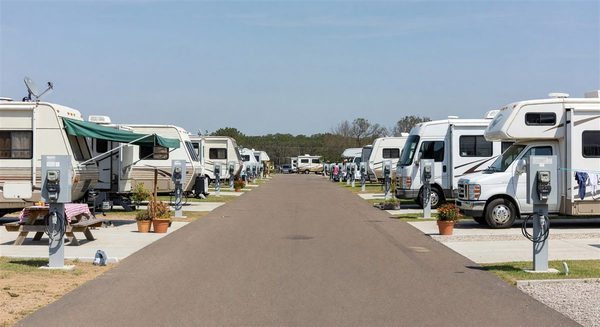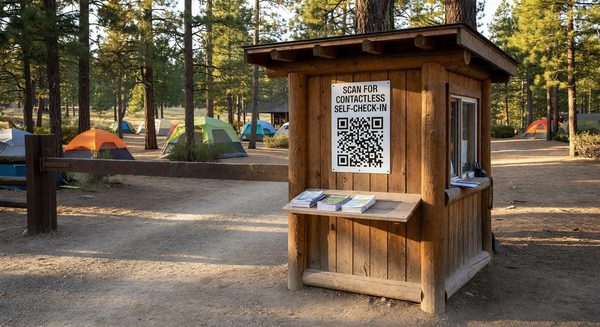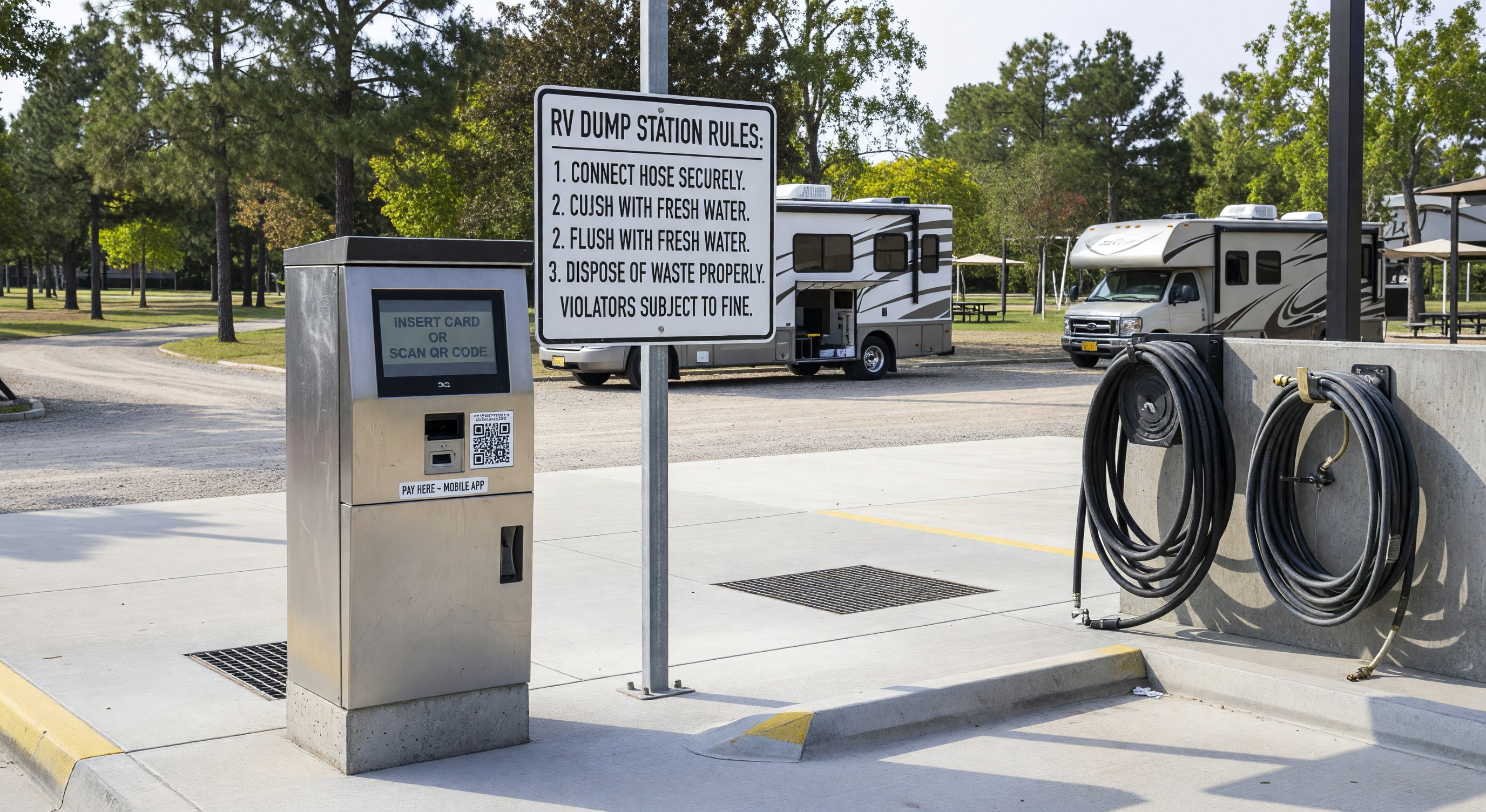
The RV dump station may not be the most glamorous campground amenity, but it’s among the most essential for RV travelers. A well-maintained, accessible dump station with modern payment options improves the guest experience, generates revenue, and keeps your property cleaner. A poorly managed dump station creates lines, guest frustration, and sanitation concerns.
Technology improvements in dump station management — from automated payment kiosks to usage monitoring — help campground operators run this critical facility more efficiently.
Why Dump Station Management Matters
For campgrounds with full-hookup sites, the dump station primarily serves transient travelers stopping specifically to dump rather than overnight guests. But for campgrounds with dry camping or partial-hookup sites, the on-site dump station is used by registered guests throughout their stay.
In either case, the dump station creates specific management challenges:
- Peak demand periods: On checkout morning (typically 10am–noon on weekends), dump stations at many campgrounds see significant queues as multiple guests prepare to leave simultaneously.
- Fee collection: Dump station fees ($5–$20 per use is common) are often poorly collected, relying on honor systems or requiring guests to go to the office — adding friction and often resulting in unpaid uses.
- Cleanliness and sanitation: Dump stations require regular inspection and cleaning. High-use periods between maintenance visits create unsanitary conditions.
- Non-guest access: Dump stations visible from the road attract non-guests looking for a convenient dump location, creating potential revenue and liability issues.
Payment Kiosk Systems
Automated payment kiosks are the most significant improvement in dump station management over the past decade. A kiosk mounted at the dump station approach allows users to:
- Pay by credit/debit card or campground key card
- Enter their site number or reservation number (for registered guests with included or discounted dump access)
- Generate a receipt
- Receive a timed water supply activation for rinsing
This eliminates the need to collect payment at the office and removes the honor system inefficiencies that lose revenue.
Integration with reservation systems: Kiosks that integrate with your reservation management system can automatically waive or discount fees for registered guests based on their reservation type. A guest with a full-hookup site who also needs to use the dump station on the way out gets the appropriate rate automatically; a day-use traveler pays the standard fee.
Remote monitoring: Modern kiosks typically include cellular connectivity for remote transaction monitoring, diagnostic alerts, and revenue reporting. Knowing how many uses occurred each day — and collecting payment data — provides the operational data needed for dump station capacity planning.
Water Management at Dump Stations
Water access at dump stations is important for proper hose flushing and site cleanliness. But uncontrolled water access creates its own problems: excessive water use, theft, and guests who use the dump station water for drinking or filling water tanks (not appropriate from a dump station water supply).
Timed water activation: Kiosk systems that activate water flow for a timed duration (typically 3–5 minutes per session) as part of the dump transaction prevent excessive water consumption and tie water access to payment. The timed flow is generous enough for proper flushing without enabling water theft.
Backflow prevention: Dump station water connections must have appropriate backflow prevention to prevent contamination of the campground potable water supply. This is both a code requirement and a critical public health concern. Verify that your dump station’s water connection includes an appropriate backflow prevention device and that it’s tested according to local requirements.
Queue Management and Wait Time Reduction
Long waits at the dump station are a common source of guest dissatisfaction at busy campgrounds during checkout periods. Several operational approaches reduce wait times:
Multiple stations: The most direct solution is adding dump capacity. If your single dump station creates consistent queues, a second station at the same or another convenient location reduces peak-period waits.
Extended operating hours: Some campgrounds open dump station access the evening before checkout peak to allow guests to dump the previous night, reducing morning queue pressure.
Staggered checkout times: Offering checkout times across a wider window (rather than a single 11am checkout for all sites) naturally distributes dump station traffic. Incentivizing early or late checkout through reservation pricing reinforces this distribution.
Queue visibility: A simple display showing estimated wait time or current queue length at the dump station — viewable from the campground app or a strategically placed display — helps guests plan their departure timing. This is a modest technology investment with meaningful impact on guest experience during peak periods.
Non-Guest Access Management
Many campground dump stations are accessible to non-guests — either by intent (generating fee revenue from passing RV travelers) or by default (no barrier exists). Managing non-guest access intentionally avoids the worst outcomes: unsupervised use with no payment, liability exposure, and sanitation impact without revenue offset.
Gate access integration: Positioning the dump station inside your perimeter gate ensures only guests with valid credentials access the facility. Non-guests who want to use the dump station must come to the office, pay the fee, and receive temporary gate access.
Dedicated non-guest access lane: Some campgrounds with high non-guest dump traffic have a separate pull-through lane that’s separately gated, allowing non-guest dump service independent of the main campground entry. Non-guests pay at the kiosk or office, access the dump lane, and leave without entering the main campground.
Frequently Asked Questions
What should the dump station fee be for non-guests? Market rates vary by region and campground amenity level. $10–$20 for non-guest dump access is the common range in most markets, with fees on the higher end at campgrounds in areas with fewer alternatives. Registered guest dump access — whether free or discounted — is typically included in the site rate or priced at $5 or below.
How often should dump stations be cleaned during peak season? Daily inspection and cleaning during peak occupancy is the minimum standard. High-volume campgrounds may need twice-daily service. A written cleaning log maintained at the station and reviewed by management provides accountability and documentation.
Can RV parks legally require all dump activity to go through an official dump station? Yes — and they should. Campgrounds are responsible for proper management of their wastewater infrastructure. Guests who dump gray or black water anywhere other than designated dump stations or sewer hookups are typically in violation of campground rules and potentially local sanitation codes. This is one area where clear policy communication and enforcement are genuinely important for property and public health reasons.
Should I offer dump station access as a standalone product in my booking system? If you have meaningful non-guest traffic that stops specifically for dump service, yes. Making it bookable online allows guests to plan stops, pre-pay, and receive a code to use at the kiosk. This particularly benefits travelers using apps that show dump station locations and availability.
Further Reading from Authoritative Sources
- EPA wastewater and sanitation regulations for RV dump facilities — The EPA’s wastewater regulations govern RV dump station design, backflow prevention requirements, and wastewater disposal standards that campground operators must comply with.
- ARVC RV park utility services standards and dump station operations — ARVC’s operational standards for RV parks include dump station management guidelines that establish industry benchmarks for cleaning frequency, fee structures, and technology adoption.